
Key Takeaways
A solar battery can reduce grid purchases and provide backup, but the right decision depends on your home, tariff and installation requirements.
- Installed costs vary widely with battery size, equipment and site conditions.
- Usable capacity matters more than the headline kilowatt-hour figure.
- Savings are usually strongest when more solar energy is used after sunset.
- Backup power can add equipment and installation costs beyond the battery itself.
- Comparing warranties, exclusions and installer support is as important as comparing price.
Understanding solar battery prices in Australia
The cost of batteries for solar system installations in Australia varies according to storage capacity, inverter equipment and the complexity of the electrical work. A small battery may suit a modest household, while larger homes can need multiple units or a high-capacity system. Treat online figures as starting points rather than a firm quote, because local site conditions can change the final price.
The broader household budget matters too. Readers managing several rising expenses may find this Australian cost of living guide useful before committing to a major energy upgrade.
Typical installed costs by battery size
As a broad 2026 planning guide, a small 5 kWh system may begin in the several-thousand-dollar range, while a typical household installation around 10–15 kWh can move well into five figures. Larger systems cost more, although the price per usable kilowatt-hour may fall as capacity increases. Exact Australian pricing depends on the products available and the installer’s scope of work.
A quote should state whether it covers the battery, inverter, protection equipment, labour, commissioning and any required approvals. Comparing only the battery’s advertised price can make two apparently similar systems look more affordable than they really are.
What the battery price usually includes
A complete quote commonly includes the storage unit, control hardware, installation labour and connection to the existing solar system. It may also include monitoring software, new cabling, compliance paperwork and commissioning. However, some suppliers separate switchboard changes, backup circuits or travel charges from the headline figure.
Ask the installer to describe the system as a complete scope rather than a product alone. This is the same practical habit used when assessing other major household costs, where hidden ownership expenses can matter just as much as the purchase price.
How lithium-ion and alternative batteries compare
Most modern household systems use lithium-based chemistry because it offers a useful balance of energy density, efficiency and lifespan. Different lithium chemistries still have different thermal characteristics, warranty terms and installation requirements. Alternative chemistries may suit particular applications, but they should be assessed on usable energy, safety provisions, cycle expectations and total cost rather than novelty.
The cheapest system is not necessarily the best value if it offers less usable storage or a shorter performance warranty. A technically suitable battery with clear documentation is easier to compare and plan around.
Why Australian prices vary between suppliers
Australian prices can differ because of freight, local labour rates, installer experience, demand and the condition of the property’s existing electrical infrastructure. Regional and remote locations may also involve additional travel or logistics costs. The size of the solar array, the distance between equipment and the location of the switchboard can all influence the quote.
For a sensible baseline, request several itemised proposals using the same storage target. A price comparison is only useful when each supplier is quoting comparable capacity, backup functionality and warranty coverage.
Choosing the right battery capacity
Battery capacity should follow your household’s energy pattern, not simply the size of the solar panels. The key question is how much electricity you use after solar production falls away, particularly in the evening and overnight. A system that is too small may empty quickly, while an oversized battery can leave expensive capacity unused.
Use several days of interval or smart-meter data if available. This gives a more realistic picture than multiplying an average daily bill by a rough percentage.

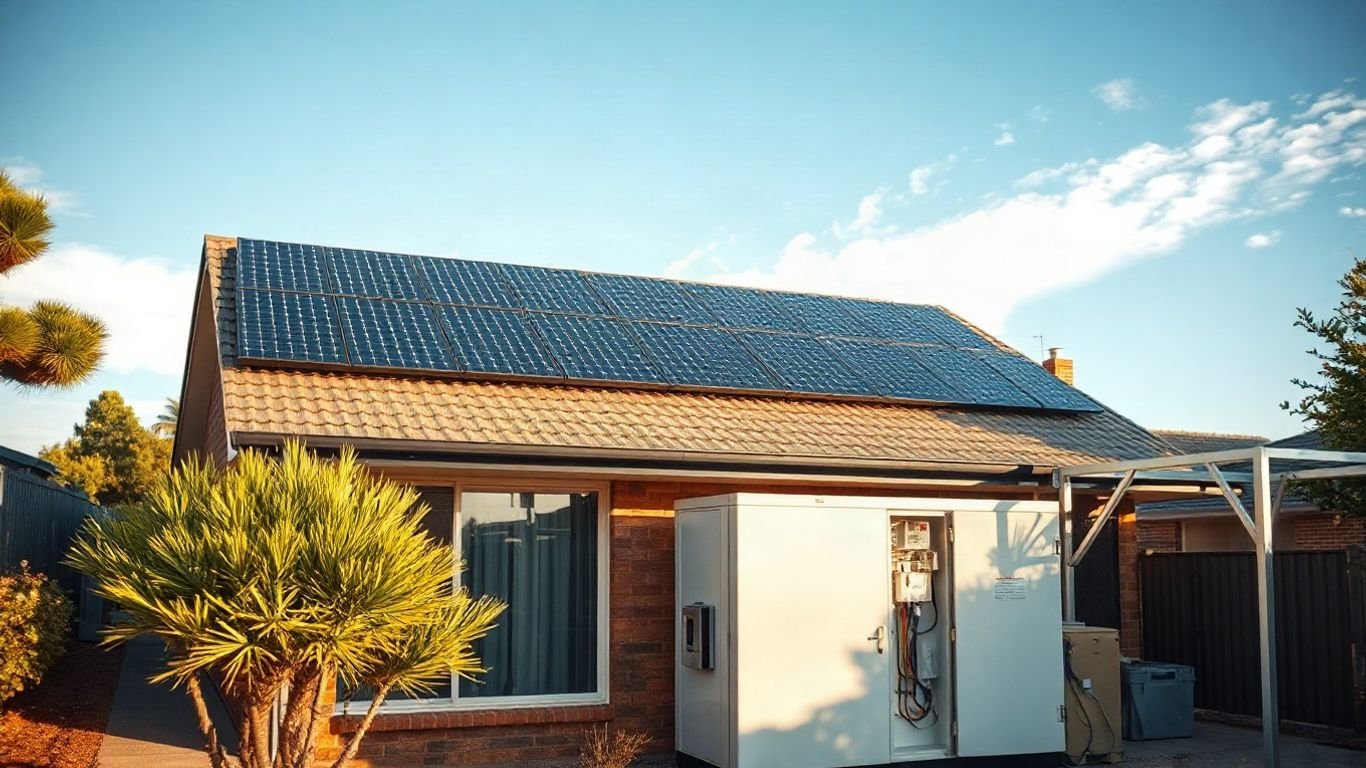
The image of a typical residential installation is a reminder that available wall space, ventilation and cable routes also form part of the design. Capacity is an energy decision, but it is still shaped by the physical home.
Estimating your household’s evening energy use
Review electricity use from sunset until the following morning, paying attention to cooking, hot-water systems, heating, cooling and vehicle charging. If the household uses most of its power during daylight, a smaller battery may be enough. If evenings are busy and the solar system exports heavily during the day, more storage could be useful.
Seasonal patterns matter. Winter heating and summer cooling can produce very different overnight demand, so avoid sizing from one unusually low or high bill.
Matching battery size to your solar system
A battery needs enough daytime solar generation to charge regularly, but a large solar array does not automatically justify a large battery. Check how much surplus energy is actually exported and whether the system can charge the battery during the available sunlight hours. The inverter’s charge and discharge limits may also affect how quickly the storage fills.
An installer should model the proposed battery against historical generation and consumption. That approach is more reliable than choosing a capacity based only on a neighbour’s installation.
Allowing for usable capacity and depth of discharge
Headline capacity is the amount of energy a battery can hold under stated conditions. Usable capacity is the amount the system makes available for normal operation after reserve limits and other controls are applied. Depth of discharge describes how much of the stored energy can be used without operating outside the manufacturer’s intended range.
Always ask for the usable figure and the expected output at the point of installation. Usable energy is the figure that matters when estimating how long appliances can run overnight or during an outage.
Planning for future electricity consumption
Consider changes that could increase demand, such as a heat pump, induction cooking, a growing family or an electric vehicle. It may be cheaper to allow for expansion from the beginning than to redesign the system later. Still, paying for unused capacity today is not automatically wise, particularly if future equipment or tariffs are uncertain.
A good quote explains whether additional batteries can be added, what limits apply and whether the inverter can support expansion. Keep those details with the warranty and electrical documentation.
The main factors that affect the total cost
The battery is only one part of a solar-storage project. Installation conditions, inverter compatibility, backup requirements and local electrical rules can shift the total substantially. Two households buying similar storage may receive very different quotes because their homes need different supporting work.
For that reason, a quote should be read as a small project proposal, not as a price tag attached to a box. The useful comparison is the finished, compliant system and what it can do.
Battery chemistry, capacity and warranty
Chemistry affects the battery’s physical size, operating characteristics and expected service life. Capacity affects both the purchase price and the amount of energy available each day. Warranty documents should clarify retained capacity, operating conditions, cycles or throughput and the process for making a claim.
A longer warranty can add value, but only if its conditions match how the household expects to use the battery. Check whether heavy cycling, high temperatures or missed maintenance requirements affect coverage.
Installation complexity and switchboard upgrades
Older switchboards may need upgrades before a battery can be connected safely and compliantly. The installer may also need to run longer cable routes, create a dedicated equipment area or coordinate work across multiple buildings. These items can be modest or significant depending on the property.
Request photographs or an on-site assessment before accepting a firm-looking price. A remote estimate may not include every upgrade needed once the electrician inspects the site.
Inverter compatibility and replacement requirements
Some batteries connect through a compatible existing inverter, while others require a hybrid inverter or a separate battery inverter. If the current inverter is nearing the end of its warranty or cannot support the proposed system, replacement can add materially to the project cost.
Ask whether the quote retains the existing inverter, replaces it or adds another unit. The answer affects efficiency, monitoring, backup capability and the number of components that may eventually need servicing.
Location, labour and grid connection considerations
Installation costs vary between metropolitan areas, regional towns and remote locations. Travel, freight and the availability of accredited electrical contractors can all affect labour. A system that changes how the home interacts with the grid may also require additional paperwork, metering work or network coordination.
The final proposal should identify who manages approvals and whether network charges are included. Clear responsibility prevents an apparently low quote from becoming difficult to budget for.
Comparing battery costs with potential savings
A battery’s financial return comes mainly from changing when electricity is used. Solar energy that would otherwise be exported can be stored and used later, reducing purchases from the grid. The value of that shift depends on the household’s tariff, export rate, consumption pattern and battery efficiency.
Savings are not guaranteed, and backup value is partly a lifestyle benefit rather than a bill reduction. The most useful estimate uses actual household data and conservative assumptions.
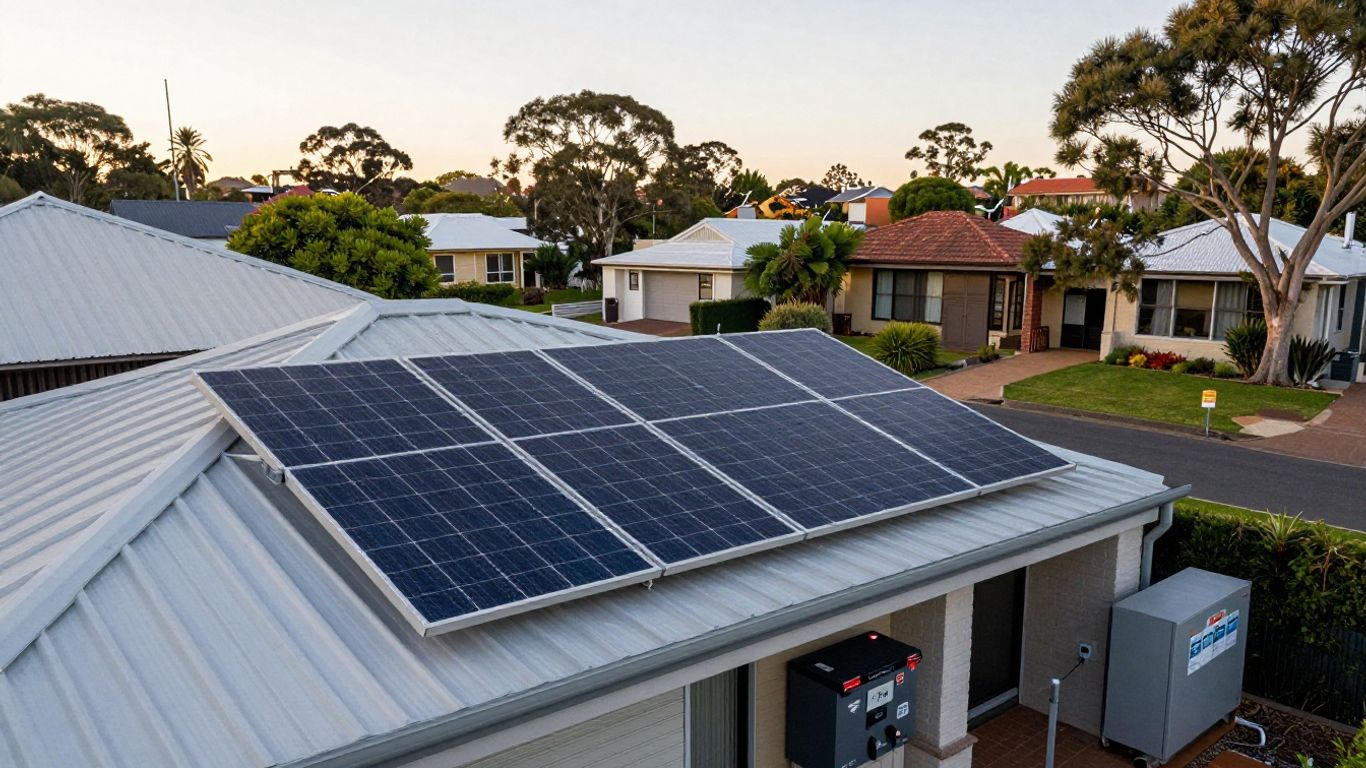
A suburban rooftop with storage can look attractive, but the economics still depend on daily operation. This is why a solar battery value guide can be a helpful second opinion when reviewing a proposed payback calculation.
Reducing grid electricity purchases
During the day, solar generation may exceed immediate demand. The battery can store some of that surplus for evening use, reducing the amount bought at the retail electricity rate. Losses during charging and discharging mean the stored energy is not delivered with perfect efficiency, so calculations should allow for that difference.
The result is usually strongest for households that consume a meaningful amount of electricity after sunset. Homes with low evening demand may export more and gain less from additional storage.
Using time-of-use tariffs to improve savings
Time-of-use plans charge different rates at different times. A battery may be programmed to avoid expensive peak periods, although the exact settings depend on the tariff, solar forecast and household priorities. Some systems can also retain a reserve for backup rather than using every available kilowatt-hour for bill reduction.
Compare the proposed operating strategy with the actual plan available at your address. Tariffs change, and a calculation based on an old bill may overstate future savings.
Calculating payback periods and return on investment
A simple payback estimate divides the net installed cost by the expected annual saving. It should include battery degradation, likely electricity-price changes, maintenance, finance interest and the possibility that the system does not cycle fully every day. A longer payback does not automatically make a battery unsuitable, especially if backup is a central reason for buying it.
When comparing investment choices, readers may also find this Australian investment overview useful for thinking about risk, liquidity and opportunity cost. A battery is an energy asset first, not a guaranteed financial product.
Understanding feed-in tariff trade-offs
Sending surplus solar to the grid earns a feed-in tariff, while storing it allows the household to avoid buying electricity later. The battery’s value is roughly tied to the difference between those rates, adjusted for efficiency and system losses. A generous feed-in tariff can reduce the financial case for storage, while a low export rate can make self-consumption more attractive.
Do not assume every exported kilowatt-hour should be stored. Some days the battery may already be full, and some households may benefit from exporting rather than cycling the battery.
Solar battery costs for backup power
Backup power changes the design brief. A battery installed only to shift solar energy may not keep appliances running during a blackout, because outage protection requires the home to be electrically separated from the grid. The equipment, wiring and capacity needed for that function can increase the price.
Decide which appliances matter before asking for a backup quote. Keeping refrigeration, lights, communications and selected power points operating is a different project from powering every circuit in the home.
Essential circuits versus whole-home backup
Essential-circuit backup sends power to selected loads, often through a dedicated sub-board. Whole-home backup can cover more circuits but may require greater inverter output, additional protection and enough stored energy to manage large appliances. High-starting-load equipment, such as some pumps and compressors, needs particular attention.
The installer should list the circuits covered and explain what happens when several appliances start together. “Backup available” is too vague to use as a technical specification.
Extra equipment needed for blackout protection
A backup installation may include an automatic transfer device, protection equipment, a backup gateway or changes to the switchboard. The exact arrangement depends on the battery, inverter and electrical design. Internet monitoring may stop during an outage even if the battery continues to supply selected circuits.
Ask whether testing, commissioning and outage simulation are included. These details help confirm that the promised backup function has been properly configured rather than assumed.
How backup duration changes the system price
Running a fridge and a few lights for several hours requires less energy than operating heating, cooling, cooking and hot water overnight. Longer backup duration therefore requires either more storage, lower loads or both. The battery’s maximum output is also separate from its total energy capacity, so both figures should be checked.
A practical load list is more useful than a broad promise of “whole-house coverage”. It lets the installer model duration under realistic conditions and shows where a generator or manual load reduction might still be needed.
This video placeholder can sit alongside the written load-planning advice, giving readers another way to understand the difference between energy capacity and appliance demand.
Off-grid battery banks and higher-capacity requirements
An off-grid home cannot rely on the grid when solar production is low, so its battery bank must cover longer periods of weak sunlight. The design may also need a generator, additional solar capacity and carefully managed loads. Oversizing storage without enough generation to recharge it can be just as problematic as choosing too little.
For a general comparison, this off-grid battery bank guide illustrates why off-grid systems are treated as a broader energy design rather than a simple add-on to a grid-connected solar array.
Incentives, finance and ongoing ownership costs
Incentives and finance can change the upfront amount, but they do not remove the need to compare the full system price. Australian assistance varies by state, territory, programme and eligibility, and availability can change. Confirm current terms with the relevant government body or installer before relying on an incentive in your budget.
Ongoing ownership also deserves a line in the spreadsheet. Monitoring, insurance, repairs and eventual replacement can affect the real cost over the battery’s useful life.
Government rebates and state-based assistance
Some households may qualify for state or territory programmes, retailer offers or other assistance, but there is no single national figure that applies to every installation. Eligibility can depend on location, income, technology, system size or approved installer arrangements. A rebate may also have application deadlines or limited funding.
Ask for the incentive to be shown separately from the pre-incentive price. That makes it easier to see what you would pay if the assistance is unavailable or delayed.
Solar battery loans and payment plans
Finance spreads the upfront cost but adds interest, establishment charges or account fees. Compare the total amount repaid with the cash price, not just the advertised weekly payment. A longer term may make the system feel affordable while extending repayments beyond the period in which the battery produces its strongest savings.
Households reviewing payment options can pair this decision with a practical Australian budgeting guide. The aim is to keep the energy upgrade within a comfortable budget, including a buffer for unexpected electrical work.
Maintenance, monitoring and insurance expenses
Most home batteries are designed for limited routine maintenance, but owners should keep monitoring active and respond to warnings promptly. Insurance may require the system to be installed by a qualified contractor and documented correctly. Check whether your policy covers the battery, damage from a power event and loss caused by a failure.
Also ask who provides software support after installation. A low-cost system can become frustrating if fault diagnosis, firmware updates or warranty communication are unclear.
Battery replacement and warranty coverage
A battery does not necessarily fail when its warranty ends, but its available capacity may decline over time. Replacement timing depends on chemistry, cycling, temperature, usage and warranty conditions. Include a future replacement allowance when comparing a battery with simply continuing to buy electricity from the grid.
Read the warranty’s definitions carefully, including who pays removal and reinstallation costs. The cheapest initial system may not be the cheapest over its complete ownership period.
How to choose and compare battery quotes
Comparing quotes is easiest when every installer answers the same questions. Ask for capacity, usable energy, inverter details, backup scope, annual savings assumptions and all installation work in writing. If a proposal is difficult to understand, that is a reason to ask for clarification before signing.
A simple comparison sheet can prevent an attractive headline price from hiding important differences. It is also worth considering whether a household savings plan leaves enough cash for other priorities and future repairs.
Comparing usable capacity rather than headline capacity
Place usable capacity beside nominal capacity on your comparison sheet. Then record the maximum continuous output, surge output and any reserve that cannot normally be discharged. These figures describe what the system can actually deliver, not just the size printed in a product brochure.
Two batteries with similar nominal capacity may provide different practical results. A quote that omits usable capacity is incomplete for a meaningful value comparison.
Checking performance warranties and cycle limits
Look for the warranty period, retained-capacity promise, cycle or throughput limit and operating conditions. Some warranties are limited by whichever threshold is reached first. Confirm whether the warranty transfers to a future homeowner and how claims are handled in Australia.
Keep copies of the product warranty, installer warranty and commissioning record together. They may be needed years after the installation, when staff and product names have changed.
Reviewing installer credentials and after-sales support
Choose an installer who can explain the electrical design, backup operation and compliance requirements without relying on vague sales language. Check relevant accreditation, insurance, references and the process for handling faults. Good after-sales support matters because a battery is a connected electrical system, not a set-and-forget appliance.
The contract should identify the party responsible for installation defects, product claims and monitoring issues. That division of responsibility is often more useful than a small difference in the initial quote.
Identifying exclusions, hidden fees and upgrade costs
Before comparing totals, look for excluded switchboard work, additional cable runs, scaffolding, freight, travel, permits, network fees and post-installation repairs. Confirm whether GST is included and whether the price depends on a particular incentive. Also check what happens if the site assessment discovers asbestos, access restrictions or outdated wiring.
An itemised quote gives you room to question assumptions. If the installer cannot explain a cost or exclusion, obtain a revised proposal before making a decision.
Conclusion
The cost of batteries for solar system installations in Australia is only one part of the decision. Capacity, usable energy, backup requirements, tariffs, incentives and installation conditions all shape the value a household receives. Compare complete, itemised quotes and use your own consumption data so the final system suits both your home and your budget.
Frequently Asked Questions
How much does a solar battery cost in Australia in 2026?
Prices vary substantially by capacity, brand, inverter requirements and installation complexity. A small system may cost several thousand dollars, while a typical home installation can reach five figures once equipment and electrical work are included.
Is a solar battery worth buying with existing solar panels?
It can be worthwhile when a household uses significant electricity after sunset, receives a low feed-in tariff or values backup power. The answer depends on the system’s net cost, expected cycling and local electricity rates.
What battery size does an average Australian home need?
There is no single suitable size. Review evening consumption, surplus daytime solar, seasonal demand and the appliances you want supported before selecting capacity.
What is the difference between nominal and usable battery capacity?
Nominal capacity is the battery’s stated storage size. Usable capacity is the energy available for normal operation after reserve limits and operating controls are taken into account.
Does a solar battery work during a blackout?
Not always. Blackout operation requires suitable inverter and isolation equipment, and the system may supply only selected circuits unless it has been designed for whole-home backup.
Are solar battery rebates available in Australia?
Assistance depends on the state or territory, programme rules and household eligibility. Check current official requirements and confirm whether an approved installer or application deadline applies.
How can I compare solar battery quotes fairly?
Compare usable capacity, output, warranty terms, backup scope, installation inclusions, monitoring and the assumptions behind savings estimates. Ask every installer to price the same requirements so the totals are genuinely comparable.