

Thinking about where to put your money in Australia for 2026? It’s a good time to be looking. The Reserve Bank’s kept interest rates steady, and things are starting to feel a bit more stable after all the ups and downs. People are looking for investments that provide a steady income and are less likely to be hit hard by economic changes. But with so much going on, it’s easy to get confused. This article will walk you through some of the best ways to invest money in Australia, helping you make smarter choices for your cash.
Key Takeaways
- Commercial property, especially in growing areas like South East Queensland, offers longer leases and better returns than residential, with sectors like healthcare and logistics in demand.
- Diversified trusts spread your risk across different assets like property, debt, and agriculture, giving you access to quality investments you might not get on your own.
- Investing in ASX shares is about picking solid companies with good finances and sticking with them, rather than trying to guess market movements.
- Infrastructure projects are creating opportunities, and a move towards regional living means property in those areas is also worth considering.
- Non-bank lending and private debt are filling gaps where traditional banks are hesitant, offering investors higher yields for funding deals.
1. Commercial Property
Commercial property in Australia is looking pretty solid for 2026, especially if you’ve got a decent chunk of change to put in, say $500,000 or more. Unlike your average house, commercial spaces often come with longer leases, meaning more predictable income. Plus, the tenants are usually businesses, which can be a bit more stable than individual renters. We’re seeing good returns, often in the 6-8% per year range, depending on what you buy and where.
Right now, places like healthcare facilities, logistics hubs, and even those handy convenience stores are in demand. This is especially true in areas that are growing fast, like South East Queensland. Think about Brisbane expanding, the Gold Coast getting more diverse, and the Sunshine Coast building up its health and tech sectors – all these places need commercial spaces and are soaking up investment.
Here are a few types of commercial property that are catching attention:
- Healthcare Assets: Think medical centres and specialist clinics. People always need healthcare, so these tend to be quite stable.
- Logistics and Industrial: With online shopping still huge, warehouses and distribution centres are essential.
- Convenience Retail: Local shops and service stations that people rely on daily.
If managing a building yourself sounds like too much hassle, or you don’t have enough capital for a whole building, a commercial property trust could be the way to go. These trusts let you pool your money with others to invest in bigger, better-quality properties, all managed by professionals. It spreads the risk and gives you access to assets you couldn’t afford on your own.
The market’s showing a cautious optimism heading into 2026. Investors are looking for reliable income and assets that can handle economic ups and downs. Commercial property, particularly in growing regions and in sectors that people always need, fits that bill nicely.
2. Diversified Trusts
Alright, let’s chat about diversified trusts. Think of them as a bit like a mixed-up fruit salad for your money. Instead of putting all your eggs in one basket, you’re spreading your investment across a bunch of different things – maybe some commercial properties, a bit of debt finance, or even some agricultural ventures. This way, if one part of the salad isn’t doing so well, the other bits can hopefully pick up the slack.
Diversified trusts are a smart way to spread your risk and get access to opportunities you might not be able to grab on your own. For instance, with a decent chunk of change, say $500,000, you could get a slice of several commercial properties, all managed by professionals. It takes the headache out of trying to pick individual winners.
Here’s a bit of a breakdown of what you might find in a diversified trust:
- Commercial Property: This could be anything from office blocks to retail spaces or warehouses. They often come with longer leases than residential places, which means more predictable income.
- Debt Finance: This involves lending money to businesses, often secured against their assets. It can offer a steady stream of interest payments.
- Infrastructure: Think roads, bridges, or energy projects. These are usually long-term investments that can provide stable returns.
- Agriculture: Investing in farms or related businesses can be a way to tap into the food production sector.
These trusts are often structured to give you regular income, like monthly payments, while also aiming for your investment to grow over the long haul. It’s about building a solid foundation for your wealth.
For example, a trust might aim for a steady 7-8% return per year, paid out monthly. Some are open-ended, meaning you can usually get your money out after a couple of years, while others might have specific investment periods. It’s a good option if you’re looking for more stability and don’t want to be constantly checking market fluctuations.
3. ASX Shares
Investing in the Australian Securities Exchange (ASX) remains a popular way to grow your money, and for good reason. It offers a chance to own a piece of Australian businesses, big and small. While the market can seem a bit wild sometimes, especially with all the news headlines, focusing on the long game is usually the best approach. Building wealth with ASX shares in 2026 doesn’t require crystal ball predictions or constant trading; it’s more about discipline and patience.
When picking shares, it’s smart to look for quality companies. Think about businesses that have been around for a while, have solid finances, and offer products or services people will keep buying, no matter what the economy is doing. Companies like CSL, Commonwealth Bank, and Wesfarmers are often mentioned because they fit this bill. Trying to guess where the market will be next month is a tough gig; owning good businesses is a bit simpler.
Here are a few pointers to keep in mind:
- Invest Regularly: Instead of trying to time the market, which is notoriously difficult, consider putting money in consistently. This approach, often called dollar-cost averaging, helps smooth out the ups and downs and takes the emotion out of investing. Markets will fluctuate in 2026, they always do. Consistent investing helps turn that volatility from a source of stress into a long-term advantage.
- Let Compounding Work: The magic of compounding is real, but it needs time. Small gains, reinvested over many years, can lead to surprisingly large amounts. It’s like a snowball rolling downhill – it starts small but picks up speed and size.
- Manage Your Risk: Keep an eye on your investments’ balance sheets and how much you have in any single company. Avoiding big losses is often more important than chasing the highest possible returns. If your portfolio is keeping you up at night, you’re probably taking on too much risk.
- Stay Invested: There will always be reasons to worry about the market. But stepping out too often can hurt your long-term growth more than riding through the occasional bumpy patch. Staying invested, while adding to quality holdings, has proven more effective than trying to dodge every potential problem.
For those looking for specific opportunities, keep an eye on ASX 200 shares that are highlighted as strong buys. These can offer excellent growth potential.
The key to building wealth with ASX shares isn’t about making bold predictions or constantly tinkering with your portfolio. It’s about sticking to a plan, focusing on quality businesses, and letting the power of compounding do its work over time. This disciplined approach gives you the best shot at long-term success, even when the market feels uncertain.
4. Infrastructure
Investing in infrastructure can be a solid move for your portfolio in 2026. Think about the big projects happening across Australia – roads, public transport, energy grids, and even digital networks. These aren’t just about making life easier; they’re long-term assets that tend to provide steady returns.
The energy transition is a massive driver for infrastructure investment right now. We’re talking about building out renewable energy sources and the transmission lines needed to get that power where it needs to go. Plus, there’s a lot of focus on upgrading digital infrastructure, which is becoming more important every day. Australia’s infrastructure landscape in 2026 will be shaped by several key factors. The energy transition will rely heavily on transmission infrastructure. Digital tools and AI are set to revolutionize planning and delivery processes. Additionally, a rethinking of airports and their roles is anticipated. Australia’s infrastructure landscape
Here’s a look at some areas to consider:
- Energy Networks: Upgrades to the grid to handle more renewables and ensure reliability.
- Transport Projects: Continued investment in roads, rail, and public transport, especially in growing urban areas.
- Digital Infrastructure: Expansion of broadband and telecommunications networks.
- Water and Utilities: Essential services that always need maintenance and upgrades.
These kinds of investments often come with long-term contracts, which can mean predictable income streams. It’s a bit different from, say, a shop that might have fluctuating sales. Infrastructure is usually more stable.
Investing in infrastructure can offer a good balance to a portfolio. It’s less about quick wins and more about contributing to the country’s development while aiming for consistent returns over time. The scale of these projects means they often have a long lifespan, which can be attractive for investors looking for stability.
5. Non-Bank Lending

With the big banks still a bit hesitant to lend for commercial projects in 2025 and likely into 2026, a gap has opened up. This is where non-bank lenders and other private finance options come into play. They’re stepping in to fund deals that traditional banks might shy away from, often offering investors a chance to get in on these opportunities with potentially higher returns.
Think of it as an alternative route for capital. Instead of going through the usual bank channels, you’re looking at specialised lenders or investment funds that focus on specific types of loans, often backed by tangible assets. This can be a good spot for investors looking for income streams that are a bit different from shares or standard property.
Here’s a bit of a breakdown of what this looks like:
- Direct Loans: Providing funds directly to businesses or property developers for specific projects.
- Securitised Loans: Pooling loans together and selling off parts of that pool to investors.
- Mezzanine Finance: A type of loan that sits between senior debt and equity, often used in property development.
- Bridging Loans: Short-term loans to cover a gap while longer-term finance is arranged.
This sector is becoming more attractive as it can offer attractive yields for investors willing to take on a bit more risk than traditional bank deposits.
The landscape for commercial borrowing has shifted. With banks tightening their belts, private lenders are stepping up. This creates a unique window for investors to back projects that might otherwise struggle to find funding, potentially leading to solid returns for those who understand the risks involved.
It’s not just about the returns, though. For some investors, it’s also about having a more direct connection to where their money is going, seeing it support tangible projects or businesses. Just remember, like any investment, it’s wise to do your homework and understand the specifics of the loan, the borrower, and the security offered.
6. Resilient Sectors
When markets get a bit shaky, and let’s be honest, they often do, people tend to look for investments that can ride out the storm. That’s where resilient sectors come in. These are industries that tend to do okay, or even quite well, no matter what the economy is doing. Think about things people always need, like healthcare or essential services.
These sectors often provide a steady income stream, making them attractive for investors looking for stability.
In Australia, we’re seeing a real shift towards these kinds of assets. Things like medical centres, childcare facilities, and even service stations that also have a retail component have shown they can keep delivering returns even when other parts of the market are struggling. It’s about finding tenants who are likely to pay their rent, month after month, year after year.
Here are a few areas that are proving their worth:
- Healthcare Properties: Think doctor’s offices, specialist clinics, and allied health centres. People always need medical care, so these spaces tend to stay occupied.
- Childcare Centres: With families needing reliable childcare, these facilities often have long leases and stable demand.
- Convenience Retail: Small-scale retail centres in growing areas, especially those anchored by a supermarket or essential services, tend to hold up well.
The move towards resilient sectors isn’t just about weathering economic downturns; it’s also about aligning investments with long-term demographic trends. As Australia’s population ages and urban fringes continue to expand, the demand for these essential services is only set to grow, providing a solid foundation for consistent returns.
For those looking to get involved without the hassle of direct ownership, diversified trusts that focus on these resilient assets can be a smart way to go. It’s a way to spread your money across several properties and tenants, reducing your risk. You can explore options like ETFs for portfolio resilience to get a feel for how this diversification works.
7. Regional Property
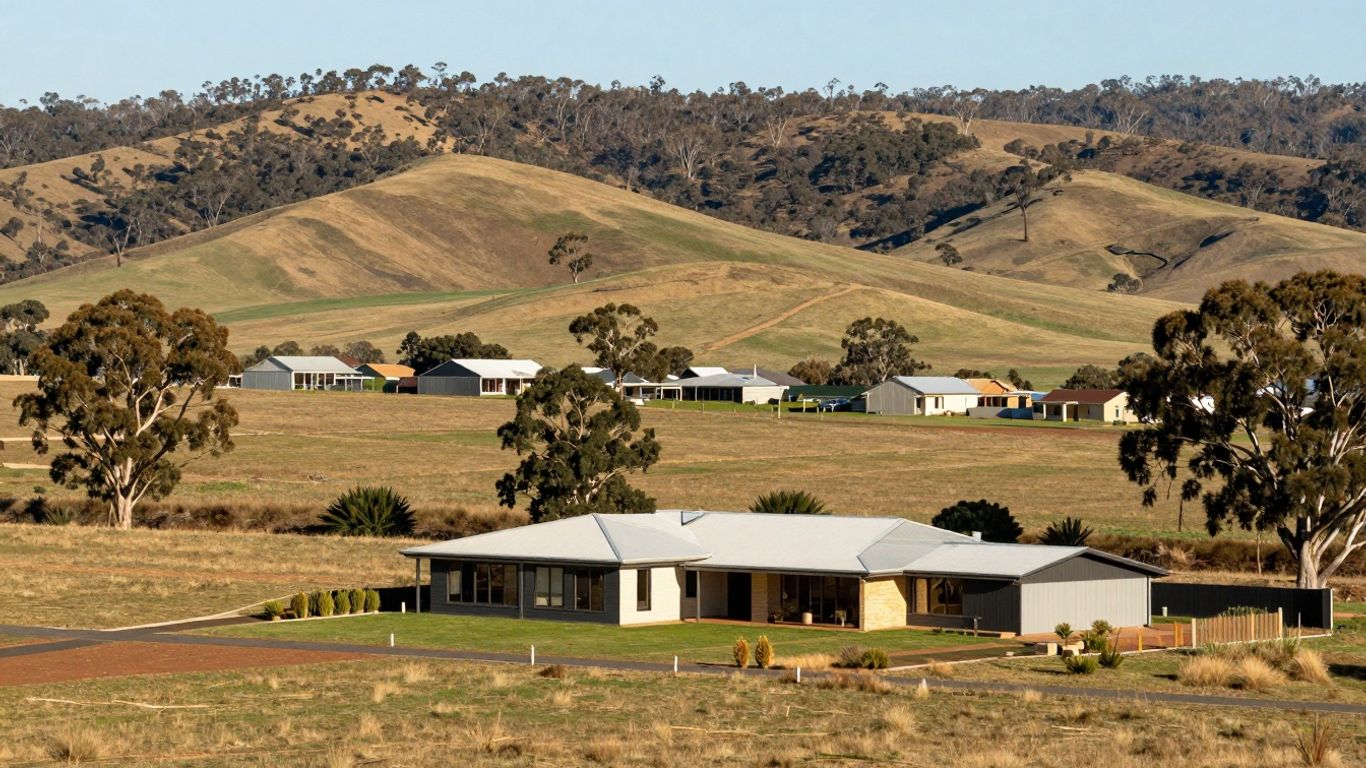
While the big cities get a lot of the attention, don’t forget about regional areas when you’re thinking about property investments for 2026. We’re seeing a real shift with people moving out of the major centres, looking for a bit more space and a different lifestyle. This trend isn’t just a blip; it’s creating solid demand for housing and commercial spaces in towns and regional hubs across Australia.
Think about places that are growing because of new infrastructure projects or industries setting up shop. These areas often have less competition than the capital cities, which can mean better entry prices. Plus, as more people move in, they need places to live, shop, and work, which is good news for property investors.
Here’s why regional property is worth a look:
- Population Growth: Many regional centres are experiencing steady population increases as people seek affordability and lifestyle changes.
- Infrastructure Investment: Government and private sector investment in transport, health, and education in regional areas is boosting economic activity and property values.
- Diversified Economy: Some regional areas are developing stronger, more diverse economies beyond traditional industries, making them more resilient.
- Rental Demand: Increased population often translates to higher demand for rental properties, potentially leading to better yields.
The key is to pick the right regional centre – one with a strong economic base and a clear growth plan. It’s not about just buying anywhere; it’s about identifying those places that are genuinely on the upswing.
Investing in regional property can offer a different kind of opportunity compared to city investments. It often involves understanding local market dynamics and community needs, which can lead to unique advantages if you do your homework properly. It’s about finding those pockets of growth that might be overlooked by the broader market.
8. Private Debt
With the big banks still a bit hesitant to lend, especially for commercial projects, private debt is stepping up to fill the gap. This means investors can get involved in funding deals that might otherwise be too tricky for traditional lenders. It’s a way to potentially earn better returns by taking on a bit more risk, but it’s backed by real assets, which is a good thing.
Think of it like this: instead of just putting your money in a savings account, you’re lending it out, often to businesses or property developers. These loans are usually secured, meaning there’s something tangible to fall back on if things go south. It’s not exactly a walk in the park, but for those who know what they’re doing, it can be pretty rewarding.
Here’s a bit of a breakdown of what you might see:
- Short- to Medium-Term Loans: Often tied to specific projects, like developing a commercial building or expanding a business.
- Asset-Backed Security: The loan is secured against something valuable, like property or equipment.
- Higher Yields: Because it’s a bit more hands-on than just buying shares, you can often expect a better return on your investment.
- Professional Management: Usually, you’ll be investing through a fund or a manager who handles the nitty-gritty of finding and managing these loans.
Investing in private debt requires a good look at the details. You need to be comfortable with how the loans are structured, what the exit strategy is, and who is managing the whole show. It’s not for everyone, but it can be a solid part of a diversified portfolio if you get it right.
9. Agriculture
Investing in agriculture in Australia for 2026 presents a unique opportunity, especially for those looking beyond traditional markets. The sector is showing real resilience, even with global economic shifts. Australian farmers have been pretty good at handling challenges, like trade issues, and still managing to produce well. This means there’s a solid base for investment.
When we talk about agriculture, it’s not just about growing crops. It includes a whole range of things like livestock, forestry, and even niche areas like ag-tech. The demand for food and fibre is always there, and with a growing global population, that demand is only going to increase. Plus, Australia’s unique climate and land can be a real advantage for certain types of produce.
Here are a few areas within agriculture that might be worth a look:
- Sustainable Farming Practices: More investors are interested in farms that use eco-friendly methods. This can lead to better long-term yields and appeal to environmentally conscious consumers.
- Agri-tech Innovations: Think about technology that helps farmers grow more with less – like precision farming, drones for monitoring crops, or advanced irrigation systems. These can really boost efficiency.
- Specialty Crops and Livestock: Instead of just bulk commodities, consider investing in farms that produce high-value items, like premium wool, specific types of wine grapes, or organic produce.
- Water Entitlements: Water is a critical resource, especially in Australia. Owning or investing in water rights can be a stable, long-term play.
The agricultural sector is showing strong potential for steady returns and diversification. It’s a tangible asset that’s always in demand. While it requires a different kind of thinking than, say, shares, the rewards can be significant. It’s definitely a space to watch if you’re looking for something a bit different in your portfolio. For those interested in how Australian agriculture performs on the global stage, it’s worth noting how farmers have navigated trade challenges.
Investing in agriculture means you’re backing a fundamental need. People always need to eat, and Australia has a reputation for quality produce. It’s about understanding the land, the climate, and the market, but the potential for growth is definitely there.
10. Healthcare Assets
The healthcare sector in Australia is looking pretty solid for investors heading into 2026. It’s one of those areas that tends to do okay no matter what’s happening with the wider economy because people always need healthcare services. Think about it – whether it’s a boom or a bust, folks still get sick, need check-ups, or require ongoing treatment. This makes healthcare assets a bit of a safe bet, offering stability.
Demand for healthcare services is only going to grow as Australia’s population ages. This demographic shift means more people will need medical attention, creating a consistent stream of patients for clinics, hospitals, and aged care facilities. It’s not just about the services themselves, but also the infrastructure that supports them – medical centres, specialised clinics, and even the technology used in healthcare.
Here are a few areas within healthcare that might be worth a look:
- Medical Centres and Clinics: These are often leased to doctors and specialists on long-term agreements, providing a steady income. They benefit directly from increased patient numbers and the trend towards preventative care.
- Aged Care Facilities: With an ageing population, the need for quality aged care is skyrocketing. Investments in well-managed facilities can offer reliable returns.
- Healthcare Technology and Pharmaceuticals: While more volatile than property-based assets, companies involved in developing new medical technologies or life-saving drugs can offer significant growth potential.
It’s not all smooth sailing though. Some Australian-listed healthcare companies are expected to face a challenging reporting season in 2026, so doing your homework on individual businesses is key. Diversified property trusts that include healthcare assets can be a good way to get exposure without picking individual properties. These trusts often have professional management looking after the day-to-day stuff, which is handy if you’re not keen on being a landlord yourself. You can find more information on these types of investments through various investment managers.
Investing in healthcare assets can provide a good balance to a portfolio. They are generally less affected by economic downturns compared to more discretionary sectors. The long-term demographic trends strongly support continued demand, making it an attractive option for patient investors looking for stable, income-generating opportunities over the next few years.
Wrapping It Up: Your Investment Journey for 2026
So, we’ve looked at a few ways you can put your money to work in Australia for 2026. It’s clear that the market’s got its ups and downs, but there are definitely opportunities out there if you know where to look. Whether you’re eyeing up commercial property for steady income, thinking about the share market with a long-term view, or exploring diversified trusts, the main thing is to have a plan. Don’t just jump in without knowing your goals. And remember, patience is key – letting your investments grow over time, rather than trying to chase quick wins, usually pays off best. It’s a good idea to chat with someone who knows their stuff too, just to make sure you’re on the right track for your own situation. Happy investing!
Frequently Asked Questions
What’s the best way to start investing in Australia for 2026?
Before diving in, figure out what you want to achieve. Are you aiming for a steady income stream, or do you want your money to grow a lot over time? Knowing your goals helps you pick the right investment types, like property or shares, that fit your plan.
Is it a good time to invest in Australian shares (ASX) in 2026?
Yes, the Australian share market can still be a great place to build wealth in 2026. The key is to focus on solid companies with good track records, invest a bit of money regularly, and be patient. Don’t try to guess market ups and downs; focus on quality businesses.
How can commercial property help my investments?
Commercial properties, like shops or offices, often come with longer rental agreements and can provide a steady income. Areas with growing populations and businesses, especially in places like South East Queensland, are showing good potential for these types of investments.
What are diversified trusts and why should I consider them?
Diversified trusts let you put your money together with others to invest in a mix of things, such as property, loans, or businesses. This spreads out your risk and gives you access to bigger, better investments that you might not be able to afford on your own.
Are there any ‘safer’ investment areas for 2026?
Some sectors are considered more reliable because people always need their services. Think about things like medical centres, childcare facilities, or places that sell everyday essentials. These tend to do okay even when the economy is a bit shaky.
What if I don’t have a lot of money to invest?
Even with smaller amounts, you can still invest. Investing regularly in things like ASX shares or through diversified trusts can help your money grow over time. The important thing is to start and keep adding to your investments consistently.