Rugby in Canada has a long history, but the journey of the national teams, both men’s and women’s, is a story of passion, challenges, and a drive to compete on the world stage. This article takes a look at how Canada Rugby League has evolved, the hurdles it faces, and what the future might hold for the sport in the Great White North.
Key Takeaways
- Canada Rugby League has seen periods of growth, particularly with the influence of touring international sides in its early days, exposing local talent to world-class competition.
- The sport faces significant hurdles, including financial limitations common to tier-two nations, a lack of a strong domestic competition structure, and difficulties in player development and keeping talent within Canada.
- The women’s national team shows immense commitment despite funding struggles, with aspirations for World Cup success, but requires more resources to compete consistently at the highest level.
- Future growth for Canada Rugby League hinges on establishing better high-performance training centres across the country and exploring options for professional domestic competitions, potentially including a Major League Rugby (MLR) team.
- Despite challenges with the international calendar, recent successes like the women’s Pacific Four Series win show progress, highlighting the team’s potential when given opportunities to play and develop.
The Evolution Of Canada Rugby League
Early Development And Touring Sides
Rugby’s roots in Canada run deep, stretching back almost two centuries to the 1820s when British settlers, soldiers, and sailors first brought the game ashore. Initially, it took hold in places like Halifax, Toronto, and Montreal, thanks in part to figures like Alfred St. George Hamersley, who’d even played in the very first international match. Vancouver later became a real hub for the sport. By the late 1800s, clubs were popping up all over, with Montreal FC, Halifax FC, Winnipeg FC, and Vancouver RFC being some of the early ones.
The real game-changer for Canadian rugby, though, was the arrival of touring international teams. Back in the day, teams from places like France, New Zealand, Wales, and Australia would make the long trip over. Imagine being a young player and getting to test yourself against the absolute best in the world, right here on home soil! Gareth Rees, a legend of Canadian rugby with four World Cups under his belt, remembers this well. He played against English club champions like Bath and Leicester when they toured. It wasn’t just national teams; club sides would also tour, giving local players heaps of exposure.
Here’s a snapshot of the kind of high-level competition Canadian teams faced during touring periods:
| Year | Opponent | Canadian Team |
|---|---|---|
| 1989 | Welsh National Team | British Columbia Centenary XV |
| 1989 | Japanese National Team | British Columbia Centenary XV |
| 1989 | Australian National Team | British Columbia Centenary XV |
| 1989 | All Blacks | British Columbia Centenary XV |
| 1989 | Irish National Team | British Columbia Centenary XV |
This regular influx of top-tier talent was absolutely vital for developing the game and giving Canadian players a benchmark to aim for. It provided a structured way for players to learn and improve.
Impact Of Professionalism On Canadian Rugby
Things got a bit more complicated as the professional era dawned. While the passion for the game remained strong, the financial realities started to bite. Unlike in countries where rugby is a primary professional sport, Canadian players often found themselves juggling their love for the game with everyday jobs. This meant that representing Canada wasn’t about earning a big paycheck; it was purely about pride and the jersey.
The shift towards professionalism globally meant that Canadian players faced tough choices. If a player needed time to recover from an injury or wanted to commit to a full pre-season with their club, balancing that with national team commitments could be a real challenge. They weren’t contracted professionals in the same way players in the Six Nations countries were, making those decisions even harder.
This lack of central contracts meant players weren’t employees of Rugby Canada in the traditional sense. They had agreements, sure, but it wasn’t the same level of commitment and support you’d see elsewhere. This put a lot of pressure on the players themselves to make sacrifices.
The Golden Generation Of Canadian Rugby
While the term ‘Golden Generation’ might be a bit strong, there have certainly been periods where Canadian rugby has punched above its weight, often fuelled by that exposure to international talent and a strong domestic club scene. Players who grew up during those touring eras, like Gareth Rees, often had a solid foundation. They understood the pace and skill required at the highest level because they’d seen it and played against it.
However, the path to sustained success has been rocky. The split between rugby union and rugby league, which happened way back in 1895, also played a role in how the game developed in Canada. Rugby league, with its 13-a-side format and emphasis on tough forward play and fast-paced backline attacks, has had its own journey in the country, often overshadowed by its union cousin.
More recently, the focus has been on building a stronger domestic game. The absence of a professional domestic league after the Toronto Arrows ceased operations in late 2023 highlights this challenge. While programs like Pacific Pride offer a professional environment, they don’t provide professional remuneration. This makes it tough for players to commit fully without significant personal sacrifice.
Looking ahead, establishing more high-performance centres across the country and exploring options for a professional domestic competition, perhaps even another MLR team or a different structure altogether, are seen as key steps. The goal is to create a more sustainable pathway for Canadian talent, allowing players to develop and compete without having to move overseas.
Challenges Facing Canada Rugby League
Financial Realities Of Tier Two Rugby
Let’s be honest, being a tier two nation in international rugby league isn’t exactly a walk in the park. The financial side of things can be pretty brutal. Unlike the big dogs in tier one, Canada doesn’t have the same kind of money flowing in from broadcast deals or massive sponsorship packages. This means that pretty much everything, from training camps to travel for international games, has to be squeezed out of a much smaller budget. It’s a constant juggling act to make ends meet, and sometimes, tough decisions have to be made about what’s even possible.
The reality for tier two nations is a constant battle for resources. What might be taken for granted in wealthier rugby nations – like regular access to facilities or consistent funding for development programs – is often a luxury in Canada. This financial strain impacts every level of the game, from the national team’s ability to prepare adequately to the grassroots development needed to grow the sport.
Lack Of Domestic Competition
One of the biggest headaches for Canadian rugby league is the lack of a strong, consistent domestic competition. Back in the day, you might have had a few local clubs, but nothing that really prepares players for the intensity of international rugby. The Toronto Wolfpack’s withdrawal from the Super League in 2020 really highlighted how tough it is for professional teams to survive here. Without a solid league structure at home, players often have to look overseas to get regular game time, which isn’t ideal for building a sustainable national team program. It means players might be playing in different countries, making it hard to get them together for crucial training and matches.
Here’s a look at the current situation:
- Limited Professional Pathways: Since the Toronto Arrows ceased operations, there are no fully professional domestic teams. This leaves a significant gap for players wanting to make a career in the sport within Canada.
- Development Programs: While programs like Pacific Pride offer a professional environment, they don’t provide professional remuneration, meaning players still face financial hurdles.
- Provincial Leagues: The highest level of domestic rugby varies by province, with leagues like the BC Premier League offering a competitive standard, but not at a national professional level.
Player Development And Retention
Developing and keeping talented players in Canada is another massive hurdle. When you don’t have a robust domestic league, it’s tough to identify and nurture young talent. Players who show promise might get scouted by overseas clubs, and if they want to pursue a professional career, they often have to leave Canada. This brain drain means the national team misses out on players who could have represented their country. Plus, even for those who stay, the lack of consistent, high-level competition makes it harder for them to improve their skills and stay match-fit for international fixtures. It’s a cycle that’s hard to break without significant investment in the grassroots and domestic structures.
The Women’s National Team’s Journey
World Cup Aspirations And Setbacks
The Canadian women’s rugby league team has a history of punching above its weight, consistently ranking among the world’s best. They’ve reached a World Cup final before, back in 2014, where they went down to England. It was a massive achievement, but also a tough lesson. Since then, they’ve been aiming to go one better, to actually lift the trophy. It’s been a decade since that final, and while they’ve made progress, getting that ultimate win has been a real challenge.
Funding And Resource Constraints
Let’s be honest, getting the money needed to run a top-tier national team is a massive hurdle. For the Canadian women, it’s even tougher. We’re talking about serious coin just for flights to get the squad together for training camps. Imagine trying to prepare properly when you’re looking at $50-60,000 just for airfares. It’s not like they can just pop down to a local training ground. They’ve had to get creative, like billeting in Nova Scotia to get extra time together before a World Cup. It shows incredible dedication, but it’s not ideal for a team ranked third in the world.
Commitment To The Jersey
Despite the financial headaches and the constant battle for resources, the commitment from these players is something else. You hear stories about them sleeping on couches and paying their own way to represent Canada. That kind of dedication to the jersey is what makes them special. They genuinely want to win for their country, and that’s a pretty solid foundation to build on. It’s this spirit that keeps them pushing forward, even when things are tough.
- World Cup Final Appearance: Reached the 2014 Women’s Rugby League World Cup final.
- Consistent Top Ranking: Regularly placed among the top three nations globally.
- Olympic Success (Sevens): Claimed a silver medal at the Paris Olympics in the Sevens format.
- Player Dedication: Players often make personal sacrifices to represent the national team.
Future Directions For Canada Rugby League

Establishing High-Performance Centres
Right now, Canada’s rugby league scene is crying out for more consistent domestic opportunities. Players shouldn’t have to pack up their lives and head overseas just to get regular game time. While the high-performance centre in Langford is a great asset, it’s not accessible for everyone. The plan is to spread these centres out across the country, aiming for at least four locations. This would give more players a chance to train and develop closer to home, without the massive disruption of relocating.
Exploring Professional Domestic Options
There’s a real push to get a professional domestic competition up and running in Canada. The absence of the Toronto Arrows, who ceased operations in 2023, left a massive gap. While a new Major League Rugby (MLR) team is one possibility, the powers-that-be are keeping an open mind. The goal is to create a sustainable league that keeps Canadian talent here, much like how Ireland’s alignment with the United Rugby Championship (URC) ensures their players get consistent game time. This could involve a new MLR franchise or an entirely different structure.
Leveraging International Exposure
Getting more international games on the calendar is key. The lack of consistent fixtures has seen Canada’s world ranking slip, and it makes it tough for players to develop. The NRL’s annual visits to Las Vegas are a good start for raising the game’s profile in North America. More regular matches, even against lower-ranked nations, would give the national team more experience and help build momentum. It’s about getting the Wolverines playing more often and showing what Canadian rugby league is all about. The Rugby Canada’s National Growth Plan for 2025-2030 highlights the importance of this pathway.
The current situation means players often have to make tough choices between representing their country and their club commitments, or even just sorting out injuries. Without central contracts, the burden falls heavily on the athletes themselves. The focus needs to shift towards creating a system where playing for Canada is a viable, supported option, not a sacrifice.
Here’s a look at what needs to happen:
- Develop More Domestic Talent: Focus on grassroots programs and pathways to identify and nurture young players.
- Increase Funding: Secure consistent financial backing to support player development, coaching, and competition.
- Build a Stronger League: Establish a professional or semi-professional domestic competition that provides regular, high-level play.
- Enhance Coaching: Invest in coach education and development to ensure high standards across all levels of the game.
- Boost Profile: Increase media coverage and fan engagement to raise the sport’s visibility nationwide.
Canada Rugby League On The World Stage
Navigating The International Calendar
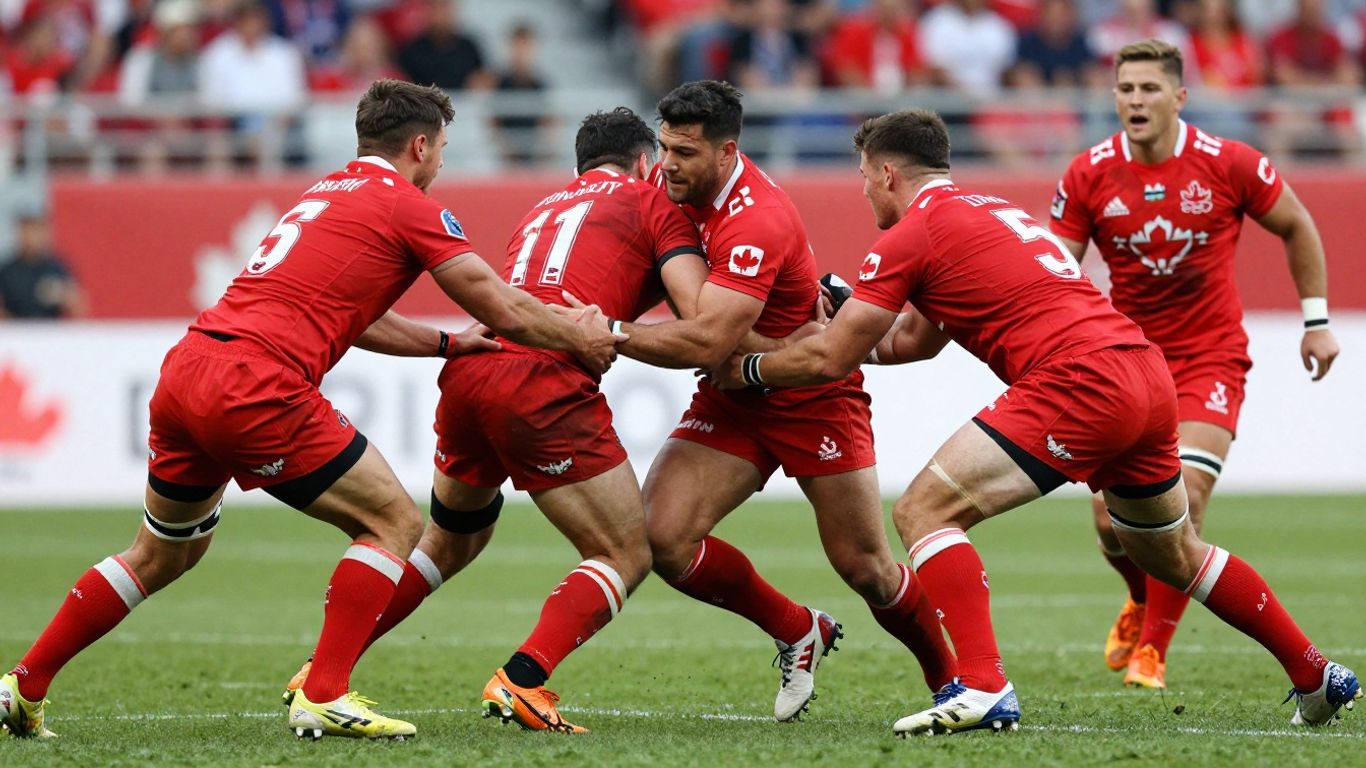
Getting consistent games on the international scene has been a bit of a puzzle for Canada Rugby League. The global rugby calendar is pretty much set around the big players in Europe and the Southern Hemisphere, which makes it tough for developing nations like Canada to find regular spots. It feels like Canada’s schedule has been a bit stop-start, with long gaps between matches. For example, there was a period where the men’s national team had no games lined up for ages, which really doesn’t help build momentum or give players much-needed experience.
The international rugby calendar, while structured around established leagues, often leaves developing nations like Canada struggling for consistent game time. This lack of regular fixtures directly impacts player development and national team performance.
Recent International Fixtures
Things have been looking up a bit lately, though. The women’s team, for instance, has been part of the Pacific Four Series since 2021. This competition, featuring Canada, the USA, New Zealand, and Australia, also acts as a qualifier for the WXV tournament. And get this – in 2024, Canada actually won the Pacific Four Series, beating the mighty Black Ferns 22-19 in Christchurch. That was a massive win, their first ever against the six-time world champions!
On the men’s side, while games have been scarce, efforts have been made to get some matches played. They’ve managed to organise games against teams like Fiji and Tonga, with support from World Rugby. A tournament in Spain last year, featuring Canada, the USA, Spain, and Brazil, was another step towards getting more international exposure.
The Road To Rugby World Cup Qualification
Qualifying for the Rugby World Cup is the big dream, but it’s a tough road. For the 2025 Rugby League World Cup, Canada was unfortunately denied a chance at one of the final spots. The remaining berths went to France and the Cook Islands after their playoff matches. Canadian officials were told that building up the domestic game is key to future qualification chances. Right now, the Canadian men are ranked 30th in the world, a position largely due to not playing enough games. Players like Josh Zimmerle, who plays semi-pro in Australia, are trying to help from afar, hoping that events like the NRL’s annual visit to Las Vegas might spark more interest back home and help grow the game for future World Cup bids.
The Road Ahead
So, looking back at Canada Rugby League’s journey, it’s clear there have been some real ups and downs. From those early days with touring teams showing up on home soil, to the challenges of building a strong domestic game today, it’s been a bit of a rollercoaster. The players, both men and women, show incredible heart and commitment, often having to make big sacrifices just to get a game in. While there’s been some great moments, like the women’s team making that World Cup final, there’s still a fair bit of work to do. Getting more games played, finding ways to support players better, and building up the sport across the country are all big jobs. But with the passion that’s clearly there, and with some smart planning, Canada Rugby League has a real chance to keep growing and make its mark on the world stage.
Frequently Asked Questions
How did rugby start in Canada?
Rugby’s roots in Canada go way back! It really got going when English and American football split in 1882. Back then, travelling teams from places like France, New Zealand, and Australia would visit Canada, showing off their skills and helping Canadian players learn. Imagine seeing the best players in the world right on your home turf!
What are the main problems Canada Rugby League faces?
Canada Rugby League faces a few hurdles. It’s tough financially because they’re not a top-tier nation. There isn’t a strong local competition for players to compete in regularly. Plus, getting players to stick around and develop their skills in Canada is a big challenge.
What’s happening with the Canadian Women’s Rugby team?
The women’s team has big dreams, like winning the World Cup, but they’ve hit some bumps. They face money problems and don’t always have the best resources. Even though they’re really committed and play with a lot of heart, getting enough funding to train and compete properly is a constant struggle.
What’s being done to improve rugby in Canada?
They’re working on setting up special training centres in different cities to help players improve. They’re also looking into creating professional leagues within Canada, maybe even joining something like Major League Rugby. Getting more international games is also a big part of their plan to get better.
How does Canada Rugby League perform on the world stage?
It’s a bit of a mixed bag. They’re working hard to compete, but the international calendar is tricky because it’s mostly set up for the big rugby nations. They’ve had some good moments, like winning the Pacific Four Series recently, but getting to major tournaments like the Rugby World Cup is a tough road.
Why is it hard for Canadian players to play professionally in Canada?
It’s tough because Canada isn’t considered a top rugby country. This means there aren’t many professional teams or leagues right here. So, many talented Canadian players have to go overseas to places like the UK or France to play professionally and get the high-level games they need to improve.