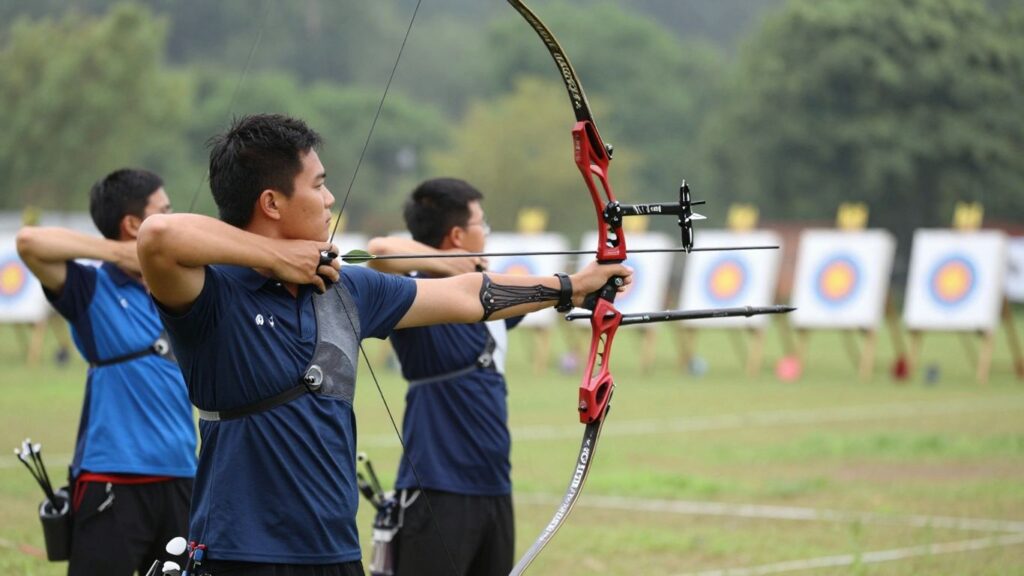
Thinking about getting into archery in Australia? Field archery might be just the ticket. It’s a bit different from shooting at a static target on a flat range; this sport takes you outdoors, often through bushland, with targets set up at various distances and angles. It’s a great way to test your skills and get a feel for what hunting might be like, all while enjoying the Australian scenery. We’ll walk you through what field archery is all about, what you’ll need, and how to get started.
Key Takeaways
- Field archery Australia involves shooting at targets set up along a course, often in natural settings, mimicking hunting scenarios.
- Courses can vary greatly, with targets placed at different distances and angles, requiring archers to adapt their shots.
- You’ll need the right gear, including a bow, arrows, and accessories, suited for outdoor conditions in Australia.
- Developing consistent shooting form, aiming, and release techniques is vital for accuracy.
- The mental side of field archery, including focus and managing pressure, plays a big role in performance and enjoyment.
Understanding Field Archery Australia
What Is Field Archery?
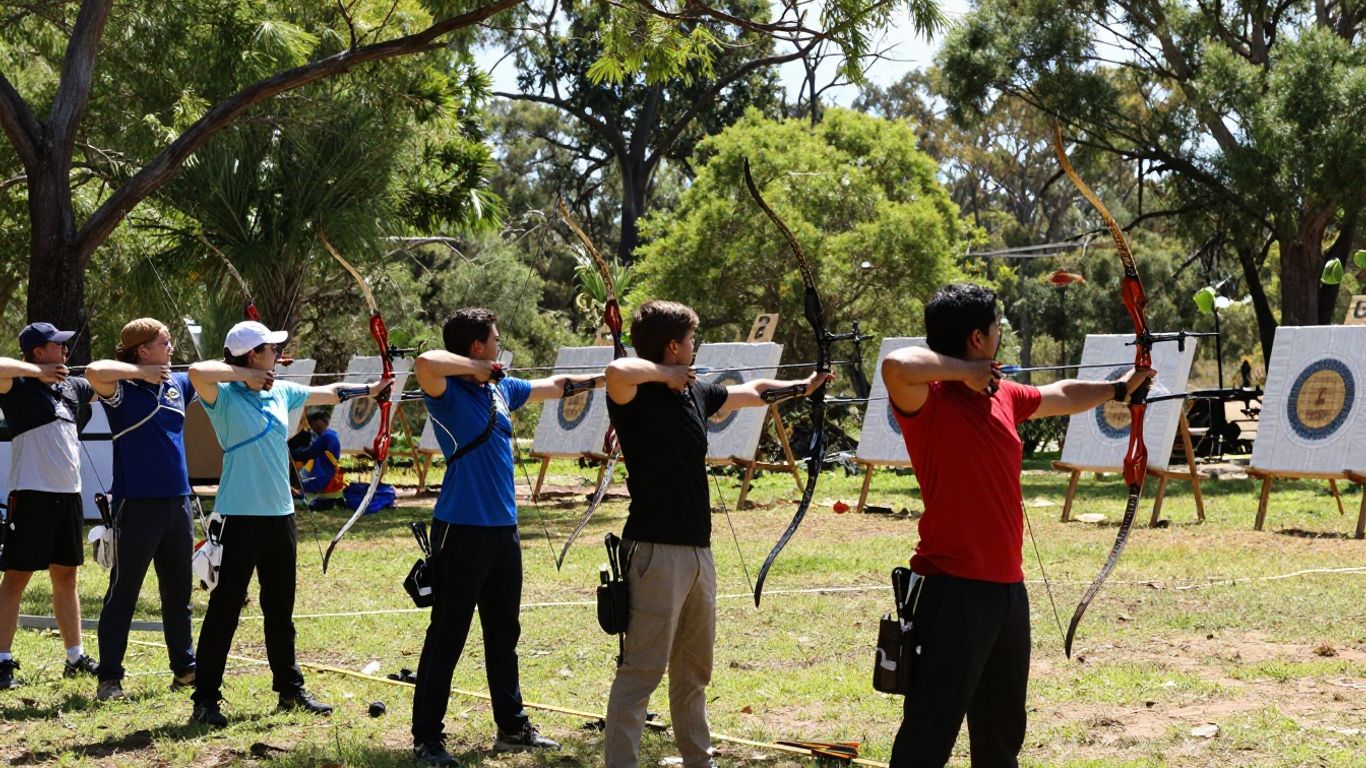
Field archery is a bit different from the target archery you might see in the Olympics. Instead of shooting at flat targets on a perfectly flat field, you’re out in nature, often in bushland or forests. Think of it as a bit of a treasure hunt for archers. You walk a course, and at different spots, there are targets set up. The trick is, you don’t always know exactly how far away they are, and they can be at all sorts of angles – uphill, downhill, you name it. It’s designed to test your skills in conditions that feel a bit more like actual hunting.
The Appeal Of Field Archery Australia
So, why do people love field archery here in Australia? For starters, it gets you outdoors and exploring some pretty amazing natural spots. It’s not just about hitting the bullseye; it’s about the challenge of judging distances and angles in a real-world setting. Plus, it’s a fantastic way to prepare for hunting if that’s your thing, teaching you to make accurate shots under less-than-ideal circumstances. It really hones your ability to adapt and shoot well, no matter the terrain.
Key Elements Of The Sport
Field archery is pretty straightforward once you get the hang of it. Here are the main things to keep in mind:
- The Course: You’ll follow a marked path through natural terrain. Each ‘station’ has a target.
- Target Distances: Targets are set at various distances, and you often have to figure them out yourself. Sometimes there are marked stakes, other times you’re guessing.
- Shooting Angles: Expect to shoot from different elevations – uphill, downhill, or on the flat. This really tests your form and ability to adjust.
- Scoring: Usually, targets have different coloured rings, with the centre being worth the most points. You get a score for each arrow you shoot.
Field archery really pushes you to think on your feet. It’s not just about a perfect stance; it’s about reading the environment and making smart decisions before you even draw your bow. This makes every shot a little puzzle to solve.
Navigating The Field Archery Course
So, you’ve got your gear sorted and you’re ready to hit the field. But what exactly does a field archery course look like? It’s not just a flat field with targets lined up, oh no. Field archery courses are designed to really test your skills, often taking you through natural terrain that mimics hunting situations. Think uneven ground, different angles, and targets hidden amongst the trees. It’s all part of the challenge and the fun.
Course Design And Layout
Field archery courses are typically set up in natural environments like forests or parks. You’ll walk a marked path, often called a ‘trace’, from one shooting station to the next. Each station will have a designated shooting peg or area, and the targets are placed at varying distances and sometimes at different heights. The layout is usually designed to make you think about your shots, not just blast away. You might be shooting uphill, downhill, or even across a small gully. It’s a bit of a workout too, so wear comfy shoes!
Target Distances And Angles
One of the defining features of field archery is the unknown distances. Unlike target archery where distances are marked, here you’ll often have to estimate. There are usually four targets per ‘field’ or ‘unit’, and they’re set at different distances. Sometimes, you’ll have a rangefinder, other times you’re relying on your judgement. The targets themselves are usually black and white concentric rings, similar to target archery, but the real trick is figuring out how far away they are and what angle you’re shooting from. This is where practice really pays off.
Here’s a general idea of target distances you might encounter:
| Target Face Size | Distance Range (Metres) |
|---|---|
| Small | 10 – 40 |
| Medium | 15 – 50 |
| Large | 20 – 60 |
Simulating Hunting Scenarios
This is where field archery really shines for many people. The courses are deliberately set up to replicate real-world hunting conditions. You’ll find yourself shooting from behind trees, over logs, or from uneven stances. The targets are often placed in spots where a hunter might encounter game. This makes it a fantastic training ground for anyone interested in bowhunting, or just for those who enjoy the challenge of shooting in a more natural, less predictable setting. It really makes you think about your shot placement and how you’d approach a real animal. Archery Australia offers a wide range of resources tailored for high-performance athletes, which can be beneficial for honing these skills.
The beauty of a field archery course lies in its unpredictability. It demands more than just a good shot; it requires you to read the terrain, judge distances on the fly, and adapt your shooting position. Every station is a new puzzle to solve, making each round a unique experience.
Essential Field Archery Equipment
Alright, so you’re keen to get into field archery, and that’s grouse! But before you can start sending arrows downrange, you need the right gear. It’s not just about grabbing any old bow; the equipment you choose can really make a difference to your experience and your scores. Let’s break down what you’ll need.
Choosing Your Bow
This is probably the biggest decision you’ll make. For field archery, you’ve generally got a few main types of bows to consider:
- Recurve Bows: These are classic. They’re often simpler, lighter, and don’t have all the bells and whistles of compound bows. Many beginners start here, and they’re great for developing good form. You can get traditional recurves or more modern ones with sights and stabilisers.
- Compound Bows: These are the high-tech option. They use a system of pulleys and cables to make drawing the bow easier and to hold the draw weight steady at full draw. This means you can hold your aim for longer without as much fatigue. They’re powerful and accurate, but also more complex and usually heavier.
- Traditional (Longbow/Selfbow): If you’re really into the purist approach, these are for you. They’re simple sticks of wood with a string, and they demand a lot of skill and practice to shoot well. Definitely not for the faint-hearted!
When picking a bow, think about your strength, your budget, and what feels comfortable in your hands. Don’t be afraid to try a few out if you can. Getting a bow that fits you properly is way more important than having the most expensive one.
Arrows and Accessories
Once you’ve got your bow, you’ll need arrows. These need to be matched to your bow’s draw weight and length. Getting this wrong means your arrows won’t fly straight, and you’ll be chasing your tail. You’ll also want:
- Quiver: To hold your arrows. Hip quivers are common for field archery.
- Armguard: Protects your forearm from the sting of the bowstring.
- Finger Tab or Release Aid: Depending on your bow type and preference, this protects your fingers or provides a mechanical way to release the string.
- Stabilisers: These help to balance the bow and reduce vibration, making your shots smoother.
- Sights: For more precise aiming, especially on compound bows.
Equipment for Australian Conditions
Australia’s a big place with varied weather. While you don’t need a whole new setup for every condition, keep a few things in mind:
- Durability: Our sun can be harsh. Look for equipment that’s built tough and can handle being out in the elements. Some materials might fade or degrade faster than others.
- Weight: If you’re out on a long course on a hot day, a lighter bow and accessories will be your best mate. Compound bows can be heavier, so consider that if you’re doing long walks.
- Maintenance: Dust and dirt are part of the Aussie landscape. Make sure you know how to clean and maintain your gear to keep it in top nick. A bit of regular care goes a long way.
Choosing the right equipment is a personal journey. What works for one archer might not be ideal for another. It’s worth chatting to experienced archers at your local club or pro shop. They can offer heaps of advice based on their own experiences and the specific demands of field archery in Australia.
Mastering Field Archery Techniques
Alright, so you’ve got your gear sorted and you’re ready to hit the field. But just having the right bow and arrows isn’t the whole story, is it? To really nail those shots out on the course, you’ve got to get your technique dialled in. It’s all about building a repeatable process, shot after shot.
Stance and Form
First things first, your stance. Think of it as the foundation for everything else. You want to be stable, balanced, and comfortable. Most folks find a feet-shoulder-width apart stance works well, with your weight evenly distributed. Some archers prefer a slightly open stance, others a closed one – it really comes down to what feels right and allows you to hold steady. Your body should be facing somewhat towards the target, but not square on. Keep your shoulders relaxed, not hunched up.
When you draw the bow, it’s not just about pulling the string back. It’s a smooth, controlled motion. Your drawing arm should move straight back, and your back muscles should do most of the work. This is where that solid form really pays off, making sure you’re not just muscling the arrow to the wall.
Aiming and Release
Now, aiming. This is where you line everything up. Depending on your bow sight, you’ll be looking at pins or a dot. But it’s not just about seeing the target; it’s about finding that consistent anchor point. This is where you bring the string to the same spot on your face every single time – maybe under your jawbone or at the corner of your mouth. This anchor point is your reference, helping you aim consistently.
The release is arguably the most critical part of the shot. A good release is often described as ‘letting the bow do the work’. It’s not a flick of the wrist or a sudden jerk. Instead, it’s a smooth, controlled expansion of your back muscles that allows the string to slip cleanly from your fingers or release aid. A clean release prevents you from imparting unwanted movement into the arrow.
Consistency on the Range
So, how do you get good at all this? Practice, practice, practice. But not just mindless shooting. You need to focus on each step of the process. Break down your shot sequence and think about what you’re doing at each stage.
Here’s a simple sequence to focus on:
- Stance: Get set, feel balanced.
- Nock and Grip: Place the arrow, hold the bow lightly.
- Draw: Smoothly pull the string back using your back muscles.
- Anchor: Find your consistent spot on your face.
- Aim: Line up your sight and the target.
- Release: Execute a surprise, clean release.
- Follow-through: Maintain your form and sight picture after the shot.
Don’t be afraid to slow down, especially when you’re starting out or trying to fix a problem. It’s better to shoot fewer arrows with focus than to blast through a whole quiver without thinking. Pay attention to how the arrow flies. If it’s not going where you want, try to figure out why. Was your stance off? Did you rush the release? Small adjustments can make a big difference.
The Mental Game In Field Archery
Focus And Concentration
Field archery isn’t just about having a steady hand; it’s a real test of your brainpower too. You’ve got to really lock in on your target, ignoring all the other stuff going on around you. Think about it – you’re out in nature, maybe there’s a bit of wind, birds chirping, other archers moving about. Your job is to tune all that out and just see your target. It takes practice, like any skill. Some archers find that visualising the shot beforehand really helps them get into that zone. It’s like a mental rehearsal before you even draw the bow.
Dealing With Pressure
This is where things can get tricky. When you’re in a competition, especially if you’re in a tight spot or on a tough shot, the pressure can really build up. Your heart might start thumping, your hands could feel a bit shaky. It’s completely normal. The trick is learning to manage that feeling. Instead of letting it mess with your shot, you try to use it. Some people find focusing on their breathing helps. Taking a few slow, deep breaths can really calm your nerves. Others might have a little routine they do before every shot, like a quick check of their stance or grip, to keep them grounded.
Building Mental Resilience
Archery, especially field archery, is a marathon, not a sprint. You’re going to have good days and bad days. You’ll hit shots you’re proud of, and you’ll miss ones you thought you had in the bag. That’s just part of it. Building mental toughness means learning from those misses without letting them get you down. It’s about bouncing back. Every archer has faced moments where they felt like giving up, but the ones who stick with it are the ones who learn to pick themselves up, analyse what went wrong, and come back stronger for the next shot. It’s a process, and it takes time, but that resilience is what separates the good from the great.
Competitions And Community In Australia
Types Of Field Archery Events
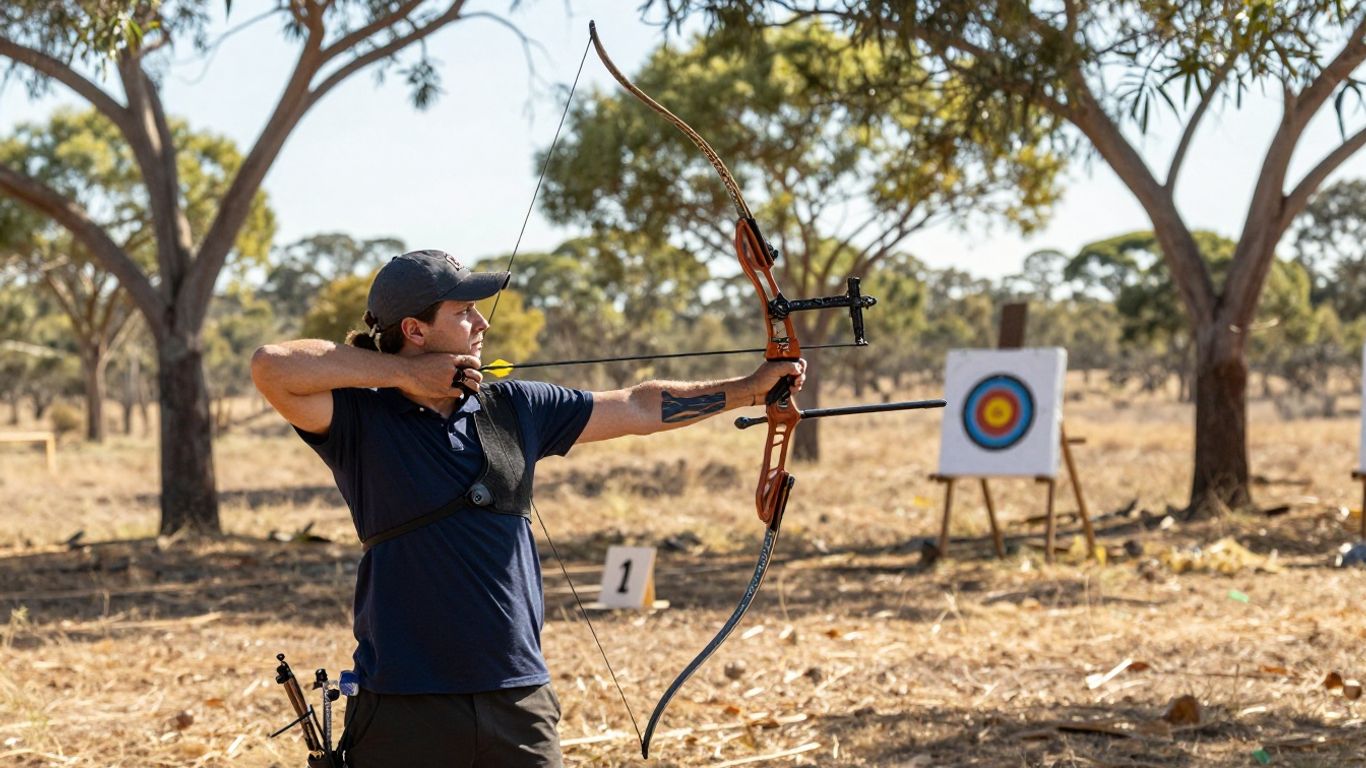
Field archery in Australia isn’t just one thing; there are a few different ways you can get involved in competitions. You’ve got your standard field rounds, which are pretty much the core of the sport, where you’re shooting at targets at varying distances and angles across different terrain. Then there’s often 3D archery, which is a bit more like hunting practice, shooting at those big foam animal targets set up in natural-looking spots. Some clubs might also run indoor events, especially during the colder months, which are great for honing your technique in a controlled environment. No matter your skill level, there’s a competition format that’ll suit you.
Here’s a quick look at some common event types:
- Field Rounds: The classic. Targets are set at unmarked distances, often with different scoring zones.
- Hunter Rounds: Similar to field rounds, but the distances are usually marked, and the targets might be smaller, demanding more precision.
- 3D Shoots: Targets are life-sized animal replicas, often set up in woods or fields to mimic hunting scenarios.
- Animal Rounds: Targets are pictures of animals, and you have to hit specific scoring zones on them.
Joining Field Archery Australia
Getting involved with Field Archery Australia (FAA) is pretty straightforward. They’re the main body that oversees the sport nationally, so they’re the ones to connect with for official competitions and rules. You’ll usually join through a local club affiliated with the FAA. These clubs are the heart of the community, organising regular shoots and training days. Checking out the FAA website is your best bet to find a club near you. They’ll have all the info on membership fees, what’s involved, and upcoming events. It’s a good way to meet people who are just as keen on archery as you are.
Sportsmanship And Camaraderie
One of the best things about field archery is the people you meet. Sure, everyone wants to shoot well and win, but there’s a really strong sense of mateship out on the course. You’ll see seasoned archers giving tips to newcomers, and everyone generally respects each other’s efforts. It’s not uncommon for friendly rivalries to turn into genuine friendships. People help each other out, share gear if needed, and celebrate good shots, regardless of who made them. It’s this blend of personal challenge and community spirit that makes field archery so enjoyable for so many.
The spirit of field archery thrives on mutual respect and shared passion. While the focus is on individual performance and hitting the mark, the journey is often made richer by the connections forged with fellow archers. It’s a sport where you can push your own limits while simultaneously being part of a supportive network, cheering each other on through every arrow loosed.
Ready to Hit the Mark?
So, there you have it. Field archery is a pretty cool sport, whether you’re just starting out or you’ve been shooting for ages. It’s a great way to get outdoors, challenge yourself, and meet some decent people along the way. From the thrill of hitting a distant target to the quiet focus needed on the course, it’s got a bit of everything. If you’re keen to give it a go, have a look around for local clubs or ranges – you might be surprised at what’s happening right in your backyard. Who knows, you might just find your new favourite way to spend a weekend.
Frequently Asked Questions
What’s the main idea behind Field Archery Australia?
Field Archery Australia is all about shooting arrows at targets set up in natural outdoor settings, kind of like a treasure hunt for archers! It’s designed to be a bit like hunting, with targets at different distances and angles, making you think about your shots.
Is Field Archery hard for beginners?
Not at all! It’s a great sport for everyone, no matter your skill level. You can start with simpler courses and gradually work your way up. The main thing is to learn the basics and have fun out there.
What sort of gear do I need to start?
You’ll need a bow, of course, and some arrows that match it. Most people start with a basic setup. As you get more into it, you might want to look at different sights, stabilizers, or releases to help you shoot better. Don’t forget comfortable clothes and shoes!
How do I get better at shooting accurately?
Getting good takes practice! Focus on your stance, how you hold the bow, and your release. Try to make every shot feel the same. Learning to stay calm and focused, especially when it counts, is super important too.
Are there competitions I can join?
Definitely! Field Archery Australia has all sorts of events, from local club shoots to bigger championships. It’s a fantastic way to test your skills, meet other archers, and be part of the community.
What makes Field Archery different from other types of archery?
Unlike shooting at a flat range, field archery takes you through different terrains with targets hidden amongst trees or over hills. This makes you adapt to uneven ground and changing distances, giving you a real challenge and a taste of what hunting might be like.