Key Takeaways
A heat pump can provide efficient heating and cooling, but the right choice depends on your home, climate and installation conditions.
- Heat pumps transfer heat rather than burning fuel, and reverse-cycle systems can heat and cool.
- System size should reflect room layout, insulation, windows and household routines.
- Installation quality affects comfort, noise, airflow, safety and running costs.
- Filters, outdoor clearances and condensate drainage need regular attention.
- Compare total ownership costs, warranties, rebates and electricity plans before deciding.
What a heat pump is and how it works
A heat pump uses electricity to move heat between your home and the outdoors. That makes it different from a heater that creates warmth by burning fuel or passing electricity through a resistance element. For Australian households, the appeal is the ability to manage both heating and cooling with one system.
The difference between heating and cooling modes
In cooling mode, the system removes heat from indoor air and releases it outside. In heating mode, the refrigerant circuit reverses, allowing the outdoor unit to collect available heat and move it indoors. The change happens through a reversing valve, so the same core equipment can serve two purposes across the year.
The result is not identical to a conventional heater. Air movement, thermostat settings and the location of the indoor unit all influence how evenly the room feels, particularly in open-plan homes.
How air-source heat pumps transfer heat
An air-source system uses a refrigerant circuit, compressor, coils and fans to transfer heat between indoor and outdoor air. Even cool outdoor air contains thermal energy; the system extracts that energy and raises its temperature before releasing it inside. In summer, the process runs in the opposite direction.
The basic concept is explained clearly in this heat pump operating guide, although Australian performance still depends on local weather, building design and the selected unit. It is useful to think of the appliance as moving heat, not manufacturing it from nothing.
Reverse-cycle systems compared with traditional heaters
A reverse-cycle air conditioner is a type of air-source heat pump that can switch between heating and cooling. Traditional electric heaters may be simple to install, but they turn electricity directly into heat rather than moving existing heat. Gas and wood systems have their own installation, ventilation, fuel and maintenance considerations.
A heat pump may therefore offer more flexibility, especially where a household would otherwise need separate cooling and heating appliances. It still needs correct sizing and sensible operation; efficiency on a product label does not remove the effects of draughts or poor insulation.
Why heat pumps can work efficiently in Australian climates
Much of Australia has relatively mild winter conditions compared with colder parts of the world, which can suit air-source technology. Coastal areas, southern cities and many regional locations may have long periods when the system can operate without extreme demand. Very cold mornings, heatwaves and poorly insulated rooms can still increase energy use.
The most useful assessment is local rather than theoretical. Consider the climate zone, the home’s exposure, the hours people are present and whether the system will heat one room or the whole dwelling.
Choosing the right heat pump for your home
Choosing among heat pumps home options starts with the building rather than a brochure. A small bedroom, a high-ceilinged living area and a multi-storey house each place different demands on a system. Think about where comfort is needed, how often rooms are occupied and whether you want a discreet or central installation.
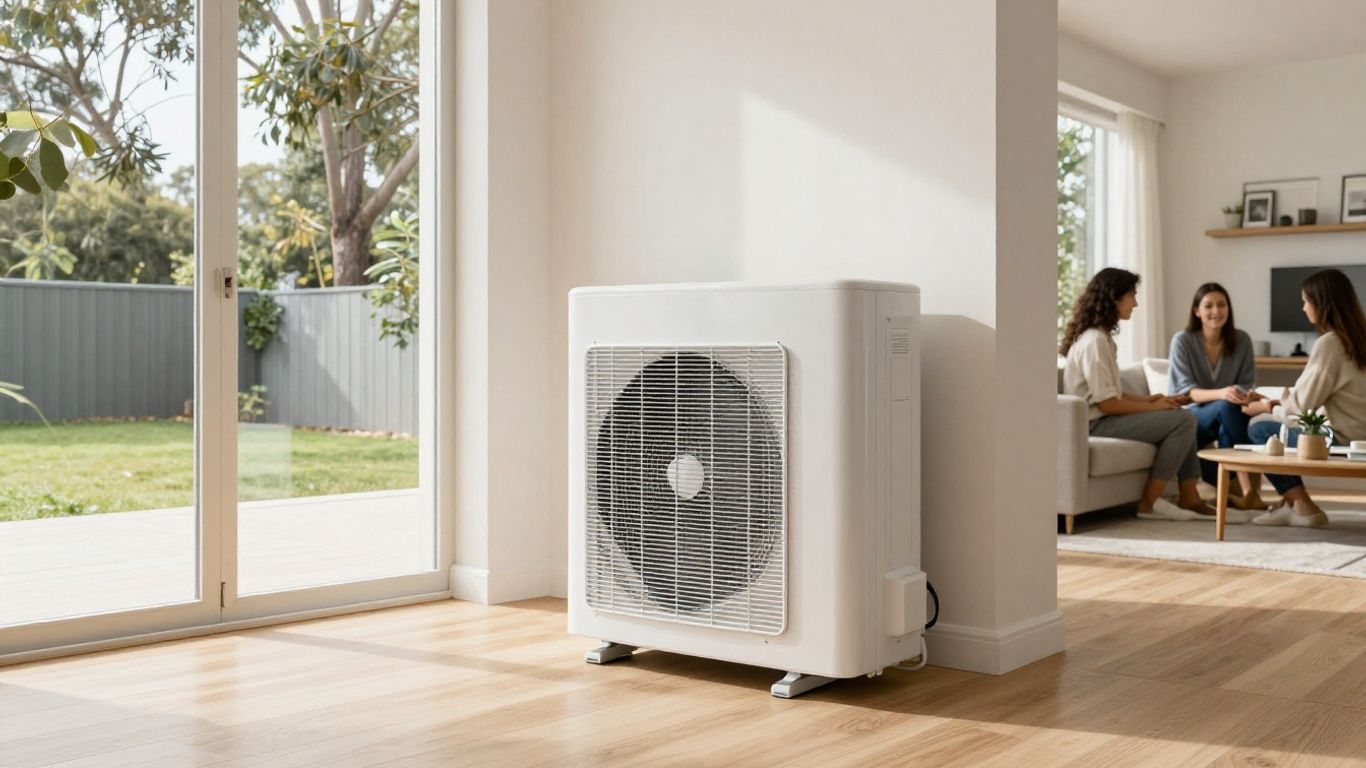
Split-system, ducted and hydronic heat pump options
Split systems have an indoor head connected to an outdoor unit and are often practical for one room or a small number of zones. Ducted systems distribute conditioned air through ceiling or floor outlets, while hydronic heat pumps warm water that circulates through radiators or underfloor pipework. Each approach affects installation complexity, control and the way warmth is delivered.
A split system can be easier to add to an existing home, whereas ducted or hydronic designs may make more sense during a renovation or new build. Ask whether the proposed arrangement genuinely suits the structure rather than assuming the most expensive option is the most comfortable.
Matching system capacity to room size and layout
Capacity should be assessed using more than floor area. Window orientation, ceiling height, insulation, shading, adjoining rooms and the number of occupants all change the heating and cooling load. An oversized unit can cycle frequently and create uneven comfort, while an undersized unit may run hard without reaching the desired temperature.
An installer should explain the basis for the capacity recommendation. If the calculation is unclear, seek another opinion before signing, particularly for a whole-home system.
Climate, insulation and household usage considerations
A well-sealed home generally asks less of its heating and cooling equipment. In a draughty older house, sealing gaps, improving insulation and managing direct sun may deliver comfort benefits before or alongside a new heat pump. Household routines matter too: a system used briefly in one living room has a different demand profile from one running across several bedrooms overnight.
For practical ways to reduce winter demand, readers can also explore cheap ways to heat a room. The advice is not a substitute for a properly sized appliance, but small building improvements can make the system easier to live with.
Features that affect comfort and energy consumption
Features such as zoning, inverter control, sleep settings, timers, remote access and air-direction adjustment can affect how a system feels in daily use. Automatic defrosting and quiet operation may be particularly relevant in colder or noise-sensitive locations. Check which functions are included, rather than assuming every model offers the same controls.
A useful shortlist should separate genuine needs from novelty features. The best setting is often the one household members will use consistently without constant manual adjustment.
Heat pump installation in Australian homes
Installation has a direct bearing on safety, performance and long-term satisfaction. The outdoor unit needs clear airflow and a stable base, while the indoor equipment must distribute air without creating uncomfortable drafts. A good installer will discuss the house, not simply measure a wall and name a model.
Where outdoor and indoor units should be positioned
Outdoor units need ventilation, service access and protection from likely flooding, falling debris and accidental damage. They should not be boxed into a tight enclosure that restricts airflow. Indoor units work best where air can circulate through the occupied area, away from obstructions and places where direct airflow will be irritating.
Noise also deserves a conversation with neighbours and household members. A technically possible location may still be a poor choice if vibration travels through a bedroom wall or the unit sits beside an outdoor entertaining area.
Electrical requirements and switchboard considerations
A qualified installer should check the circuit, isolation arrangements, cable routes and switchboard capacity before work begins. Older homes may need electrical upgrades, and the final requirements depend on the selected equipment and the existing installation. Do not treat electrical work as an afterthought.
The quote should state what is included, including any switchboard changes, penetrations, brackets, drainage work and removal of old equipment. Clear scope reduces the chance of an unexpected variation.
Ductwork, airflow and zoning decisions
Ducted systems need properly planned routes, return-air paths and outlets. Poorly designed ductwork can create hot and cold spots, pressure problems and unnecessary fan energy. Zoning may reduce conditioning in unused rooms, but it needs to be designed around the minimum operating requirements of the system.
For a broader home-services decision, the same habit applies when checking a Belconnen plumbing service: verify credentials, clarify the scope and ask for a detailed quote. The tradesperson may be different, but the principle of checking work before it starts is useful.
Choosing a qualified installer
Look for appropriate licensing, experience with the proposed system and evidence of compliant installation practices. Ask who will perform the work, what warranty applies to labour and equipment, and how faults will be handled. A rushed quote with no site discussion deserves caution.
A qualified installer should also explain the controls and leave the owner with documentation. Proper commissioning is part of the job, not an optional courtesy after the unit is switched on.
Heat pump running costs and energy efficiency
Running costs vary with the home, weather, electricity tariff, set temperature and hours of operation. A heat pump is not automatically cheap in every situation, although moving heat can use less electricity than direct electric heating for the same comfort outcome. The fairest comparison includes purchase, installation, maintenance and expected service life.
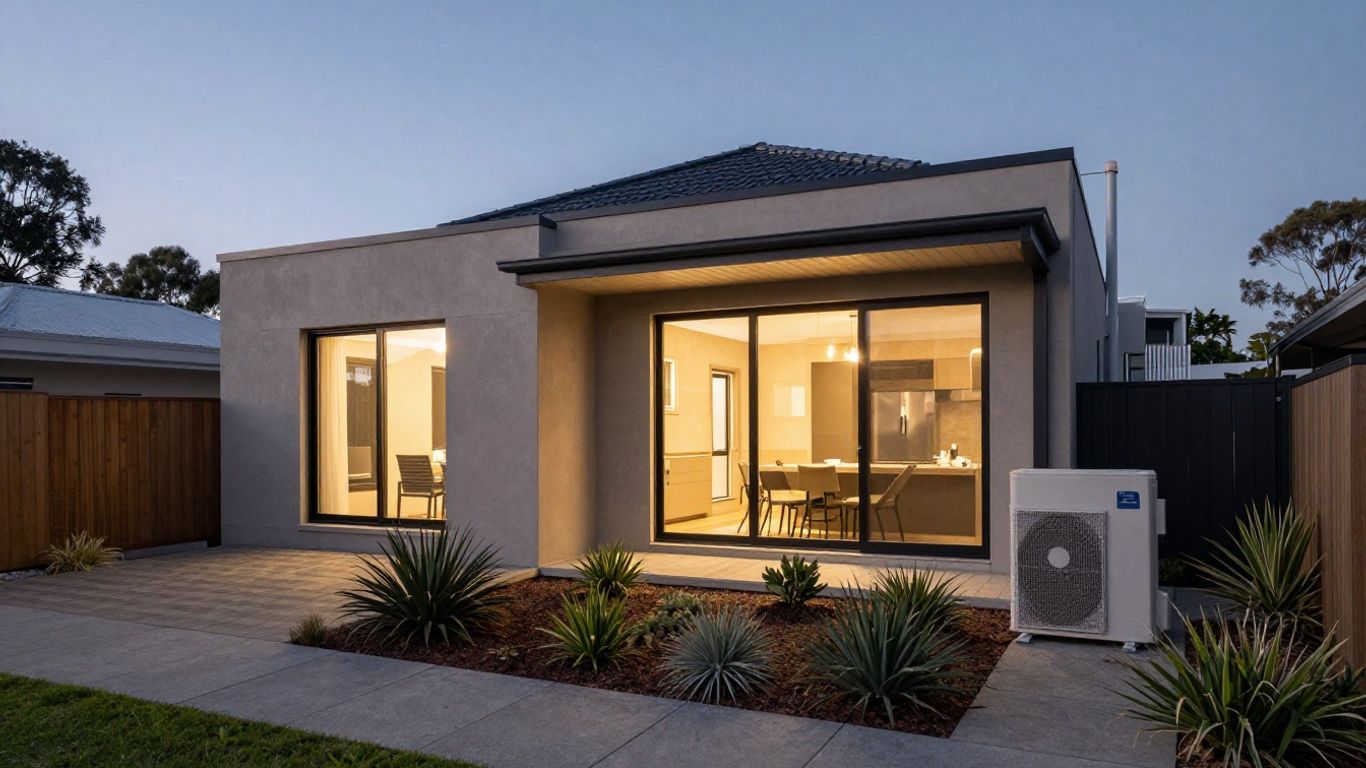
What influences daily and seasonal energy use
Outdoor temperature, humidity, solar exposure and the condition of the building all affect demand. Keeping a room several degrees warmer in winter or cooler in summer can increase consumption, as can leaving doors open between conditioned and unconditioned spaces. Frequent filter blockage also makes the fan work harder.
Use a steady, reasonable set point and avoid treating the thermostat as a performance switch. In many homes, improving draught control and insulation is as valuable as changing a setting on the appliance.
Understanding efficiency ratings and performance labels
Performance labels help compare models, but they are not a promise of a particular household bill. Read the heating and cooling ratings, noise information, operating range and any seasonal figures relevant to your climate. Ask how the unit performs at the conditions most likely in your area.
A quote should identify the exact model number rather than using a broad product family name. That detail makes it easier to compare like with like and check warranty terms.
Comparing heat pump costs with gas, electric and wood heating
Comparison depends on local electricity and gas prices, fuel delivery, existing infrastructure and the condition of the current heater. Wood can involve storage, handling and flue maintenance, while gas systems require attention to supply and ventilation. Direct electric heaters may have a lower purchase price but can cost more to operate for sustained heating.
The following framework keeps the comparison practical:
| Cost area | Heat pump | Existing heating system | What to check |
|---|---|---|---|
| Purchase and installation | Equipment, electrical work and mounting | Replacement or repair costs | Upfront quote and inclusions |
| Energy use | Electricity for compressor and fans | Electricity, gas or wood | Tariff and seasonal demand |
| Maintenance | Filters, drainage and servicing | Fuel, flue or mechanical upkeep | Recommended service intervals |
| Comfort and cooling | Usually one reverse-cycle system | May require separate cooling | Whole-home needs |
This table is a starting point, not a universal price ranking. Use actual usage history and current local tariffs when calculating the likely difference.
Using solar power, timers and smart controls to reduce bills
Solar generation can help cover daytime operation, while timers can avoid conditioning empty rooms. Smart controls may improve scheduling, but they should be simple enough for everyone in the household to use. Be careful with automatic changes that cause the system to work hard recovering from large temperature swings.
You can also watch for unusual patterns by checking electricity data after installation. A gradual increase may point to changing weather or use; a sudden jump can justify checking filters, settings or the equipment itself.
The benefits and drawbacks of home heat pumps
Heat pumps are attractive because one system can cover two major household needs. They can also suit homes moving towards electric appliances, particularly when paired with efficiency improvements or solar generation. The trade-offs are real, however, and vary with the building and installation proposal.
Lower emissions and improved energy efficiency
Because a heat pump transfers heat rather than directly generating all of it, it may provide more heating output for each unit of electricity consumed than resistance heating. Its environmental impact also depends on the electricity supply, refrigerant, equipment life and how much energy the home needs. Efficiency should therefore be considered alongside building performance.
Year-round heating and cooling from one system
Reverse-cycle operation can simplify household equipment and provide cooling during hot weather without a second major appliance. Individual split systems can target occupied rooms, while ducted systems can condition several areas. This flexibility is useful, but only if the design matches the way the home is actually used.
Noise, airflow and indoor comfort considerations
Fans create some sound, and air movement may feel noticeable in a quiet room. Indoor humidity, drafts and the position of the head or outlet can affect comfort even when the thermostat shows the desired temperature. Ask to hear a comparable unit operating if noise is a concern.
Upfront price, maintenance and possible limitations
Purchase and installation can cost more than replacing a basic portable heater. Outdoor space, electrical capacity, heritage constraints or difficult duct routes may limit the practical options. Heat pumps also need routine cleaning and may require professional attention when refrigerant or electrical faults occur.
The right decision is usually a balance between comfort, installation feasibility and long-term cost rather than a search for a perfect appliance.
Maintaining a heat pump system
Routine care is straightforward, but it should not be ignored. Dust and leaves reduce airflow, while blocked drainage can cause water leaks or shutdowns. Keep the manufacturer’s instructions and installation information somewhere accessible so future servicing is easier.
Cleaning filters and keeping airflow unobstructed
Clean indoor filters at the interval recommended for your household, and check them more often during dusty periods or heavy use. Keep furniture, curtains and stored items away from indoor air inlets and outlets. Restricted airflow can reduce comfort and place extra load on the fan.
Filter cleaning is generally a homeowner task, but damaged filters or persistent odours warrant further investigation. Never force a component that does not remove as the instructions describe.
Inspecting outdoor units and condensate drainage
Remove leaves and loose debris around the outdoor unit without bending the fins or spraying electrical components. Check that condensate lines discharge safely and that water is not pooling against walls, paths or foundations. In winter, some dripping during heating operation can be normal, but persistent leaks should be assessed.
Outdoor units should remain level and secure. New vibration, rattling or a change in airflow is worth recording before contacting a technician.
When professional servicing is needed
Arrange professional attention when the system repeatedly trips, fails to heat or cool, produces unusual sounds or shows signs of refrigerant or electrical trouble. Servicing may also be sensible before a high-use season, especially for older equipment or homes with heavy dust exposure.
Do not attempt to open refrigerant circuits or carry out electrical repairs yourself. A licensed professional can test components, inspect connections and confirm whether the system is operating safely.
Warning signs that a system needs repair or replacement
Weak airflow, uneven temperatures, water damage, persistent odours and rising electricity use can all indicate a problem. So can frequent cycling, error codes or a unit that struggles despite clean filters and unobstructed airflow. The cause may be minor, but early assessment can prevent secondary damage.
Replacement becomes more likely when repairs are frequent, compatible parts are difficult to source or the system no longer suits the home. Get a diagnosis before assuming a new unit is necessary.
Making the right heat pump decision
A sensible decision brings together technical information and everyday priorities. Compare the installed price with expected energy use, maintenance, comfort and the likely time you will remain in the home. Local conditions matter more than a generic online saving estimate.
Calculating the total cost of ownership
Start with the installed purchase price, then estimate electricity use using realistic hours and set points. Add likely servicing, filter replacement and any electrical or building work. If the system replaces separate heating and cooling equipment, include the costs those appliances would otherwise incur.
It can help to make three scenarios—low, typical and high use—rather than relying on one precise forecast. That shows how sensitive the decision is to weather and household habits.
Checking rebates, energy plans and installation warranties
Rebates and incentives change by state, territory and programme, so check current government and retailer information before relying on them. Ask whether eligibility depends on the model, installer, home type or disposal of an old appliance. Electricity plans should be compared using your broader household consumption, not just the heat pump.
Read both equipment and workmanship warranties. Also clarify who handles a fault when the appliance and installation are covered by different parties.
Comparing quotes and system specifications
Request itemised quotes that identify capacity, model number, installation inclusions, electrical work, warranty and commissioning. Compare noise ratings, controls, zoning arrangements and expected service access as well as price. A low quote may exclude important work, while a high quote is not automatically better.
For other property upgrades, homeowners may also encounter options such as heated gutters, seamless gutters or Boling Construction. Those are separate projects, but they illustrate why climate, materials, installation detail and long-term maintenance should be considered together rather than judged by headline price alone.
Deciding whether a heat pump suits your home and climate
A heat pump is often worth investigating when you want both heating and cooling, have suitable outdoor space and can improve insulation or draught control. It may be less straightforward where electrical upgrades are difficult, rooms are poorly connected or a heritage property restricts equipment placement. A site assessment will expose those issues early.
Before committing, write down the rooms to be conditioned, preferred temperatures, operating hours and non-negotiable noise or appearance concerns. That short brief will help an installer recommend a system that fits your actual life.
Conclusion
A well-chosen and properly installed heat pump can make Australian homes more comfortable across the seasons, but efficiency is a property-wide outcome rather than a label alone. Assess the building, compare whole-of-life costs, check the installation details and plan for routine care before making the change.
Frequently Asked Questions
What is a heat pump?
A heat pump is an electrically powered system that transfers heat between the outdoors and indoors. Reverse-cycle models can move heat in either direction for heating and cooling.
Are heat pumps suitable for Australian homes?
They can suit many Australian homes, particularly where one system is wanted for heating and cooling. Suitability depends on climate, insulation, room layout, outdoor space and installation conditions.
Do heat pumps work in cold weather?
Air-source heat pumps can operate in cold weather, although output and efficiency vary with outdoor conditions. Correct sizing and an appropriate model are important in colder regions.
Are heat pumps cheaper to run than electric heaters?
They may use less electricity than direct resistance heating because they transfer heat. Actual savings depend on tariffs, set points, insulation, weather, usage and the efficiency of the selected system.
How often should heat pump filters be cleaned?
Clean filters according to the manufacturer’s instructions and inspect them more often during dusty periods or heavy use. Blocked filters can restrict airflow and reduce comfort.
Do heat pumps need professional servicing?
Professional servicing is advisable when performance changes, faults recur, unusual noises develop or electrical or refrigerant work is required. Routine filter cleaning remains a basic homeowner task.
What should I ask an installer?
Ask about system capacity, placement, electrical requirements, noise, drainage, zoning, itemised costs, commissioning and both equipment and workmanship warranties.