
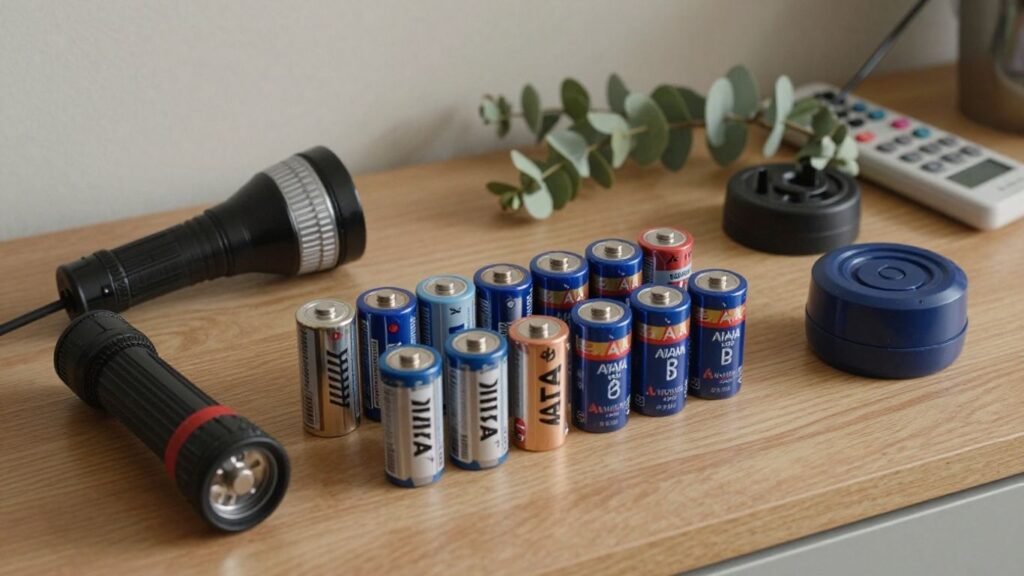
Key Takeaways
Choosing batteries is mostly a matter of matching the cell to the device, the way it is used and the cost of replacing it.
- Check the battery size, voltage and chemistry specified by the device.
- Alkaline cells generally suit more demanding everyday equipment than carbon zinc cells.
- Rechargeables can be economical when a device uses batteries regularly.
- Store batteries dry, cool and away from loose metal objects.
- Treat leaks, damaged cells and disposal carefully, following local recycling guidance.
Understanding Kmart batteries and the available options
Kmart batteries are available in several familiar household sizes and chemistries. The right choice depends less on the number of cells in a pack than on the device’s space, voltage and expected power draw. A remote control and a bright torch may both use AA cells, but they do not necessarily place the same demands on them. Checking the device instructions first is the simplest way to avoid a poor match.
AA and AAA batteries for everyday devices
AA and AAA cells are the sizes most often used around an Australian home. AA batteries are common in toys, torches, clocks and some wireless accessories, while AAA cells suit slimmer remotes, small keyboards and compact electronic devices. Before buying, compare the markings in the battery compartment rather than relying on memory; the two sizes are not interchangeable.
For low-drain equipment, a basic cell may be perfectly adequate, especially when the device is used only occasionally. If a device is used daily or draws power through a motor, camera flash or bright light, the manufacturer’s recommended chemistry deserves more attention than the pack’s headline price.
C and D batteries for high-drain equipment
C and D batteries are larger cells used where equipment needs more capacity or a physically larger battery. They can appear in lanterns, larger torches, radios, toys and some older household equipment. Their size does not automatically mean every C or D battery performs identically, so check whether the device specifies alkaline, rechargeable or another chemistry.
Large cells are also easy to leave in equipment for long periods. That makes correct storage and periodic inspection worthwhile, particularly in an emergency torch or camping kit that may sit unused for months.
9V batteries for alarms and specialist devices
The rectangular 9V battery is used in some smoke alarms, test equipment, audio accessories and other specialist devices. Its terminals are different from those of cylindrical cells, so it should never be forced into a compartment designed for AA, AAA, C or D batteries. For alarms, follow the alarm maker’s instructions and the replacement schedule rather than waiting for a warning chirp.
A 9V battery stored for emergencies should remain in its packaging until needed. Loose metal items can contact its terminals, so a drawer organiser or original packet is safer than a mixed container of cells.
Rechargeable batteries and charger compatibility
Rechargeable batteries can be useful when the same device consumes cells repeatedly. They need a charger designed for their chemistry and size, and the charger should be used according to its instructions. Do not assume a charger is suitable simply because the battery looks like a standard AA or AAA cell.
Capacity is often expressed in milliamp-hours, but a larger number is not the only consideration. Charging time, the device’s operating requirements and the age of the cells all affect practical performance. A small household supply of compatible rechargeables can reduce repeated purchases, provided the batteries are charged and stored properly.
Carbon zinc versus alkaline batteries
Carbon zinc batteries are generally associated with simple, low-drain devices, while alkaline batteries are commonly selected for equipment that needs more sustained output. That is a useful rule of thumb, not a substitute for the device manual. Product labels should state the chemistry clearly, and some devices will specify one option directly.
If you want to compare real-world experiences, these Kmart AA Carbon Zinc Batteries reviews discuss their use in low-drain devices and battery-operated lights. User feedback is only one part of the decision, but it can reveal how a cell behaves in the kinds of equipment you actually own.
Choosing the right Kmart batteries for your device
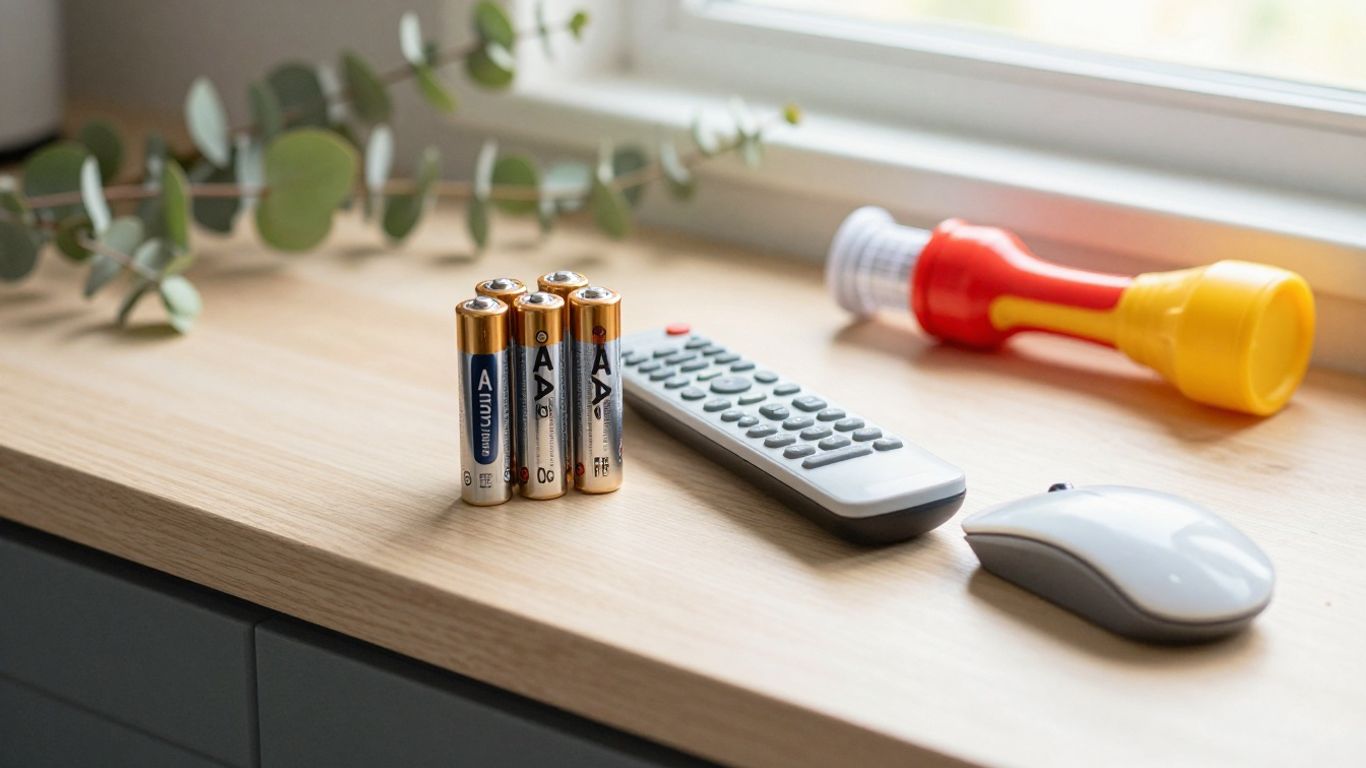
Choosing batteries starts with the device, not the shelf display. Look inside the battery compartment, read the manual where available and note both the required size and the number of cells. Consider whether the item is used occasionally, continuously or in short bursts of high demand. Those details help narrow the choice before price becomes the deciding factor.
Matching battery size and voltage
Battery size and voltage are separate specifications. A device may need two AA batteries, for example, while another uses two AAA batteries, even though both sets provide the same nominal voltage per cell. The compartment marking should show the correct orientation and number of batteries.
Never substitute a different size because it appears to fit, and do not mix cells with different voltages. If the device requires a battery type that is not readily available, check the manual or ask the manufacturer before trying an alternative.
Checking the device’s power requirements
The device’s power pattern matters as much as its label. A wall clock may draw a small amount steadily, while a toy motor or camera flash demands a stronger burst. Some manuals identify suitable chemistry, capacity or operating limits, which can save trial and error.
It is also worth checking for a standby function, rechargeable battery pack or faulty switch that could be consuming power when the item seems inactive. A battery that appears poor may simply be serving a device with an unusually high or continuous draw.
When to choose alkaline batteries
Alkaline batteries are a sensible starting point for many everyday devices that need more output than a simple clock or remote. They can suit toys, torches and accessories when the device instructions allow them. The choice is particularly practical when the equipment is used intermittently and you want cells that can be installed and left ready.
Compare the stated chemistry and pack size rather than assuming every similarly priced pack has the same performance. The cheapest pack is not always cheapest if a device needs frequent replacement or stops working at an inconvenient time.
When rechargeable batteries make more sense
Rechargeables deserve consideration when a household goes through batteries regularly. Game controllers, frequently used toys, wireless accessories and some photographic equipment can make repeated replacement costly and wasteful. The calculation is less attractive for a remote that receives occasional use and may run for years on one set.
A useful approach is to keep rechargeable cells for high-use equipment and a small number of suitable primary cells for infrequent or emergency devices. Rechargeables also need a compatible charger, careful labelling and enough spare cells to avoid waiting for a charge.
Why battery chemistry affects performance
Different chemistries store and deliver energy in different ways. That affects voltage behaviour, usable capacity, leakage risk, low-temperature performance and how well a battery handles bursts of demand. The result is why two cells of the same physical size can give noticeably different results in the same device.
When in doubt, follow the manufacturer’s chemistry recommendation. A device designed around a particular battery type may not work reliably with an alternative, even if the cell fits and appears to have the same nominal voltage.
Comparing Kmart battery value and performance
Price comparisons are most useful when they include the number of cells, chemistry and likely replacement interval. A large pack may be convenient but not good value if the batteries will sit unused beyond their useful life. Conversely, a smaller pack can cost more per cell while avoiding unnecessary stock. Think about what the household will use over the next year, not only what is cheapest at the checkout.
Comparing pack size and cost per battery
Divide the pack price by the number of cells to find the basic cost per battery. Then check whether the packs have the same size and chemistry; comparing an alkaline pack with a carbon zinc pack on price alone can give a misleading result. Also allow for devices that require two, three or four cells at once.
A simple comparison table can make the difference clearer when shopping across several options:
| Battery detail | Why it matters | What to check |
|---|---|---|
| Size | Determines whether the cell fits | AA, AAA, C, D or 9V marking |
| Chemistry | Affects output and intended use | Alkaline, carbon zinc or rechargeable |
| Pack quantity | Changes the cost per cell | Number of usable batteries |
| Best-before information | Helps with longer storage | Date and storage guidance |
After working out the unit price, consider whether the chemistry suits the device. A low unit cost has less value if the cells need replacing frequently or are unsuitable for the equipment.
Considering shelf life and storage
Shelf life matters for batteries bought as backups. Look for the date or storage guidance on the packaging and keep unused cells in a cool, dry place. Heat, humidity and loose contact with metal can all create problems over time.
Do not open a large pack simply to place every cell in a drawer. Leave unused batteries in their original packaging where possible, and rotate older cells into suitable devices before buying more.
Balancing upfront price with replacement frequency
The practical cost of a battery includes how often it needs replacing. A cheaper cell can be reasonable in a clock or remote that draws little power, while a more durable option may be less frustrating in a torch, toy or camera accessory. Keep a note of which devices use batteries quickly; that small bit of household information is more useful than a general claim about value.
For broader household budgeting, budgeting books can offer ideas for tracking recurring purchases and identifying small expenses that add up. Batteries are not usually a major cost, but repeated replacement is easy to overlook.
Evaluating performance for low-drain and high-drain devices
Low-drain devices typically reward shelf life and reliability more than peak output. High-drain equipment needs cells that can provide stronger, more sustained delivery, and it may expose weak or ageing batteries quickly. Use the device instructions as the main guide, then compare pack value within the suitable category.
A battery that performs well in a remote is not automatically the right choice for a bright torch or motorised toy. Matching the cell to the workload is more useful than treating one type as universal.
Reading product labels and customer reviews
Read the front and back of the pack for size, chemistry, quantity, storage guidance and any stated use recommendations. Reviews can add context, especially when several people describe the same device type, but individual experiences vary with equipment age and usage. Treat claims about performance as observations rather than guarantees.
The same careful reading applies to unrelated buying decisions. For example, a guide to real estate SEO may distinguish broad search terms from specific local intent; battery shopping benefits from a similar habit of separating general labels from the exact needs of your device.
Best uses for different Kmart battery types
There is no single best battery for every household item. Low-drain devices can often run for a long time on simple cells, while equipment with motors, bright lights or frequent wireless activity may need a more capable chemistry. Emergency equipment deserves its own routine because reliability matters more than a small saving. Sorting devices by use makes a household battery drawer easier to manage.
Remotes, clocks and basic household devices
Remotes, wall clocks, simple radios and some small household accessories are usually low-drain applications. Check the specified size and replace all cells in a set at the same time. Mixing old and new batteries can reduce performance and increase the chance that one cell is pushed beyond its useful life.
If an item is rarely used, remove the batteries before putting it away for an extended period. That simple step reduces the consequences of a leak and makes it easier to see which cells are available.
Toys, torches and wireless accessories
Toys, torches and wireless accessories vary widely in their power demands. A small occasional-use toy may be modest, while a motorised toy or bright torch can consume cells quickly. Watch for dimming, sluggish movement or intermittent connection, which may indicate that the batteries are nearing the end of their charge.
Keep spare cells with camping and household equipment, but avoid storing them loose in a bag. A small plastic case protects terminals and makes it less likely that new and used cells will be mixed.
Cameras, game controllers and other high-drain devices
Cameras, game controllers and similar equipment can place heavier demands on batteries, particularly during wireless activity, vibration or repeated flashes. Use the chemistry and capacity recommended by the equipment maker. Rechargeables may be convenient for frequent use, but only when the device and charger are compatible.
Give high-drain devices a dedicated set of batteries rather than moving partly used cells between several items. That makes performance easier to monitor and reduces the chance of one weak cell affecting the whole device.
Smoke alarms and emergency equipment
Smoke alarms and other emergency equipment should be maintained according to the manufacturer’s instructions. Test the alarm using its test control, replace its battery when directed and never treat a battery warning as something to silence indefinitely. Emergency torches should also be checked periodically rather than assumed to work because they are stored.
Keep emergency cells separate from everyday stock and record when they were installed. If an alarm has a sealed power unit or a specified battery type, follow that guidance rather than improvising.
Travel and backup battery kits
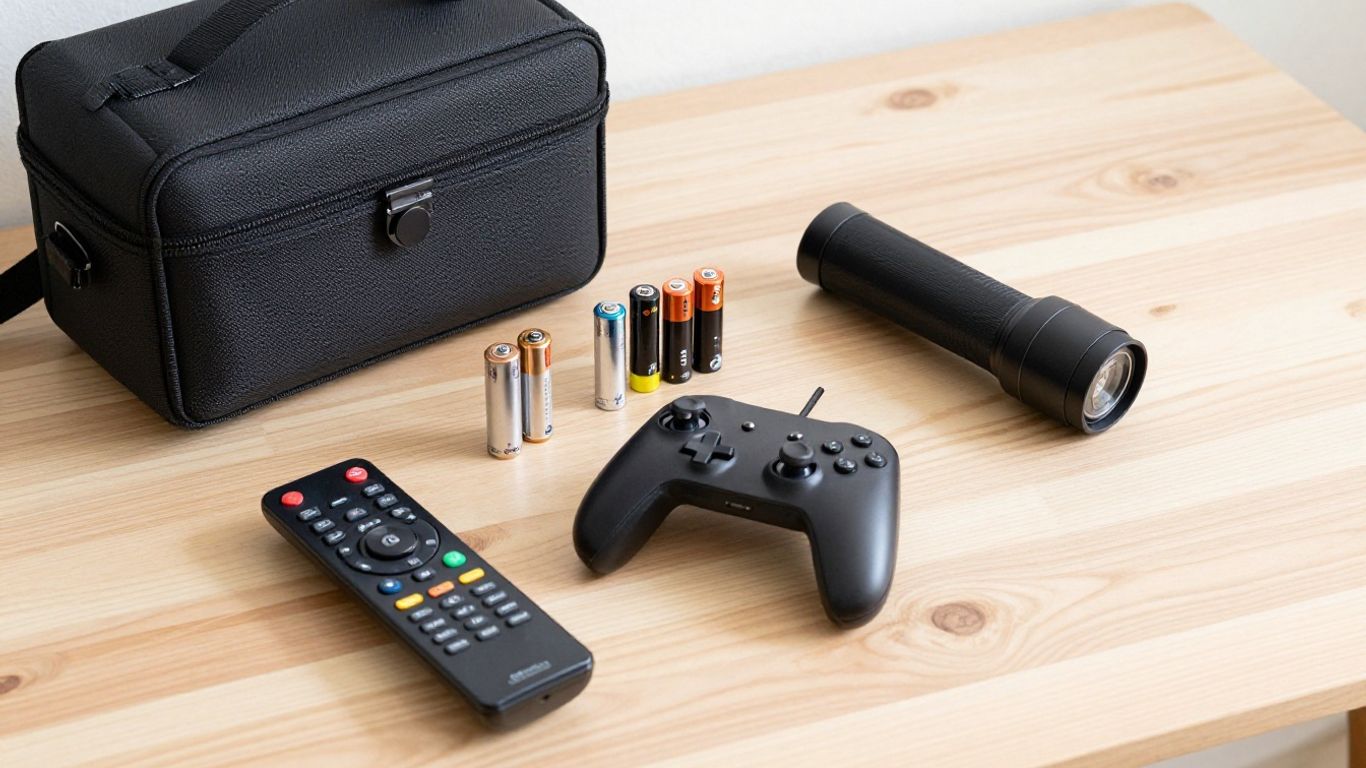
A travel or backup kit should contain only the sizes you actually use, along with a protective case. Count the cells before leaving, keep them away from keys and coins, and avoid carrying loose batteries in a pocket or luggage compartment. For air travel and larger battery packs, check the carrier’s current rules before departure.
A short demonstration can also help household members identify polarity and spot a damaged cell:
After watching or explaining the basics, label the case by size and keep used cells in a separate bag until they can be disposed of or recycled appropriately.
How to use and store Kmart batteries safely
Safe battery use is mostly routine rather than complicated. Install cells carefully, keep damaged batteries away from children and animals, and inspect equipment that has been stored for a long time. Batteries should never be heated, crushed, opened or deliberately short-circuited. If the instructions for a device conflict with general advice, follow the device and battery manufacturer’s directions.
Installing batteries with the correct polarity
The plus and minus symbols in the compartment show how each cell should face. Match them before closing the cover and do not force a battery that does not sit naturally. Some devices use batteries in alternating directions, so copying the arrangement from memory can be risky.
If the device does not work after installation, remove the cells and check each orientation rather than repeatedly pressing the power button. Incorrect polarity can prevent operation and may damage some equipment.
Avoiding leaks and corrosion
Leaks are more likely to become a problem when batteries are old, damaged, exposed to heat or left in an unused device. Inspect the compartment when opening stored equipment, especially if the item has been sitting for months. White or crusty residue around terminals is a warning sign that should not be ignored.
Do not use a leaking or swollen battery. Keep it away from skin and eyes, ventilate the area and follow local hazardous-waste or recycling advice for its disposal. The device may need careful cleaning or professional assessment if corrosion has reached its contacts.
Keeping new and used batteries separate
New cells should remain in their packaging or a dedicated container, while used cells should go into a separate collection bag or box. This prevents accidental mixing and makes it easier to identify which batteries are ready for disposal. Never store batteries with coins, keys, screws or other conductive objects.
A simple four-part household system can keep the drawer orderly:
- Store unused cells by size and chemistry.
- Keep partly used cells with the device they belong to.
- Place spent cells in a separate, labelled container.
- Check for swelling, damage or corrosion before reuse.
This arrangement takes little space and makes the next replacement safer. It also helps prevent a partly discharged cell being mistaken for a fresh one.
Storing batteries in a cool, dry place
A cupboard away from direct sun, heaters and damp areas is usually suitable for ordinary household batteries. Keep the packaging intact where possible and avoid storing cells in a refrigerator or freezer unless the manufacturer specifically says otherwise. Extreme temperatures can affect performance and create condensation problems.
Store batteries where children cannot access them. Button and coin cells require particular care because swallowing one can cause serious injury; seek urgent medical help if ingestion is suspected.
Disposing of or recycling used batteries responsibly
Do not put damaged, leaking or rechargeable batteries in household rubbish unless local authorities specifically direct you to do so. Battery recycling arrangements vary across Australia, so check your council, local collection point or retailer for current instructions. Tape terminals on some loose batteries if the collection service recommends it.
Keep different battery types together only when the collection provider allows it. The safest approach is to follow the instructions for the specific drop-off point rather than assuming every battery can go in the same bin.
Troubleshooting common battery problems
Battery problems are not always caused by the cells. A dirty contact, a loose cover, a jammed switch or a device fault can produce the same symptoms as a flat battery. Work methodically, starting with the simplest checks. Avoid testing a suspect cell by shorting its terminals or using unapproved equipment.
What to do when a device will not turn on
First check the battery size, number of cells and polarity. Then try a known working set that matches the device specification. Look for corrosion on the contacts, a damaged spring or a cover that is not closing firmly.
If the device still fails, remove the batteries and inspect the power switch and cable connections. A device that remains unresponsive with suitable fresh cells may need repair rather than another battery purchase.
Why batteries may drain quickly
Fast drain can result from high use, a motor, a bright light, wireless activity or a device that remains partially switched on. Cold conditions can also reduce apparent performance. Compare the runtime with the device’s normal pattern and check whether batteries are being mixed or reused across several items.
If multiple fresh sets drain quickly in the same device, stop treating the battery as the only suspect. The equipment may have an electrical fault or a setting that is consuming power continuously.
How to respond to leaking batteries
Turn the device off and move it away from children, pets and food. Do not touch residue with bare hands, and avoid using water or household chemicals unless the device manufacturer gives specific cleaning instructions. Wear suitable protection and dispose of the damaged battery through the appropriate local channel.
If the leak has affected skin or eyes, rinse with clean running water and seek medical advice. A badly corroded device may be unsafe to handle or not worth repairing without professional assessment.
When batteries appear flat straight out of the pack
Check that the pack is sealed, within its stated date and the correct type for the device. Test more than one cell if possible, because a single damaged or discharged battery can affect a complete set. Also check that the device itself is working with a known suitable battery.
Keep the receipt and packaging if several cells appear faulty. Product support or the retailer may need the batch information to investigate, and the batteries should not be opened or altered while you are checking the problem.
Signs that a charger or device may be faulty
A charger that becomes unusually hot, shows an error repeatedly, damages cells or fails to recognise compatible batteries should be taken out of service. Do not use a charger with a different chemistry or an improvised adapter. Inspect cables and plugs for fraying before every use.
A device may also be faulty if it overheats, smells unusual, flickers with fresh cells or drains several sets unusually quickly. In those cases, stop using it and seek qualified repair advice rather than continuing to experiment.
Are Kmart batteries right for your needs?
The sensible battery choice depends on how often a device is used, how much power it draws and how important uninterrupted operation is. Low-cost cells can work well for simple equipment, while specialist or rechargeable options may suit more demanding routines. A mixed household supply is often more practical than buying one chemistry for everything. The goal is dependable use at a reasonable total cost.
Situations where low-cost batteries can be practical
Low-cost batteries can make sense for infrequently used remotes, clocks, simple radios and occasional household gadgets. They are also convenient when you need a common size quickly and the device instructions allow that chemistry. Check the pack date and store the unused cells properly so the saving is not lost through waste.
For Australians trying to reduce everyday spending, practical saving money tips can help place small recurring purchases, including batteries, into a broader household budget. The value comes from matching the product to the job, not simply choosing the lowest shelf price.
When premium or specialist batteries may be preferable
Premium or specialist cells may be preferable for equipment used frequently, emergency devices or products with clear chemistry requirements. The extra cost can be justified when reliability, longer operating time or reduced replacement interruptions matters. Follow the device maker’s recommendation rather than assuming a premium label guarantees suitability.
The same principle applies to financial decisions: French property finance involves matching a route to income, assets and circumstances, rather than choosing on a single headline figure. Battery buying is much simpler, but the decision-making habit is similar.
Deciding whether to switch to rechargeable batteries
Rechargeables are worth considering when you replace batteries often and can maintain a compatible charging routine. Count how many cells the household uses in a month, then consider charger cost, replacement cells and the inconvenience of waiting for a charge. For occasional-use emergency equipment, primary cells may remain the more straightforward option.
A switch works best when rechargeable cells are labelled by set and kept with the right charger. Do not mix old and new rechargeable cells in the same device unless the manufacturer specifically permits it.
Creating a suitable battery supply for your home
Start with an inventory of every battery-powered device and group it by size, chemistry and frequency of use. Keep a small reserve for urgent needs, but avoid buying far more than the household can use within the storage period. Review the drawer every few months for leaks, damaged packaging and cells approaching their date.
A calm decision framework is useful for any household purchase. The Timeless Core approach discusses keeping basic principles in view when short-term metrics might otherwise dominate; here, those principles are safety, compatibility, reasonable value and responsible disposal.
Conclusion
The best battery choice is the one that matches the device’s size, voltage, chemistry and pattern of use. Compare cost per cell, but also consider replacement frequency, storage and the consequences of failure in equipment such as alarms or emergency torches. With a little organisation, the household battery drawer can stay safer, less wasteful and easier to manage.
Frequently Asked Questions
Are alkaline batteries better than carbon zinc batteries?
Not in every situation. Alkaline batteries are often a better fit for devices with greater or more sustained demand, while carbon zinc cells may suit simple low-drain equipment. Always follow the device instructions.
Can different battery brands be mixed in one device?
It is best not to mix brands, ages or chemistries in the same device. Use a matched set of the correct size and replace all cells together when the device requires multiple batteries.
Should batteries be stored in the fridge?
Generally, no. Store ordinary household batteries in a cool, dry place away from direct sunlight and heat. Follow the manufacturer’s storage guidance if it differs.
How can I tell if a battery is leaking?
Look for swelling, a damaged casing or crusty residue around the battery and device contacts. Do not handle leaking cells with bare hands; isolate them and follow local disposal guidance.
Do rechargeable batteries work in every device?
Not necessarily. Check the device instructions and the rechargeable battery’s chemistry, voltage and size. You also need a charger designed for that battery type.
Why do new batteries sometimes fail to work?
The cells may be the wrong size or chemistry, installed backwards, damaged or past their useful date. The device may also have dirty contacts or a separate electrical fault.
Where should used batteries be disposed of?
Use a council service, retailer collection point or dedicated recycling service that accepts the relevant battery type. Requirements vary, so follow the instructions provided by the collection point.