So, you’re wondering who qualifies for DHHS grant program in Australia? It’s a question a lot of people ask because these grants fund so many important health and community projects. Figuring out if you or your organisation can apply isn’t always straightforward. It really comes down to what the grant is for and the kind of group you represent. Let’s break down the basics for 2025.
Key Takeaways
- Most DHHS grants are for organisations like charities, government bodies, schools, and healthcare providers, not usually individuals applying directly.
- Individuals might benefit from DHHS funding through local services or specific research awards, but direct grants are uncommon.
- Your project or program needs to clearly connect with DHHS goals, such as improving health or supporting vulnerable communities.
- Organisations must prove they are legitimate entities (like registered charities or government bodies) and demonstrate solid financial management skills.
- Always check the specific eligibility rules for each grant, as requirements can differ between funding rounds and programs.
Understanding Who Qualifies for DHHS Grant Program Funding
So, you’re keen to get your hands on some funding from the Department of Health and Human Services (DHHS) here in Australia for a project you’re passionate about? It’s a question that pops up a lot, and for good reason – the DHHS supports a heap of important work. But here’s the thing: it’s not a free-for-all. Who gets the funding really boils down to the specific grant you’re eyeing, what your organisation does, and frankly, who you are. Let’s break down what these grants are all about and who typically gets a look-in.
Key Purposes and Scope of DHHS Grants
At its core, the DHHS is all about making Australia a healthier place and boosting community welfare. Grants are one of their main tools for getting money out to projects that make a real difference. These aren’t loans you have to pay back, mind you; they’re financial awards designed to help with all sorts of things. Think supporting local health services, funding vital medical research, beefing up public health initiatives, or lending a hand to folks who need it most – like families, kids, or older Australians.
Alignment with Departmental Goals
It’s not just about having a good idea; your project needs to line up with what the DHHS is trying to achieve. They’re looking for initiatives that actively contribute to their broader mission. This usually means projects that:
- Improve health outcomes for Australians.
- Strengthen community services and support networks.
- Advance health research and innovation.
- Address specific health challenges or inequalities.
Focus on Health and Community Wellbeing
Ultimately, the DHHS grants are geared towards projects that have a tangible positive impact on the health and overall wellbeing of the community. They want to see initiatives that:
- Promote healthy lifestyles and preventative care.
- Provide access to essential health services, especially for those who struggle to get them.
- Support vulnerable or underserved populations.
- Build stronger, more resilient communities.
The DHHS looks for projects that demonstrate a clear plan to achieve measurable improvements in health and community welfare, showing how public money will be used effectively to benefit Australians.
It’s important to remember that while these are the general aims, each grant program will have its own specific objectives and priorities. Always dive into the details of the particular grant you’re interested in to see if your project is a good fit.
Eligible Applicant Types for DHHS Grants
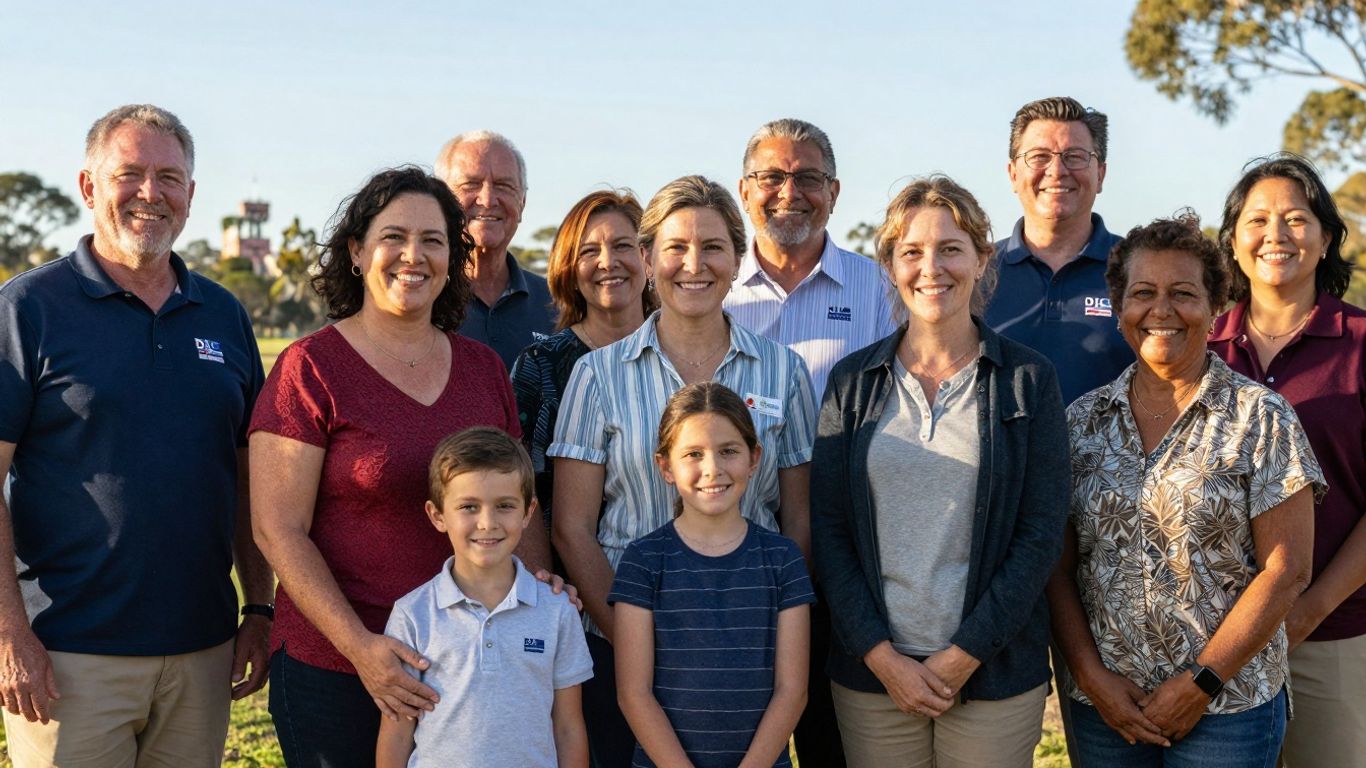
So, who actually gets a shot at this DHHS grant money? It’s not exactly a free-for-all, and the specific program you’re eyeing really dictates who can apply. But generally, there are a few main types of organisations and entities that are the most common recipients. It’s less about individuals getting a cheque directly and more about established groups running programs that help the community.
Non-Profit Organisations and Charities
These are probably the biggest players when it comes to DHHS grants. Think of charities, community service groups, and foundations. If your organisation is focused on things like providing free health clinics, running homeless shelters, offering support for domestic violence situations, or managing nutrition programs, you might be a good fit. The key is that your mission aligns with public health, family support, or vital research.
- Primary focus on public health, welfare, or community research.
- Can include large national charities or small local groups.
- Often required to show proof of charitable status and a direct link to the grant’s health-related goals.
Here’s a quick look at the kinds of non-profits that often hit the mark:
| Area of Focus |
|---|
| Community Health Services |
| Family & Youth Support |
| Research & Awareness |
State and Local Government Bodies
Government bodies at various levels are also major recipients. Often, they receive grants from the DHHS and then distribute that funding further into their communities. For instance, a state government might get funds to boost opioid addiction treatment services, or a local council could receive money to improve healthcare access in their region. It’s about channeling support to where it’s needed on the ground.
Educational and Healthcare Institutions
Universities, colleges, and sometimes even schools can apply for these grants. This is especially true if their work involves medical or public health research, training the next generation of healthcare professionals, or developing programs to educate the community about health. Hospitals, clinics, and health centres also fall into this category. Grants can help them expand their services, improve the quality of patient care, or run outreach programs to underserved populations.
It’s important to remember that while these are the most common groups, the specific eligibility criteria for each grant program can vary quite a bit. Always check the details of the particular funding opportunity you’re interested in. Don’t assume you’re in or out without reading the fine print.
Generally, if your organisation is focused on improving health outcomes, supporting vulnerable populations, or conducting important research, and you can demonstrate you’re a legitimate entity with good financial practices, you’re on the right track to exploring DHHS grant opportunities.
Individual Access to DHHS Grant Funding
When you’re looking into DHHS grants, it’s important to know that most of them aren’t set up for individuals to apply for directly. The big funding rounds are usually aimed at organisations, government bodies, or research institutions. So, if you’re an individual, you’re probably not going to be filling out a grant application for, say, a new community garden project yourself.
Direct Grants for Individuals: Rare Exceptions
It’s pretty rare for the Department of Health and Human Services (DHHS) to give grants straight to individuals. Think of it this way: the grants are designed to fund larger projects or services that benefit a wider group of people. Applying directly as an individual usually only happens in very specific circumstances, like if you’re a researcher with advanced degrees applying for a specific fellowship or a training grant related to health. Most of the time, if you’re an individual, you’ll be looking at other avenues for support. The odds aren’t the same for everyone, and a lot depends on your track record, capacity, and fit with program guidelines. Always double check individual grant criteria before spending hours on paperwork.
Fellowships and Research Training Awards
While direct project grants for individuals are uncommon, there are specific opportunities. These often fall into categories like scholarships for further study or professional development, and fellowship programs for advanced health or medical research. For individuals working in health or research, these are the main routes for direct funding. These programs usually have strict criteria:
- You must have relevant qualifications or a solid track record.
- Your proposed research must align with DHHS or broader health priorities.
- Applicants often need institutional support or a host organisation.
Here’s a quick look at how common these funding types are for individuals:
| Funding Type | Common? |
|---|---|
| Research Fellowships | Sometimes |
| Individual Project Grants | Rare |
| Professional Development Scholarships | Occasionally |
Receiving Benefits Through Funded Local Programs
This is where most individuals connect with DHHS funding. The department gives money to state and local governments, as well as non-profit groups, and they then use that money to run programs. So, you might not get a grant cheque directly, but you could absolutely benefit from the services those grants pay for. For example, a local community health centre might get DHHS funding to offer free health checks, or a non-profit could use it to run after-school programs for kids. It’s all about how the money gets distributed to serve the community. If you’re a family looking for help with childcare costs, for instance, you might be eligible for support through programs funded by the DHHS.
Most people will need to work through local councils, community groups, or universities to access support that is ultimately funded by the DHHS. Direct applications for individuals are rare, often limited to specific research fellowships or training grants.
Program-Specific Eligibility Criteria to Consider

Right, so you’ve got a good idea and your organisation ticks the boxes. That’s a great start! But here’s the thing: not every DHHS grant is a free-for-all. Each one has its own set of rules, like a specific club with its own membership criteria. You really need to dig into the details for the particular grant you’re eyeing up. It’s not a one-size-fits-all situation, not by a long shot.
Geographic Focus and Priority Areas
Some grants are super specific about where they want the money to go. They might be looking for projects in particular regions, maybe areas that are a bit remote, or suburbs that are doing it tough. Sometimes, the focus can be as narrow as a couple of postcodes or even just one suburb. These priority areas can shift from year to year, depending on what health issues are bubbling up around the country.
Here’s a rough idea of how this might look:
| Grant Example | Area Focused | Eligibility Condition |
|---|---|---|
| Community Health Access Fund | Rural QLD & VIC | Must operate in designated rural zones |
| Urban Family Support Initiative | Western Sydney | Need to serve local family cohorts |
| Remote Health Workforce Scheme | NT & WA remote towns | Staff based in listed LGAs |
So, don’t just assume your location is a shoo-in. Always, always check the official program documents for the exact areas they’re interested in before you get too far down the application track.
Target Population Requirements
Most DHHS grants aren’t just for anyone and everyone. They usually want to help specific groups of people. This could mean your project needs to focus on:
- Kids and young people
- Seniors
- People living with disabilities
- Culturally and linguistically diverse communities
- Aboriginal and Torres Strait Islander peoples
Sometimes, you’ll need to show that the people you want to help actually meet certain income levels or have specific health needs. They might even ask for current numbers on who you’re planning to support. It’s a bit like applying for a first home owner’s grant – you have to fit a particular profile.
Program-Specific Requirements
Even if your organisation and your target audience are a perfect match, the actual type of project you’re proposing matters too. You need to look out for things like:
- Service Type: Is the grant for direct healthcare, building new facilities, running training programs, or something else entirely?
- Project Duration: Some grants have limits on how long the project can run, maybe a maximum of 12 months.
- Avoiding Duplication: If there’s already a similar service getting funded in the same area, your application might hit a wall.
Basically, your project needs to tick all the boxes regarding its size, what it aims to do, and who it’s for. You’ll need to clearly explain why your activity fits with what the DHHS wants to achieve and what unique benefit it brings to the table.
Key Organisational Eligibility Requirements
Right, so you’re an organisation looking to snag some DHHS grant money. That’s awesome! But before you get too excited, you’ve got to prove you’re a legit operation and can actually handle the responsibility that comes with public funds. It’s not just about having a good idea; it’s about showing you’re a stable, trustworthy entity ready to make a real difference.
Proof of Legal Entity Status and Compliance
First things first, you need to show you’re a properly registered organisation in Australia. This usually means having your Australian Business Number (ABN) handy. If you’re a charity, you’ll likely need to prove you have Deductible Gift Recipient (DGR) status. For government bodies, it’s about having your official designation. You might also need to dig out your organisation’s constitution or rules, and sometimes even your certificate of incorporation. Basically, they want to see the official paperwork that says you’re a real, recognised entity.
Here’s a quick rundown of what you might need:
- ABN Certificate: Your official Australian Business Number.
- DGR Endorsement: If you’re a charity, proof from the ATO.
- Incorporation Certificate: Confirmation from your state or territory authority.
Demonstrating Financial Management Capacity
This is a big one. DHHS needs to know you can handle the money responsibly. They’ll want to see that you have solid financial systems in place. This means having clear procedures for how money is spent, how it’s tracked, and how you report on it. Do you have accounting software? Are your budgeting processes clear? It’s also really important to show you’ve managed projects and funds successfully before, especially if they were similar in size or scope to the grant you’re applying for. Past performance is a strong indicator of future success, after all.
They’re not just handing out cash; they need to be sure it’s going to be used effectively and accounted for properly. Think of it as showing them you’re a safe pair of hands.
Track Record and Project Suitability
Beyond just being a registered organisation with good financial habits, you need to show that your past work aligns with what the DHHS is trying to achieve. Have you successfully completed projects that have a clear benefit to community health and wellbeing? If your organisation has a history of working with specific groups, like Aboriginal and Torres Strait Islander communities or people in rural areas, and you can demonstrate positive outcomes, that’s a huge plus. They want to fund initiatives that have a proven ability to make a tangible impact and support vulnerable or underserved populations. So, think about your past projects – do they clearly demonstrate your capacity to deliver on the goals of the grant you’re interested in?
DHHS Grant Alignment and Project Suitability
So, you’ve ticked the boxes for who can apply, but that’s only the start. Now, you’ve got to convince the Department of Health and Human Services (DHHS) that your project is exactly what they’re looking to fund. It’s not enough to just have a good idea; it needs to slot neatly into their big-picture goals. Think of it like this: they have specific problems they want to solve, and your project needs to be the perfect tool for the job.
Demonstrating Alignment with DHHS Mission
This is where you show you’ve done your homework. Your project proposal needs to clearly shout out how it helps achieve the DHHS’s main mission – usually something around improving the health and wellbeing of Australians. You’ll want to connect your project’s objectives directly to the department’s current priorities. Are they focused on preventative health? Improving access for remote communities? Supporting mental health services? Whatever it is, make sure your project directly addresses those points. It’s also a good idea to mention any relevant government strategies or initiatives your project supports, like efforts to close health gaps for Indigenous Australians. This shows you’re thinking on a national level.
Targeting Community Health and Wellbeing Outcomes
What difference will your project actually make on the ground? That’s the million-dollar question. Your application should spell out the tangible outcomes you expect. Instead of saying ‘we’ll improve health’, be specific. Will you be running more mobile clinics? Offering new types of training for local health workers? Reaching a group of people who currently have very little access to services? You need to show how your project will lead to measurable improvements in community health and wellbeing.
Here are some examples of outcomes you might focus on:
- Reduced hospital admissions for preventable conditions.
- Increased participation in community-based health programs.
- Improved mental health scores among a target demographic.
- Greater access to essential health services for underserved populations.
It’s really about showing the DHHS that your project isn’t just a nice-to-have, but a necessary step towards achieving their broader public health objectives. They want to see evidence that your approach is sound and that you’ve thought through the practical steps to achieve positive change.
Supporting Vulnerable or Underserved Groups
Many DHHS grants have a specific focus on helping those who need it most. Your application should clearly identify which vulnerable or underserved groups your project aims to benefit. This could include:
- People living in regional or remote areas.
- Seniors requiring aged care support.
- Individuals with chronic health conditions.
- Culturally and linguistically diverse communities.
- People experiencing homelessness or financial hardship.
You’ll likely need to provide data or evidence to back up your claims about the need within these groups and how your project is specifically designed to meet their unique challenges. Showing that your project has been developed with input from the community you intend to serve can also be a big plus.
Wrapping It Up: Who’s In and Who’s Out for DHHS Grants?
So, that’s the lowdown on who generally qualifies for DHHS grants in Australia for 2025. It’s pretty clear that most of the time, it’s organisations like charities, schools, hospitals, and government bodies that get the nod for this funding, not individuals applying on their own. If you’re an individual, you’re more likely to benefit from the services these funded groups provide. The big thing to remember is that your project needs to clearly line up with what the DHHS is trying to achieve – better health and stronger communities for everyone. If you think you fit the bill, definitely dig into the specific grant details, get your ducks in a row with the paperwork, and don’t be shy about asking questions if you’re feeling a bit lost. It can take some effort, but with a solid plan and a bit of persistence, you might just snag that grant.
Frequently Asked Questions
Can individuals apply for DHHS grants in Australia?
Generally, individuals can’t apply directly for most DHHS grants. These grants are usually for organisations like charities, government bodies, schools, and healthcare providers. If you’re an individual, you’re more likely to benefit from the services or programs that these funded organisations run, or you might find specific scholarships or research awards.
What kinds of organisations usually get DHHS grants?
The DHHS typically gives grants to non-profit groups, charities, state and local government bodies, universities, and healthcare organisations. Basically, any group that works to improve health or community wellbeing and can show they’re a legitimate organisation is often a good candidate.
Do I need to prove my organisation is official to apply for a grant?
Absolutely. You’ll need to show proof that your organisation is legally set up, often with an Australian Business Number (ABN). If you’re a charity, you’ll need to show that too. Government bodies also need to prove they’re official. Without this proof, your application usually won’t be considered.
What types of projects does the DHHS like to fund?
The DHHS wants to fund projects that help make Australians healthier and improve community wellbeing. This can include things like better healthcare access, mental health support, medical research, and programs for groups who need extra help, like families, kids, or older people.
Does the location of my project matter for a DHHS grant?
Yes, it often does. Some grants are specifically for projects in certain areas, like rural regions, places with fewer health services, or specific suburbs. You always need to check the grant details to see if your project’s location fits the requirements.
How can I be sure my project fits what the DHHS is looking for?
You need to clearly show how your project lines up with the DHHS’s main goals, like boosting health or helping vulnerable people. Explain the real-world results you expect to achieve and who you’ll be helping. Making a strong connection between your project and the DHHS’s mission is key.