
Key Takeaways
The best battery pack is not necessarily the largest one. It is the model that matches your devices, travel plans, charging opportunities and tolerance for extra weight.
- List every device you expect to charge and check its input requirements.
- Compare usable watt-hours, output and recharge time rather than capacity alone.
- Choose ports, connectors and charging methods that fit your everyday kit.
- Treat heat, water, impacts and airline rules as part of the buying decision.
- Consider warranty, storage and eventual recycling before paying for more capacity.
Define how and where you will use the battery pack
Start with the situation, not the product catalogue. A small power bank may be ideal for a day in Melbourne, while a larger battery pack could make sense beside a touring vehicle or at a remote worksite. Australian travel also introduces long distances, hot conditions and stretches without a convenient power point.
Think through a normal day and a difficult one. If your phone is your navigation, payment method and emergency contact, keeping it charged matters more than having enough energy for an occasional tablet. A useful low-cost holiday planning guide can help you think about the wider trip budget too, including what you can realistically carry and recharge.
Charging phones, tablets and laptops
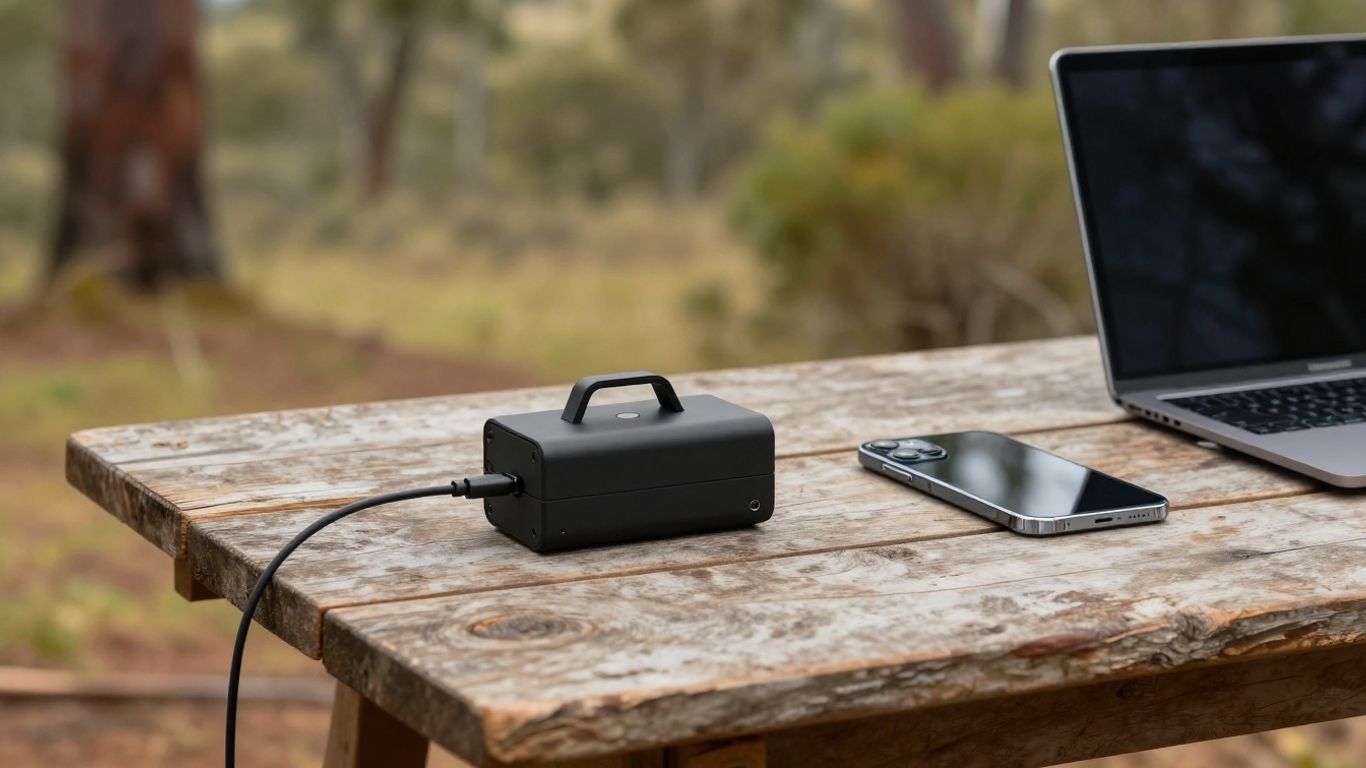
Phones and tablets usually charge through USB, but laptops can have much higher demands. Check whether your laptop accepts USB-C charging and identify the wattage printed on its charger; a battery pack with a familiar-looking port is not automatically powerful enough.
For a phone, capacity and portability often matter most. For a tablet or laptop, prioritise USB-C Power Delivery output and the correct cable. A pack that restores a phone several times may only provide a partial laptop charge once conversion losses and the laptop’s own battery size are considered.
Powering cameras, drones and other equipment
Cameras, drone batteries, lights and audio equipment can have very different charging arrangements. Some use USB-C, others need a dedicated charger, and some equipment draws power while operating rather than simply charging a cell.
Make a list of the chargers you would actually pack. If a drone charger needs a particular voltage or a mains socket, a USB-only power bank may be the wrong choice. For specialist equipment, the safer approach is to confirm the charger specification first and select the battery pack second.
Choosing between home, vehicle and backpack use
A home backup pack can be heavier and more capable because it is rarely carried far. A vehicle-based model can trade some portability for more outlets, while a backpack model should be judged by weight, dimensions and ease of access as much as energy capacity.
For remote Australian driving, planning the vehicle and route is just as important as buying power. Guides to outback vehicle preparation and travelling around Australia are useful reminders that fuel, navigation, water and communications all compete for space and attention.
Estimating how many devices need power at once
Write down which devices must run together, not just which devices you own. A phone, camera and laptop might all be charged in the evening, but a laptop and a portable fridge may need to operate at the same time.
Add the running or charging wattage of those devices, then leave some headroom. This avoids choosing a model that technically meets the total on paper but becomes slow, hot or unreliable when several outputs are used together.
Match capacity and output to your devices
Capacity tells you how much energy a pack stores; output tells you what it can deliver at a given moment. Both are essential, and neither should be treated as a proxy for the other. A high-capacity pack with weak output may still fail to run a demanding device.
Look for the maker’s usable capacity, continuous output and recharge specifications. Claims based only on a cell’s internal voltage or milliamp-hour figure can make two packs appear more comparable than they really are.
Understanding watt-hours, milliamp-hours and usable capacity
Watt-hours are generally the clearest way to compare stored energy across different battery voltages. Milliamp-hours are common on small power banks, but the number needs context because it is tied to a nominal voltage.
A simple conversion is watt-hours equals milliamp-hours multiplied by volts, divided by 1,000. In practice, the energy reaching your device is lower than the stored figure because charging electronics, cables and voltage conversion consume some energy.
Calculating the runtime you can realistically expect
Estimate runtime by dividing usable watt-hours by the device’s average power draw. If a device draws 20 watts and the pack can provide 200 usable watt-hours, the theoretical result is 10 hours; real operation will be shorter once losses, changing loads and reserve capacity are allowed for.
Screens, radios, motors and compressors can draw more at certain times. For a more honest estimate, use the device’s typical draw rather than its lowest advertised figure, and allow a margin for cold starts and ageing cells.
Checking continuous and peak power output
Continuous output is the figure that matters for sustained use. Peak or surge output describes a short burst, which may help a motor or compressor start but does not mean the pack can maintain that load.
Check both the total output and the limit for each port. When several ports operate together, the pack may share or reduce available power, so read the combined-output notes rather than assuming every socket delivers its maximum simultaneously.
Avoiding underpowered or unnecessarily large models
An underpowered pack creates frustration: devices may charge slowly, stop charging under load or refuse to start. An oversized pack, meanwhile, adds cost and weight and may be inconvenient to carry through an airport or along a track.
A practical comparison can look like this:
| Use case | Main specification | Sensible priority | Common mistake |
|---|---|---|---|
| Phone and earbuds | USB output and modest capacity | Low weight | Paying for unused capacity |
| Tablet and camera | Capacity plus stable USB-C output | Port flexibility | Ignoring cable compatibility |
| Laptop work | USB-C Power Delivery wattage | Continuous output | Choosing by mAh alone |
| Remote equipment | Usable watt-hours and recharge options | Reliability and access | Forgetting recharge time |
The right model is the smallest one that comfortably handles your real load. If you are comparing lightweight options, the ultralight backpacking battery pack guide offers a useful way to think about power-to-weight trade-offs, rather than treating capacity as the only measure.
Compare battery types and charging options
Battery chemistry affects weight, service life, charging behaviour and sometimes cost. The charging system matters just as much: a pack is less useful if it stores plenty of energy but takes too long to refill between stops.
For Australian travel, consider where the next reliable source of power will be. A mains outlet at accommodation, a vehicle socket and a solar panel each suit different routines.
Lithium-ion versus lithium iron phosphate batteries
Lithium-ion packs are common because they can offer a useful balance of energy density, size and price. Lithium iron phosphate, often called LiFePO4, is generally selected when durability, thermal characteristics and repeated cycling matter more than the smallest possible package.
The chemistry label is only part of the decision. Look at the complete pack, including its management electronics, enclosure, warranty and charging limits. A well-built pack with clear specifications is preferable to a vague chemistry claim.
USB-C Power Delivery and other fast-charging standards
USB-C Power Delivery can negotiate an appropriate voltage and current between a charger and a compatible device. That makes it especially relevant for modern laptops, tablets and phones, but the cable and the receiving device must also support the required level.
Fast charging can shorten time beside a power point, though it may create more heat. Confirm the pack’s input and output ratings separately: a model that recharges quickly may not deliver the same power to another device.
Mains, car and solar charging
Mains charging is usually the quickest and most predictable option. Car charging is convenient on a road trip, but check the vehicle socket’s limits and avoid leaving a battery pack in a hot, parked car unless the manufacturer permits it.
Solar charging is more variable. Cloud, shade, panel angle and temperature all affect the result, so solar works best when you can leave the panel positioned for several hours rather than expecting an instant refill.
When a solar battery pack makes sense
Solar becomes more practical when you are away from mains power for multiple days and have modest, predictable loads. It suits field sensors and low-draw communications particularly well, while a large laptop or high-power appliance may need a different plan.
For a documented example, Voltaic Solar Optimized IoT Battery Packs are described as designed for solar charging and equipped with an integrated charge controller that charges in sunny and low-light environments. That specific description is relevant to IoT field use; it should not be read as a promise that any solar battery pack will quickly charge every travel device.
Check ports, compatibility and practical features
A battery pack can have impressive numbers and still be awkward in daily use. Port layout, cable storage, display quality and compatibility often determine whether it stays in your bag or gets left at home.
Before buying, inspect the ports and compare them with the equipment you already own. A short compatibility check now is much easier than finding an adapter or replacement cable in a regional town.
Selecting the right mix of USB, AC and DC ports
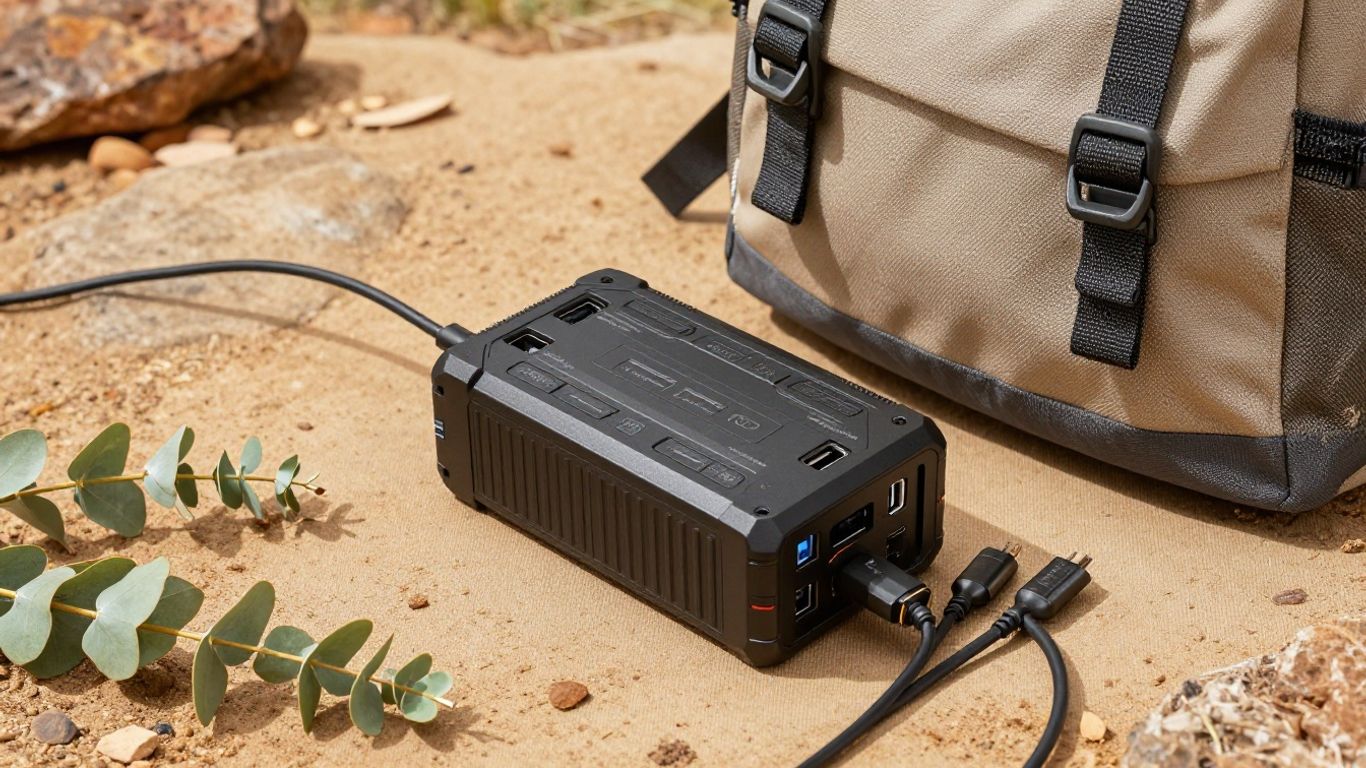
USB-A remains useful for older cables, while USB-C is increasingly the main charging connection for phones, tablets and computers. AC outlets can support standard chargers, but they add conversion losses, size and safety considerations.
DC outputs may suit particular equipment, but only when the voltage, connector and polarity match. Choose the mix you will use regularly rather than selecting every possible socket for hypothetical situations.
Confirming voltage and connector compatibility
Never rely on the connector shape alone. Check voltage, current, polarity and, where relevant, the device’s charging protocol. A plug can fit while delivering an unsuitable electrical supply.
Keep original chargers or manufacturer specifications available when checking specialist equipment. The thermal-scope battery and charger guide illustrates why equipment-specific battery types and chargers need closer attention than a general USB purchase.
Pass-through charging and low-power modes
Pass-through charging allows the pack to receive energy while sending power to another device. It can be handy on a desk or bedside table, but it may generate heat and some models limit the feature or do not recommend it for regular use.
Low-power modes are useful for devices that draw very little, such as earbuds, watches or small sensors. Without such a mode, the pack may switch itself off because it interprets the low draw as no connected device.
Displays, charge indicators and built-in cables
A percentage display is more informative than four broad indicator lights, particularly when planning a long drive or a day outside. Built-in cables reduce clutter, although they can be harder to replace if damaged.
Also consider button placement and visibility in low light. Small practical details—whether the pack can be operated with one hand, for example—become noticeable after a week of travel.
Prioritise safety, durability and Australian conditions
Portable batteries contain concentrated energy, so safe design and careful handling matter. Treat marketing language cautiously and look for clear instructions, protective features and stated operating limits.
Australia’s conditions add practical pressure. Summer heat inside a vehicle, sudden rain, dust and rough tracks can all affect equipment that would be perfectly comfortable in an office drawer.
Overcharge, overheating and short-circuit protection
Look for protection against overcharging, excessive discharge, overheating and short circuits. These systems help manage risk, but they do not make damaged cells or poor storage safe.
Stop using a pack if it swells, leaks, smells unusual or becomes unexpectedly hot. Do not puncture, open or attempt a home repair; follow the supplier’s advice for isolation and disposal.
Water resistance, impact protection and temperature limits
Water resistance is not the same as waterproofing, and a rugged case cannot protect a pack from every fall. Read the stated rating and temperature range, then use a dry pouch when conditions are uncertain.
Avoid direct sun and enclosed hot spaces. In cold areas, performance can also fall temporarily. Allow the pack to return to a suitable temperature before charging if its instructions call for that precaution.
Airline rules and safe transport
Airline rules can vary by battery type, capacity and whether the pack is carried in cabin baggage. Check the current airline and aviation authority guidance before flying, and keep the rating label legible.
Protect terminals from metal objects and do not pack a damaged or swollen battery. Carrying the pack where staff can inspect it is generally more practical than placing it deep inside checked luggage, but the airline’s current rules take priority.
Choosing a battery pack for camping and remote travel
For camping, balance capacity against the distance you must carry it. A model that can recharge a phone and camera for several days may be more useful than a heavier unit designed for appliances you will not bring.
Plan a fallback as well: paper maps, spare cables and a charged phone still matter when a pack fails. If you enjoy quiet regional breaks, a guide to a restorative Hayesville getaway offers a broader reminder that slower travel often rewards simple, reliable equipment.
Compare value, maintenance and long-term performance
Price is only one part of value. A battery pack that is easy to understand, supported by a credible warranty and suited to your devices may cost less over its useful life than a cheaper model that sits unused or needs replacing early.
Read the warranty conditions and keep the purchase record. Product support matters when a connector fails, a display becomes inaccurate or you need safe disposal advice.
Assessing build quality, warranty and brand support
Look for clear technical specifications, sensible safety guidance and a service channel you can actually reach in Australia. A solid hinge, protected ports and strain relief around cables can be more valuable than decorative features.
As an example of a documented product category outside travel charging, LiftMaster garage door openers are described as offering battery backup for power outages, built-in cameras on some options, myQ access and serviceable support. Those capabilities belong to the cited opener range, not to battery packs generally, but the example shows why support and serviceability deserve attention when comparing powered equipment.
Comparing price with capacity and power delivery
Divide the price by usable watt-hours only as a first comparison. Then account for output, recharge speed, port selection, weight, warranty and whether the pack can replace another charger in your kit.
A cheaper model may be good value for occasional phone charging. For regular laptop work or remote travel, spending more on appropriate continuous output and dependable construction can be the more economical decision.
Extending battery life through proper storage and charging
Follow the manufacturer’s storage instructions rather than leaving the pack permanently full or completely flat. Keep it somewhere cool and dry, inspect cables periodically and recharge it before a trip rather than discovering an old empty pack on departure morning.
A simple care routine is easy to maintain:
- Check the casing and ports before each longer trip.
- Use a suitable cable and charger with clean, undamaged connectors.
- Keep the pack away from direct heat, moisture and loose metal objects.
- Recharge and store it according to the maker’s stated conditions.
These habits reduce avoidable wear and make problems easier to spot. They also help you decide whether the pack is still suitable before you depend on it for navigation or emergency contact.
Knowing when to replace or recycle the battery pack
Replace a pack when it is swollen, damaged, unusually hot, unreliable or no longer holds enough charge for its intended use. A gradual reduction in capacity is normal, but physical damage is a safety issue rather than a performance complaint.
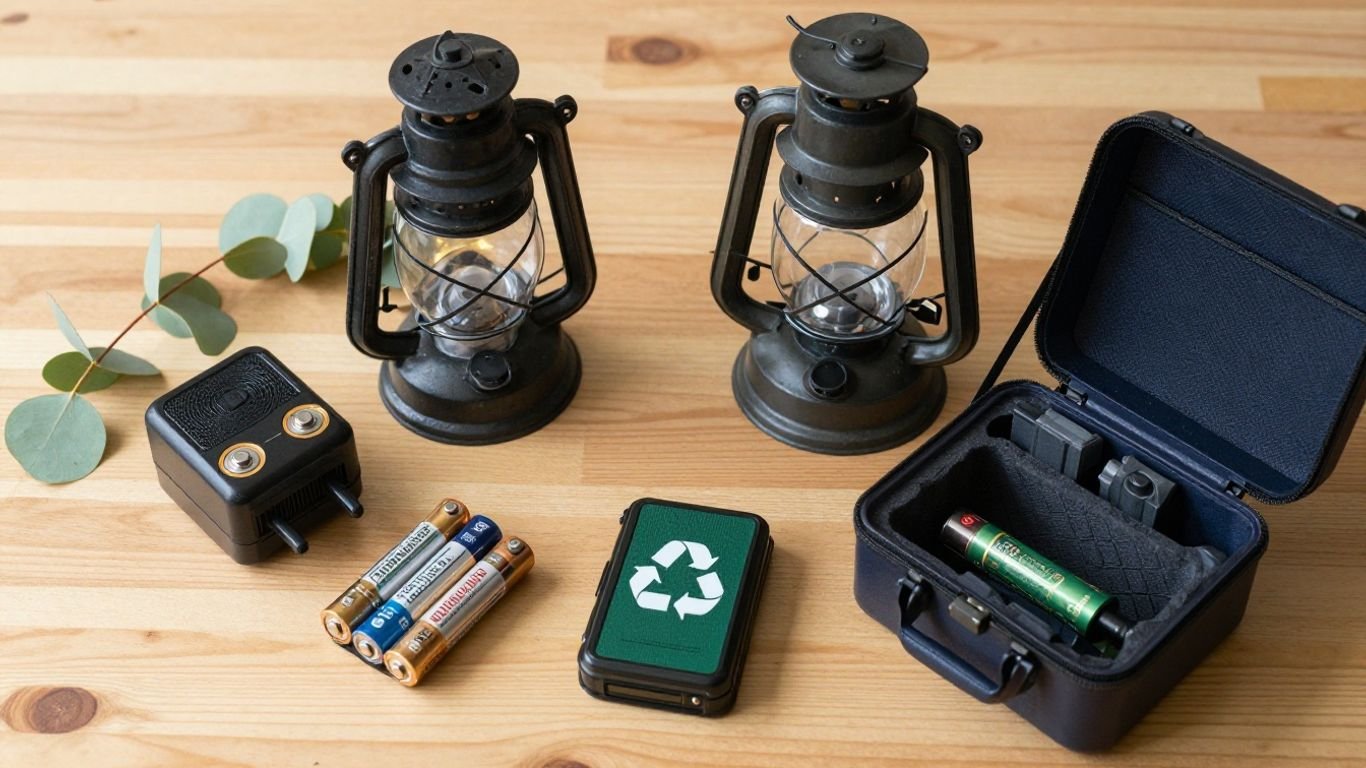
Do not place rechargeable battery packs in household rubbish or kerbside recycling. Use an Australian battery recycling service or ask the retailer, council or waste facility about the correct drop-off option, and tape or protect exposed terminals as directed.
Conclusion
Choosing a battery pack comes down to matching real devices and real conditions: usable capacity, continuous output, charging access, compatible ports, safe handling and manageable weight. Work through those questions before comparing prices, and the final choice should be simpler, safer and far more useful on the road, at work or outdoors.
Frequently Asked Questions
What size battery pack do I need for travel?
Choose capacity based on the devices you will carry and how long you will be away from mains power. A phone-only trip needs far less energy than a trip involving a laptop, camera and drone.
Is a higher mAh rating always better?
No. Milliamp-hours do not show the whole picture because voltage, conversion losses, usable capacity and output limits also matter. Compare watt-hours and delivery ratings where possible.
Can a battery pack charge a laptop?
It can if the laptop accepts the pack’s charging method and the pack provides sufficient USB-C Power Delivery output. Check the laptop charger wattage and the pack’s continuous rating before buying.
Are solar battery packs useful in Australia?
They can be useful for multi-day trips away from mains power, especially with low-draw devices. Solar charging depends heavily on sunlight, panel position, weather and the pack’s charge controller.
Can I take a battery pack on a plane?
Airline and aviation rules depend on the pack’s capacity and condition. Check the current requirements for your airline, keep the rating visible and follow instructions about cabin or checked baggage.
How should I store a battery pack?
Store it in a cool, dry place away from direct sun, moisture and metal objects. Follow the manufacturer’s guidance on charge level and inspect it for swelling or damage before use.
When should I recycle a battery pack?
Recycle it when it is damaged, swollen, unreliable or no longer useful for its intended job. Use a battery recycling point, retailer programme, council service or approved waste facility rather than household rubbish.