Key Takeaways
A 200Ah lithium battery can be a flexible storage option for travel, backup power and smaller off-grid systems, but the label alone does not tell you whether it will suit your setup.
- Convert amp-hours into watt-hours and allow for the usable state-of-charge range.
- Choose the battery voltage and chemistry around your appliances, charger and inverter.
- Calculate daily energy use before deciding whether one battery will be sufficient.
- Check the battery management system, certifications, charging limits and installation requirements.
- Compare warranty terms, monitoring features and total ownership cost rather than price alone.
What a 200Ah lithium battery can deliver
A 200Ah lithium battery sounds substantial, and it can store a useful amount of energy. Its real-world value depends on voltage, chemistry, discharge limits and the equipment connected to it. A battery for a campervan may be sized very differently from one supporting a home’s essential circuits. Start with the electrical maths, then consider how the battery will be used day after day.
Understanding amp-hours and usable capacity
Amp-hours describe electrical charge, not energy by themselves. To estimate energy storage, multiply the nominal voltage by the amp-hour rating: a 12V, 200Ah battery is nominally about 2,400 watt-hours, or 2.4kWh. A 24V version is about 4.8kWh, while a 48V version is about 9.6kWh.
Those figures are nameplate capacity. The amount you can use depends on the battery management system, recommended depth of discharge, temperature, age and the efficiency of the rest of the system. It is sensible to leave a reserve rather than planning to drain the battery completely every time.
Comparing 12V, 24V and 48V battery systems
Voltage changes how a system moves power. For the same load, a higher-voltage battery draws less current, which can reduce cable size and voltage drop. A 12V system is common in recreational vehicles and small boats because many accessories are designed around it. Larger off-grid and home systems may use 24V or 48V architectures for more efficient power transfer.
The right voltage is not automatically the highest one. Every component must match, including the inverter, charger, solar controller, monitoring equipment and any DC appliances. Changing voltage later can be inconvenient, so think about likely expansion before buying a single battery.
Estimating runtime for common appliances
Runtime is found by dividing usable watt-hours by the appliance’s average watt draw, with an allowance for inverter losses where applicable. For example, a 60W fridge that cycles rather than runs continuously will consume far less over a day than its maximum rating suggests. Conversely, a kettle or microwave may run briefly but place a high instantaneous demand on the inverter.
Make a simple load schedule for the equipment you expect to use. Include operating hours, starting surges and whether each appliance runs directly from DC or through an AC inverter. This avoids the common mistake of adding appliance wattages without considering how long each one operates.
Why lithium batteries provide more usable energy than lead-acid
Lithium batteries are often selected because they can generally deliver a larger proportion of their rated capacity without the same voltage sag associated with many lead-acid installations. They are also typically lighter and can accept charging at a useful rate, although the exact performance depends on the product and system design.
That does not make every lithium battery interchangeable. A 200Ah unit with a modest continuous discharge rating may not suit a large inverter, and a battery installed in a hot, poorly ventilated compartment may perform differently from one in a suitable enclosure. Usable capacity matters more than the headline number when comparing options.
Choosing the right lithium battery chemistry
The chemistry affects safety characteristics, weight, charging behaviour, lifespan and the environments in which the battery can operate. For many Australian deep-cycle applications, LiFePO4 is a practical starting point, but it still needs to be matched with the correct controls and protection. Read the technical datasheet rather than relying on a product title alone.
Advantages of LiFePO4 for deep-cycle applications
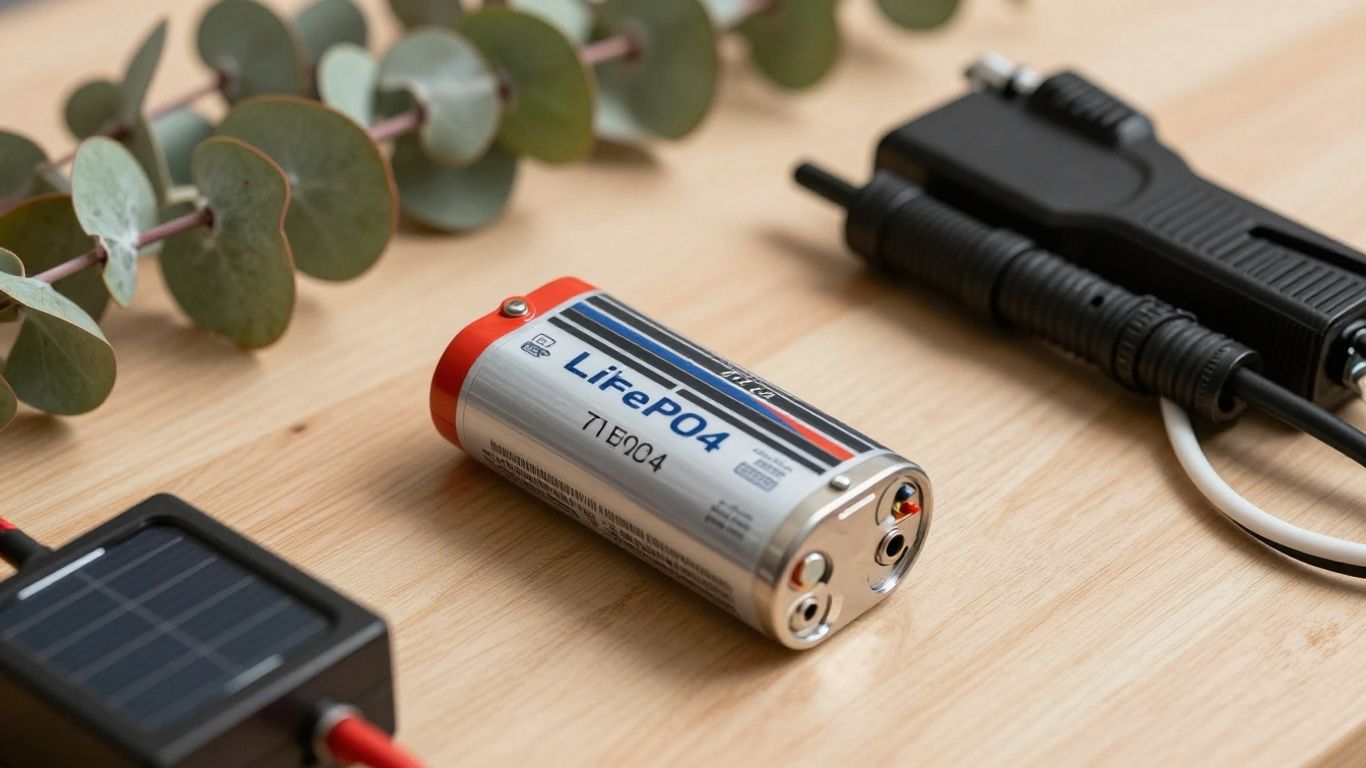
Lithium iron phosphate, usually written as LiFePO4 or LFP, is widely used for repeated charge and discharge applications. It is known for a stable chemistry, useful cycle life and a relatively flat discharge voltage. These qualities can suit caravans, marine systems, solar storage and backup applications where the battery is used frequently.
The trade-off is that LFP batteries still need suitable charging settings and a battery management system. They are not simply drop-in replacements for every lead-acid battery bank, particularly where the existing charger has no lithium profile or where the installation is exposed to low temperatures.
Lithium-ion options and where they fit
“Lithium-ion” is a broad family rather than one single battery chemistry. Different cell chemistries can have different energy density, discharge characteristics, thermal behaviour and recommended applications. A buyer should identify the actual chemistry and confirm the manufacturer’s charging and operating limits.
For a 200Ah deep-cycle purchase, the most useful questions are whether the chemistry is documented, whether the cells are suitable for stationary or mobile use, and whether the BMS limits are clear. Avoid choosing on the word lithium alone; the complete battery specification is what determines suitability.
Comparing cycle life, weight and operating performance
Cycle-life figures need context. The stated number may depend on depth of discharge, temperature, charge rate and the point at which the manufacturer considers capacity to have declined. A battery used gently may last longer than one routinely pushed to its limits, while an oversized battery may experience less strain for the same daily load.
Weight and physical dimensions matter just as much in a caravan or 4WD as they do in a home cabinet. Allow space for terminals, fuses, ventilation requirements and access for inspection. If two products appear similar, compare their continuous current rating and low-temperature protection as well as their energy capacity.
Checking safety certifications and battery quality
Look for clearly stated testing and transport documentation, cell information, protection features and a traceable manufacturer or importer. Certifications can help, but the relevant standard depends on the product and intended installation. A certification logo without supporting documentation should not be treated as proof of overall system quality.
A useful product comparison records the following before purchase:
- Nominal voltage, capacity and recommended depth of discharge.
- Continuous and peak charge and discharge current.
- BMS protections, temperature limits and reset behaviour.
- Enclosure rating, terminals, dimensions and mounting requirements.
This short list gives you a more meaningful basis for comparison than marketing language. It also makes it easier to identify missing information before money is committed.
Matching battery capacity to your energy needs
Sizing begins with your loads, not with a preferred battery size. Write down what you need to power, how often it runs and whether it is essential during an outage or trip. A 200Ah lithium battery may be generous for lights and communications yet inadequate for heating, air conditioning or long periods of cooking with an inverter.
Calculating daily energy consumption
For each appliance, multiply watts by expected hours of use to get watt-hours. A 40W device used for five hours consumes 200Wh. Add those figures across the day, then include standby consumption from chargers, routers, control systems and inverter idle draw.
A fridge, pump or compressor is best estimated from measured energy use where possible because its label may show maximum input rather than typical daily consumption. If you have no measurements, use a cautious estimate and review it after observing the system in real operation.
Allowing for inverter losses and peak loads
An inverter does not convert stored DC energy into AC energy perfectly. Its efficiency varies with load, and it consumes some power even when the connected appliance is using little. Add a practical margin to the calculated daily demand, especially if most loads will run through the inverter.
Peak power is a separate issue from daily energy. Motors, compressors and some electronic equipment can draw a starting surge. Check both the inverter’s continuous rating and its surge rating, then confirm that the battery and BMS can supply the required current without disconnecting.
Sizing solar panels and chargers
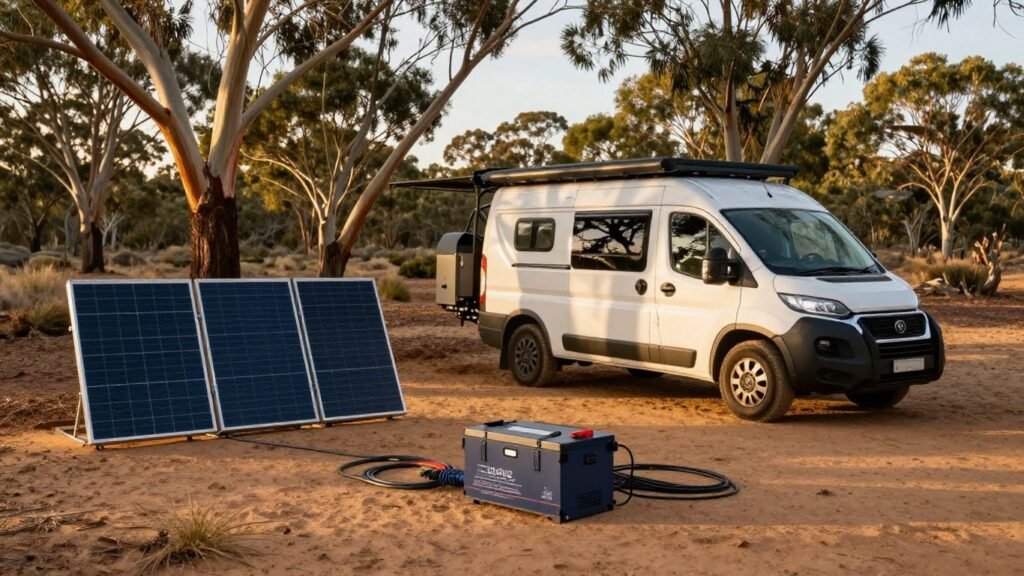
A battery stores energy; it does not create it. Solar panels, an alternator charger or mains charger must put enough energy back into the battery for the expected pattern of use. In Australia, available solar generation varies by season, location, panel orientation, shading and weather, so a system sized only for ideal summer days may disappoint in winter.
Select a charger with a lithium-compatible profile and a current suitable for the battery’s specifications. Oversizing the charger can be just as unsuitable as undersizing it if the BMS or cells have a lower permitted charge rate. The home battery sizing guide offers a useful additional way to think about nameplate capacity, critical loads and solar integration.
Deciding when one battery is not enough
One battery may not cover a large daily load, several cloudy days or a high-power appliance. Expansion can be sensible, but it should be planned as a system rather than treated as an afterthought. Batteries should generally be compatible in voltage, chemistry, capacity, age and BMS behaviour, subject to the manufacturer’s instructions.
Before adding a second unit, check the maximum number allowed, cable arrangement, balancing requirements and whether the charger and inverter can handle the larger bank. Sometimes reducing non-essential loads or improving solar input is a better solution than simply adding storage.
Finding the right applications for a 200Ah battery
A 200Ah battery can work well where energy demand is moderate, usage is predictable and there is a reliable way to recharge. Recreational vehicles, boats, small cabins and essential-load backup systems are common examples. The same battery will behave differently in each setting because installation conditions and load profiles vary.
Caravans, campervans and motorhomes
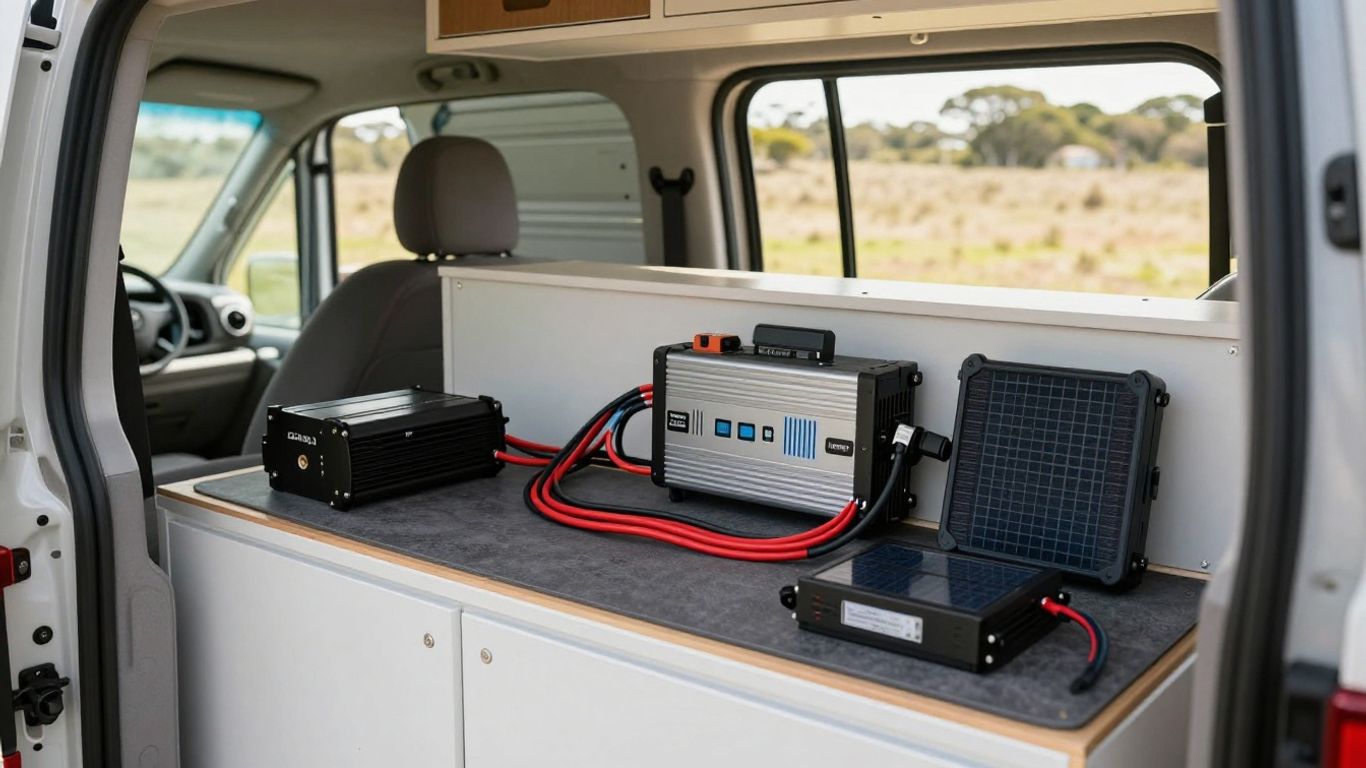
In a caravan or campervan, a 12V 200Ah battery can support lighting, refrigeration, fans, device charging and modest entertainment loads. The available compartment, payload limit and cable runs often influence the choice as much as capacity does. Confirm that the battery can be secured against movement and that the charging sources are compatible.
Consider how long you normally stay away from mains power. Weekend travel with regular driving may need a different balance of solar and alternator charging from extended stays in one location. For broader travel planning, practical vehicle preparation advice can also help when electrical upgrades are part of a remote trip.
Off-grid cabins and backup power systems
A cabin system needs a clear distinction between everyday loads and emergency loads. Lights, communications, refrigeration and small water pumps may be reasonable essential circuits, while electric heating and large cooking appliances can quickly consume the available energy. An appropriately sized inverter and distribution board are essential parts of the design.
Backup systems should also account for how they recharge after an outage. If the battery is expected to carry loads for multiple days, solar access, generator arrangements or another charging source may matter more than a small difference in the battery’s nominal capacity.
Marine and 4WD electrical setups
Marine and 4WD installations face vibration, moisture, temperature swings and limited space. The enclosure rating, mounting method, terminal protection and cable routing deserve close attention. In a boat, the battery must also suit the vessel’s charging system and comply with the applicable installation requirements.
A 4WD touring setup may combine a starter battery, an auxiliary battery, solar input and a DC-DC charger. Make sure the isolation and charging logic are understood before connecting a new lithium bank. A battery that is suitable on paper can still be a poor fit if it cannot be safely mounted or serviced in the available location.
Solar storage for essential household loads
For a home, a single 200Ah battery is usually better considered as part of a defined essential-load system than as a whole-home power source. List the circuits you want during an outage and check their combined demand, particularly if pumps, refrigeration or networking equipment must remain active.
Household systems may also involve grid connection rules, approved equipment and professional installation. More storage does not automatically solve a high peak load, and a battery needs an appropriate inverter and switchboard arrangement to supply selected circuits safely.
Checking compatibility before buying
Compatibility is where many apparently good battery purchases become complicated. Capacity and chemistry are only part of the picture; voltage, current limits, communications and physical connections must all line up. Ask for the complete system requirements before placing an order, especially if you are replacing an existing battery.
Selecting an inverter with the correct voltage
The inverter’s DC input must match the battery bank voltage. Its continuous output should cover the normal combined load, while its surge capability should cover equipment with motors or compressors. Also check the low-voltage shutdown point so the inverter does not repeatedly disconnect the battery under load.
A 12V system supplying a large AC load can draw very high current, which makes cable sizing, fusing and connection quality particularly important. A higher-voltage system may reduce current, but it introduces different isolation and series-connection requirements.
Matching chargers to lithium battery profiles
Mains chargers, solar controllers, alternator chargers and DC-DC chargers should have a profile suitable for the battery chemistry. Review bulk, absorption, float and low-temperature settings against the battery documentation. Some lithium systems do not require the same float treatment as lead-acid, so copying an old configuration can be unhelpful.
Charging equipment also needs to be sized around the battery’s permitted current and the available generation. If a charger is connected to several sources, confirm that their combined behaviour is acceptable rather than assuming each source can be assessed in isolation.
Understanding battery management system specifications
The BMS monitors and protects the cells. Relevant specifications include continuous discharge current, charge current, over-temperature protection, low-temperature charging cut-off, short-circuit protection and the way the system recovers after a protection event. Bluetooth or a display can help with observation, but monitoring does not replace correctly sized electrical protection.
For example, the SUNGOLDPOWER battery documentation describes a built-in BMS with protection against overcharging, discharging, overcurrent, short circuits and high temperature, along with Bluetooth and LCD monitoring. Those are documented product features; they should still be checked against the requirements of the particular installation.
Connecting batteries in series or parallel
Series connections increase voltage, while parallel connections increase capacity and available current. The batteries must be suitable for the proposed arrangement, and cables should be equal in length and appropriately sized so current is shared as intended. Follow the manufacturer’s limits on the number of batteries and the connection method.
Do not mix batteries with substantially different ages, capacities or states of health without specific guidance. Before energising the system, check polarity, torque, isolation and fuse placement. If the arrangement is unfamiliar, have a qualified installer review it rather than relying on trial and error.
Installing and using a 200Ah lithium battery safely
Safe installation is mostly careful planning. Lithium batteries can deliver high current, so a small wiring mistake can have serious consequences. Use equipment rated for the system, isolate all energy sources before working and follow Australian electrical requirements that apply to the installation.
Choosing a suitable location and enclosure
Choose a dry, secure location protected from accidental impact, direct heat and unnecessary exposure to water. The battery should be firmly restrained, with enough room to inspect terminals and remove the unit when required. An enclosure may be needed to prevent contact with conductive objects and to meet the conditions of the vehicle, vessel or building.
Do not place a battery where its operating temperature will regularly exceed the manufacturer’s limit. In a caravan or 4WD, consider heat inside enclosed compartments; in a marine setting, consider spray, condensation and access for inspection.
Protecting cables with correct fuses and isolators
A fuse or circuit breaker should be positioned close to the battery’s positive terminal so the cable is protected if it shorts. Select the rating and interrupt capacity for the cable, expected current and system design. An isolator provides a clear way to disconnect the battery for maintenance or emergencies, but it must also be rated for the DC voltage and current involved.
Cable size depends on current, length, installation method and acceptable voltage drop. Keep high-current cables short where practical, protect them from abrasion and use secure connections. A neat installation is not just cosmetic; it makes faults easier to identify.
Managing charging in cold and hot conditions
Low temperatures can restrict lithium charging, depending on the chemistry and battery design. Some products use a low-temperature cut-off, while others require external temperature monitoring or a heated installation. Never assume that a battery can safely charge below freezing simply because it can discharge there.
Heat also affects service life and operating performance. Provide the conditions specified by the manufacturer, avoid enclosing the battery beside hot equipment and investigate unusual odours, swelling, heat or repeated BMS shutdowns. Stop using a battery that appears damaged and seek qualified advice.
Avoiding common wiring and installation mistakes
The most frequent problems are incorrect polarity, undersized cables, missing or badly positioned fuses, loose lugs and incompatible chargers. A second set of eyes can catch errors before the system is energised. After commissioning, check connections and monitor performance under a normal load rather than assuming everything is correct because the inverter starts.
For related battery-care principles in an Australian setting, the safe battery charging advice is a useful general reference, although the installation requirements for a 200Ah system should come from the battery and equipment documentation. Keep records of settings, serial numbers and any maintenance or faults.
Comparing prices, features and long-term value
The cheapest 200Ah lithium battery is not necessarily the least expensive choice over its service life. Compare usable energy, current capability, cycle-life conditions, warranty exclusions and the cost of chargers, cabling, monitoring and installation. A battery that fits the system properly can be better value than a larger or cheaper unit that requires extra equipment.
Assessing warranty coverage and product support
Read the warranty before comparing headline years. Check the covered capacity, cycle or throughput limits, approved uses, installation conditions, transport arrangements and who handles a claim in Australia. Also look for a local support pathway and clear technical documentation.
For example, the Renogy Core Mini is documented as having a 200A BMS, low-temperature cut-off for charging and discharging, IP65 waterproof and vibration-resistant construction, specified certifications and a five-year warranty. Those features may be relevant to an outdoor installation, but whether the product suits your system still depends on voltage, loads and charging equipment.
Comparing Bluetooth monitoring and display options
Monitoring can show voltage, state of charge, current, temperature or protection events, depending on the battery and its software. This is useful when the battery is installed in a compartment that is difficult to access. It is less useful if the readings are vague, the app is unsupported or the system does not provide a clear way to diagnose a fault.
Ask whether monitoring is built in or optional, whether a separate shunt is required and whether the display shows live current as well as an estimated state of charge. The LiTime battery is one example of a product presented with Bluetooth monitoring, but its full specifications should be checked before it is selected for a particular installation.
Calculating cost per cycle and total ownership cost
A simple cost-per-cycle estimate divides the purchase price by the expected number of cycles, but that is only a starting point. Add installation, protective devices, chargers, monitoring, replacement parts and the value of usable capacity. Then consider how deeply and often the battery will actually be cycled.
A battery with a longer stated cycle life may offer better value if the claim is based on conditions close to your intended use. The WattCycle battery, for instance, is documented with a stated cycle range, a 200A BMS, low-temperature protection and a five-year warranty. Treat those as specifications to compare, not as a promise of identical results in every Australian installation.
Knowing which specifications matter most in Australia
Australian buyers should pay attention to transport documentation, local warranty arrangements, temperature limits, enclosure protection and the conditions of professional installation. Regional heat, long travel distances and limited access to service can make support and repair pathways particularly important.
A methodical comparison is useful even outside batteries. For instance, researching digital marketing tools involves matching functions to a small business’s actual needs rather than collecting features; the same principle applies here. Likewise, renewable energy blockchain is a separate technology topic, but it illustrates why a system’s wider operating context should be understood before judging a component in isolation.
Price should be the final part of the decision, not the first. Confirm the electrical design, installation conditions and support arrangements, then choose the battery that gives you a sensible balance of usable energy, safety and service life.
Conclusion
Choosing a 200Ah lithium battery is less about finding the biggest capacity label and more about matching voltage, chemistry, current limits, charging, installation and daily energy use. Work from your actual loads, allow for losses and environmental conditions, and compare documentation as carefully as price. That process will give you a system that is easier to use, safer to maintain and more likely to suit Australian conditions.
Frequently Asked Questions
How much energy does a 12V 200Ah lithium battery store?
A 12V 200Ah battery has a nominal capacity of about 2.4kWh. The usable amount will be lower or higher in practice depending on the battery’s discharge limits, efficiency, temperature and condition.
How long will a 200Ah lithium battery run a fridge?
There is no single runtime because fridges cycle and have different daily energy demands. Use measured watt-hours per day where possible, then divide the battery’s usable watt-hours by the fridge’s daily consumption while allowing for inverter losses.
Is LiFePO4 suitable for deep-cycle use?
LiFePO4 is commonly used for repeated charge and discharge applications because of its stable operating characteristics and useful cycle life. It still requires an appropriate charger, battery management system and installation conditions.
Can a 200Ah lithium battery run a microwave?
It may be able to, but the inverter and BMS must support the microwave’s continuous and starting demand. A short high-power load can require substantial current, particularly in a 12V system.
Can lithium batteries be connected in parallel?
Some batteries can be connected in parallel, but only when the manufacturer permits it and the batteries, cables, protection and charging equipment are compatible. Follow the specified limits and connection method.
Can lithium batteries charge in cold weather?
Charging limits depend on the battery chemistry and design. Some batteries include low-temperature charging protection, while others require temperature control or must not be charged below a specified temperature.
Is a 200Ah battery enough for a house during a blackout?
It may support selected essential loads for a limited period, but it is unlikely to power every household appliance indefinitely. Calculate the loads, peak demand, recharge options and desired backup duration before sizing the system.