Key Takeaways
Choosing a battery for solar charging is mainly a matter of matching chemistry, capacity, voltage and safety requirements to the way you use energy. A careful design will cost less trouble over its working life.
- Start with your daily energy use rather than the battery’s advertised capacity alone.
- Compare usable capacity, depth of discharge, cycle life, weight and installation needs.
- Make sure the battery, panels, charge controller and inverter use compatible voltages.
- Allow extra capacity for cloudy weather and charging losses.
- Follow Australian safety requirements and use professional help where the installation calls for it.
Understand how a battery for solar charging works
A solar battery is the part of a small energy system that shifts electricity from one time of day to another. Panels generate power when sunlight is available, while the battery stores some of that energy for later use. The right setup depends on whether you want everyday cycling, occasional backup or portable power. Before comparing products, understand how the components work together.
The role of solar panels, charge controllers and batteries
Solar panels produce direct current, but their output changes with sunlight, temperature and shade. A charge controller regulates the flow into the battery, helping prevent unsuitable charging conditions. The battery then stores electrical energy, while an inverter may convert it to alternating current for household appliances. A useful beginner reference is this guide to solar battery chargers, which explains how panels and controllers work together for charging and maintenance.
How energy is stored and used after sunset
During the day, the system can supply loads directly while sending surplus generation to the battery. After sunset, the battery supplies those loads until its available energy reaches the system’s chosen limit. This does not mean every watt-hour generated becomes usable: conversion losses, battery efficiency and standby consumption reduce the amount that reaches an appliance. For that reason, design around usable capacity rather than the largest number printed on a label.
Off-grid, backup and portable solar charging setups
An off-grid system must balance generation and storage over several days because there is no mains supply to fill the gap. A backup system may need less daily cycling but must deliver enough power when an outage occurs. Portable systems have their own trade-offs, particularly around weight, connectors and the power rating of the inverter. For small rechargeable cells rather than a home battery, the AA & AAA Solar Power Kit illustrates how solar charging can be packaged for portable use.
Key battery specifications to compare
Capacity is usually stated in amp-hours or watt-hours, but those figures need context. Check the nominal voltage, recommended depth of discharge, maximum continuous charge and discharge current, cycle-life conditions, operating temperature range and warranty terms. Also check the physical dimensions and terminal arrangement before ordering. Usable energy matters most when two batteries appear similar on paper but have different operating limits.
Choose the right battery chemistry
Battery chemistry affects almost every practical part of a solar installation, including weight, ventilation, charge settings, service life and purchase price. Lithium iron phosphate is often considered for frequent cycling, while AGM, gel and other lead-acid designs can suit simpler or smaller systems. The best choice is not automatically the newest chemistry; it is the one that fits the duty cycle and installation environment.
Lithium iron phosphate batteries for daily cycling
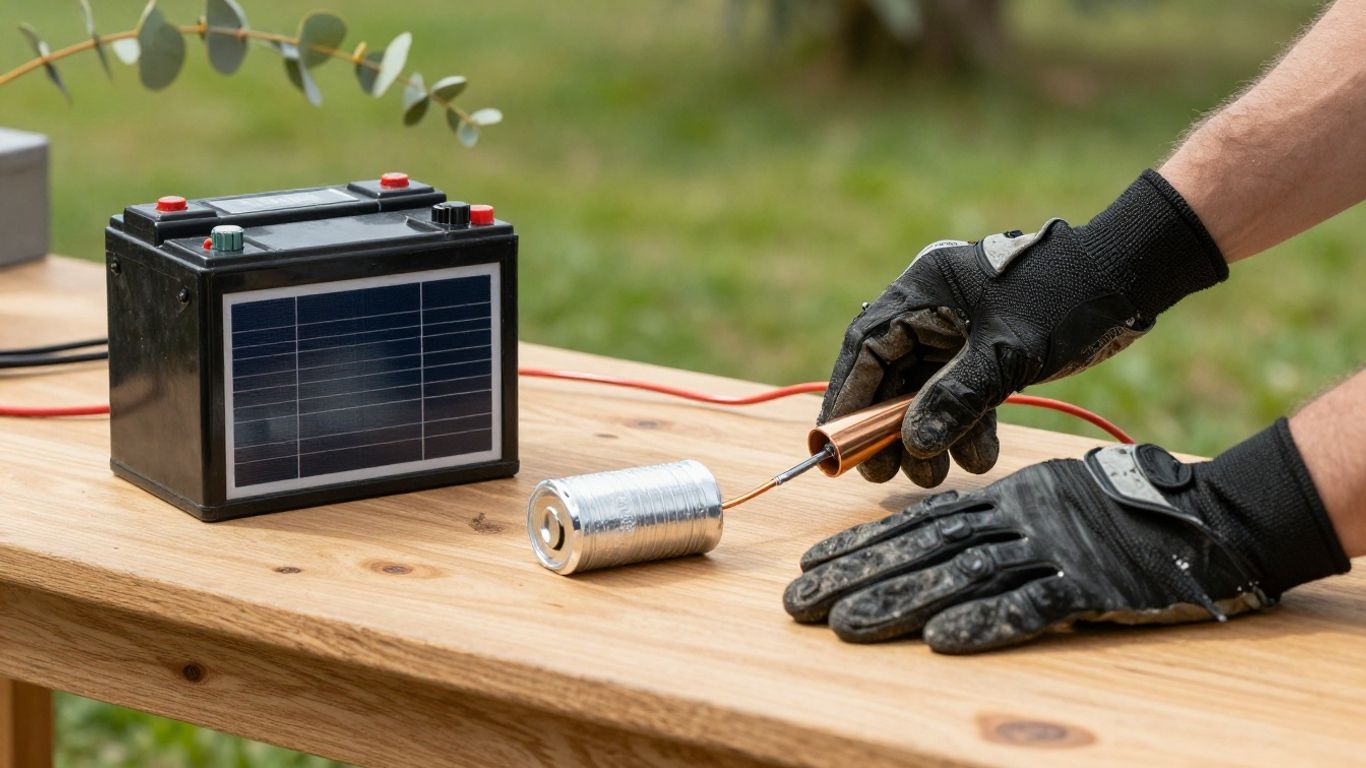
Lithium iron phosphate, commonly called LiFePO4, generally offers a high usable proportion of its rated capacity and lower weight than comparable lead-acid storage. It is often a practical choice when the battery will be charged and discharged regularly, provided the charge controller and battery management system are compatible. The Dakota Lithium solar battery banks page, for example, describes deep-cycle LiFePO4 batteries and portable power stations for off-grid and backup use; those are product-specific descriptions, not a guarantee for every lithium battery.
AGM and gel batteries for smaller solar systems
AGM and gel batteries are sealed lead-acid options that can be convenient where a straightforward installation and moderate energy demand matter more than maximum cycle life. They are often considered for small sheds, communications equipment, caravans and occasional backup. Their charging profile still needs to be set correctly, and they should not be treated as maintenance-free in every respect. Temperature, ventilation and storage conditions remain relevant.
Lead-acid batteries and their practical limitations
Traditional flooded lead-acid batteries can be economical for some stationary applications, but they require more care than sealed alternatives. They are heavier for a comparable usable energy level and can be damaged by repeated deep discharge. They may also require ventilation and regular inspection of electrolyte levels, depending on the design. A low purchase price therefore needs to be weighed against installation effort, usable capacity and replacement frequency.
Comparing lifespan, weight, safety and upfront cost
A sensible comparison looks beyond the price on the invoice. Lithium batteries commonly reduce weight and may provide more usable energy, but they require compatible protection and can cost more initially. Lead-acid batteries may suit a lower-use system, although their greater mass and more conservative discharge limits can change the total cost over time. Ask an installer to compare expected cycles and usable watt-hours rather than comparing nominal amp-hours alone.
Calculate the battery capacity you need
Capacity planning starts with how much electricity you actually use and when you use it. A battery that is too small may reach its limit early each evening, while an oversized battery can remain undercharged and add unnecessary cost. Begin with measured loads where possible, then include realistic losses and a reserve for the local weather pattern. This approach is more reliable than choosing a battery based on panel size alone.
Estimating daily energy consumption
List each appliance, its wattage and the number of hours it runs each day. Refrigerators, pumps and inverters may have starting or standby demands that are easy to miss, while lights and small electronics are usually simpler to estimate. Multiply watts by hours to get watt-hours, then total the results for a typical day. If usage changes seasonally, calculate both an average day and a higher-demand day.
Converting watt-hours into amp-hours
To convert energy into battery capacity, divide watt-hours by the battery’s nominal voltage. For example, 1,200 watt-hours at 12 volts is 100 amp-hours before allowing for discharge limits and system losses. At 24 volts, the same energy is 50 amp-hours. The calculation is simple, but the result is only a starting point because the battery cannot always deliver its full nominal rating in normal operation.
Allowing for depth of discharge and system losses
Depth of discharge describes how much of the stored energy is used before recharging. If your design allows only 80 per cent of a battery’s nominal capacity to be used, a 100 amp-hour unit provides about 80 amp-hours before other losses. Inverter efficiency, cable resistance and controller losses reduce the final figure further. Write these assumptions down so a future replacement is compared on the same basis.
Planning extra capacity for cloudy weather
A system used every day needs a plan for several dull or rainy days, not just a clear summer afternoon. The reserve may come from more battery capacity, more panel generation, a generator or a mains connection. Avoid adding storage without checking that the panels can recharge it; a large battery that rarely reaches a healthy state of charge can perform poorly. Local rainfall, seasonal shading and the consequences of losing power should guide the reserve.
Match the battery to your solar system
A battery is only one part of a working solar system. Voltage mismatches, an undersized controller or an inverter that cannot handle the load can undermine an otherwise suitable battery. Check every component’s technical documentation before making a purchase, and use a qualified professional for fixed installations where required. Compatibility is a system question, not a battery-only question.
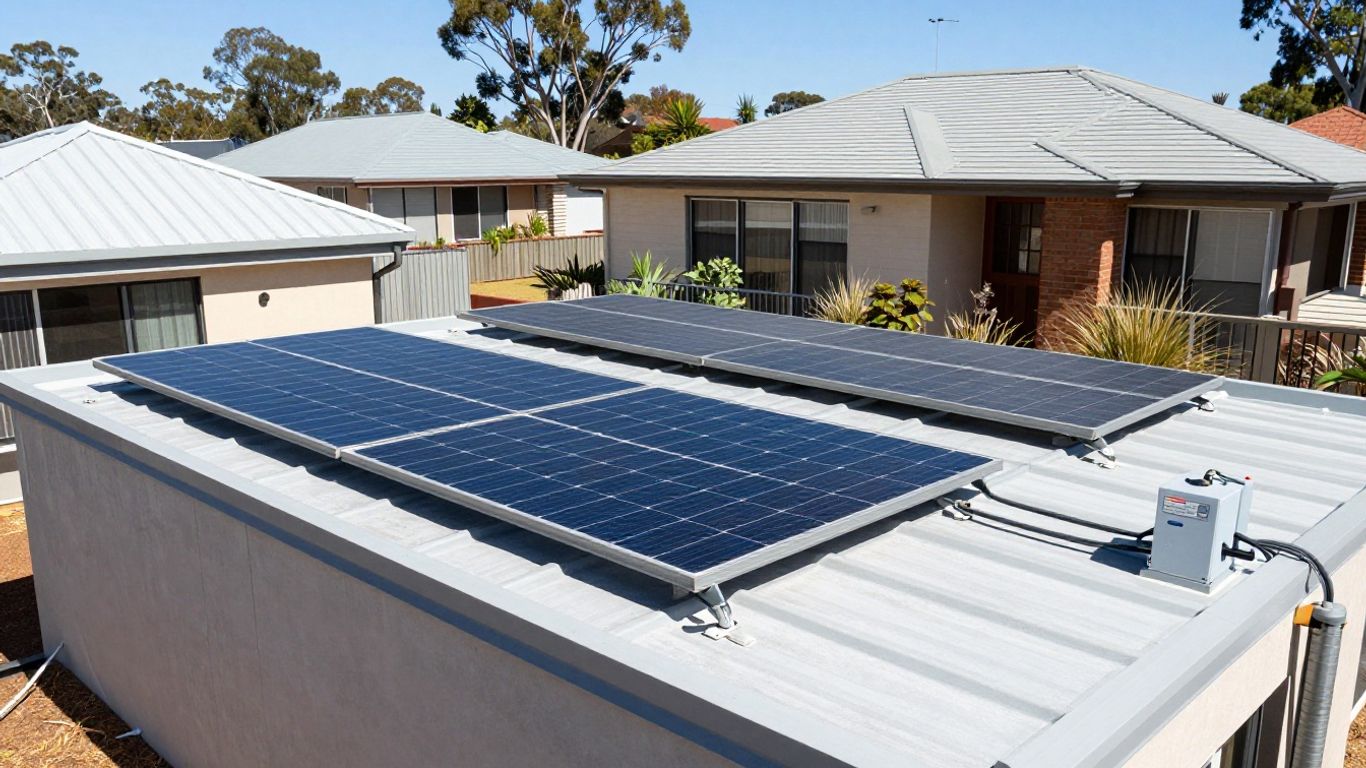
Checking voltage compatibility
Common nominal system voltages include 12, 24 and 48 volts, but the actual charging voltage is higher than the nominal label. The battery, controller, inverter and protective equipment must all be suitable for the same system architecture. Batteries should not be mixed casually, particularly when they differ in age, chemistry, capacity or internal resistance. If more storage is needed, use a design intended for parallel or series expansion.
Sizing the solar charge controller
A controller must tolerate the panel array’s maximum current and voltage, including conditions that may increase voltage in cold weather. Its battery output also needs to suit the battery chemistry and expected charging current. Leave a sensible margin rather than sizing right at the stated limit. The controller’s manufacturer settings should include the correct absorption, float or lithium charging behaviour for the selected battery.
Choosing between PWM and MPPT controllers
PWM controllers can be suitable for basic, smaller systems where panel and battery voltages are closely matched. MPPT controllers can make better use of a panel array with a higher operating voltage, although they usually cost more and need to be specified correctly. Neither type fixes poor panel positioning, excessive shade or an incorrectly sized battery. Compare the full system design rather than choosing by controller label alone.
Confirming inverter and appliance requirements
The inverter needs enough continuous power for normal loads and enough surge capacity for appliances with motors or compressors. Check its low-voltage cut-off, standby consumption, waveform requirements and compatibility with the battery’s maximum discharge current. A battery may have plenty of stored energy but still fail to run a large appliance if its output current is limited. List the appliances that must operate together before selecting the inverter.
Design a reliable solar charging setup
Reliability comes from small design decisions made before installation. Panels need a clear solar path, cables need suitable protection and the battery needs monitoring that makes unusual behaviour visible early. Australian heat, dust, storms and long periods of strong sunlight all deserve consideration. A tidy system is easier to inspect and safer to service.
Positioning panels for Australian conditions
Panel orientation and tilt should suit the site, while nearby trees, roof structures and seasonal shadows need to be checked across the day. Keep panels accessible for inspection without creating a fall risk, and account for wind exposure, salt air near the coast and dust in regional areas. Roof work also needs careful planning around flashing, penetrations and ventilation; the Roofing 101 guide is a useful reminder that a roof is a complete system, not just a surface for mounting equipment.
Connecting batteries safely and efficiently
Use cable sizes suitable for the expected current and keep high-current cable runs as short as practical. Terminals should be tight without being damaged by over-tightening, and connections should be protected from moisture and accidental contact. Batteries placed in parallel should use an arrangement that encourages balanced current sharing. Do not improvise connectors or combine batteries with incompatible specifications.
Using monitoring systems to track performance
A monitor can show voltage, current, state of charge and energy flow, depending on the equipment installed. Reviewing those readings over time helps distinguish low solar generation from increased consumption or a battery that is losing usable capacity. Keep a simple record of unusual readings, maintenance and weather conditions. For work involving multiple technicians or service visits, a field service management system can help organise scheduling and inventory, although it is separate from the solar hardware itself.
Adding a battery management system for lithium batteries
A battery management system, or BMS, monitors lithium cells and can protect against unsuitable voltage, current and temperature conditions. The BMS must be compatible with the battery pack and the charging equipment; it is not a substitute for correct system design. Check whether the battery includes an internal BMS and how it communicates with the controller or inverter. Follow the battery maker’s instructions rather than changing protective settings casually.
Install and use the battery safely
Stored electrical energy can cause serious injury, fire or equipment damage if it is handled carelessly. Installation should account for battery chemistry, fault current, ventilation, temperature, cable routing and isolation. Australian rules and local requirements may apply differently to portable equipment, fixed systems and work connected to a building. When in doubt, use a licensed electrician or an appropriately qualified solar installer.
Ventilation and temperature considerations
Lead-acid batteries can release gases during charging, so the installation area may need effective ventilation and separation from ignition sources. Lithium batteries do not require the same ventilation approach, but they still need protection from excessive heat, cold, water and physical damage. Avoid placing any battery in a sealed hot cupboard or directly beside a heat-producing appliance. The manufacturer’s operating temperature limits should guide the location.
Protecting cables with fuses and circuit breakers
A battery can deliver very high fault current, even when the connected solar array is relatively small. Fit correctly rated fuses or circuit breakers close to the battery and provide isolation points that can be reached safely. Protective devices must match the cable size, expected current and interruption rating. A fuse is not a replacement for careful cable routing, secure terminals and a covered battery enclosure.
Preventing overcharging, deep discharge and short circuits
Correct controller settings are the first defence against overcharging, while low-voltage cut-offs help prevent harmful over-discharge. Keep tools, jewellery and loose metal away from exposed terminals, and isolate the system before maintenance. Never bypass a BMS or protective device to make a system run temporarily. Clear labelling and a written shutdown procedure are particularly useful in shared homes, workshops and holiday properties.
Following Australian electrical and installation requirements
Fixed solar and battery work may involve electrical, building, fire and grid-connection requirements. The rules depend on the installation, location and equipment, so online general advice cannot replace a site assessment. Confirm who is responsible for design, certification, commissioning and future servicing before work begins. For related household work, even a practical local roofing contractors directory shows why location and trade suitability matter when selecting help.
Maintain and troubleshoot your solar battery
Regular checks help identify a loose connection or declining battery before it becomes a complete outage. Keep the manufacturer’s instructions, installation diagram and commissioning readings together. Maintenance should be performed with the system isolated where necessary, and damaged batteries should not be opened or repaired casually. A measured, gradual approach is safer than replacing components at random.
Inspecting terminals, cables and connections
Look for corrosion, heat discolouration, swelling, cracked insulation, loose lugs and signs of water entry. Clean and tighten connections only when the equipment is safely isolated and the procedure is permitted by the manufacturer. Check that cables are supported, protected from sharp edges and not compressed by covers or doors. Any melted insulation, strong odour or visible damage warrants professional attention.
Testing battery health and charging performance
Compare the battery’s voltage and charge current with the expected readings for the current stage of charging. A single voltage reading cannot fully measure state of health, especially under load, so use the monitor’s history and a controlled test where appropriate. Check panel generation, controller status and inverter consumption as separate parts of the diagnosis. Good records make gradual capacity loss easier to recognise.
Diagnosing slow charging and unexpected power loss
Slow charging may be caused by shade, dirty panels, seasonal sun angles, an incorrect controller setting, a damaged cable or increased household demand. Unexpected power loss can also come from inverter standby use, a low-voltage cut-off or a battery that is no longer holding its expected charge. Test one part of the system at a time instead of assuming the battery is at fault. If the issue involves a building’s roof or electrical work, use an appropriate local trade; a guide to selling a house privately is unrelated to diagnosis but illustrates why property decisions often involve formal responsibilities and documentation.
Knowing when to replace the battery
Replacement may be sensible when usable capacity has fallen substantially, the battery repeatedly trips protection, the case is swollen or damaged, or the system can no longer meet normal loads. Compare the replacement’s voltage, chemistry, dimensions, communication requirements and warranty with the existing equipment. Do not dispose of batteries in household rubbish; arrange recycling or an approved collection service. A new battery will not solve a panel or controller problem, so confirm the cause before ordering.
Conclusion
The right battery for solar charging is the one that fits your real energy use, solar generation, system voltage, budget and safety conditions. Compare usable capacity rather than headline figures, allow for Australian weather and have the complete installation checked by a qualified professional where required. A little planning at the start makes everyday charging more predictable and future maintenance much easier.
Frequently Asked Questions
What is the best battery for solar charging?
There is no single best option for every system. Lithium iron phosphate often suits frequent cycling and weight-sensitive installations, while AGM, gel or other lead-acid batteries may suit smaller or less frequently used systems.
How many batteries do I need for solar charging?
Calculate your daily watt-hour demand, convert it to the system voltage, then allow for depth of discharge, losses and cloudy weather. The result should also be checked against the amount of solar energy available to recharge the batteries.
Can a solar panel charge a battery without a controller?
A controller is normally needed to regulate charging and protect the battery from unsuitable voltage or current. Small products may include regulation internally, but the manufacturer’s instructions should always be followed.
Is a 12-volt or 24-volt battery better for solar?
Neither is automatically better. A 12-volt system can suit smaller loads, while 24-volt systems can reduce current and cable demands for larger installations. The battery, controller, inverter and loads must all be compatible.
How long does a solar battery last?
Service life depends on chemistry, temperature, charging settings, depth of discharge, cycling and maintenance. Manufacturer cycle figures are based on stated test conditions and should not be treated as a guaranteed household lifespan.
Can solar batteries be installed outdoors?
Some batteries are designed for outdoor use, but the location still needs protection from water, heat, flooding, impact and unauthorised access. Check the enclosure rating and operating temperature requirements before installing outdoors.
When should I ask an electrician for help?
Ask a qualified professional for fixed wiring, high-current battery connections, grid-connected systems, unusual faults, damaged batteries or any work you are not trained and authorised to perform. Safety and compliance should take priority over a do-it-yourself shortcut.