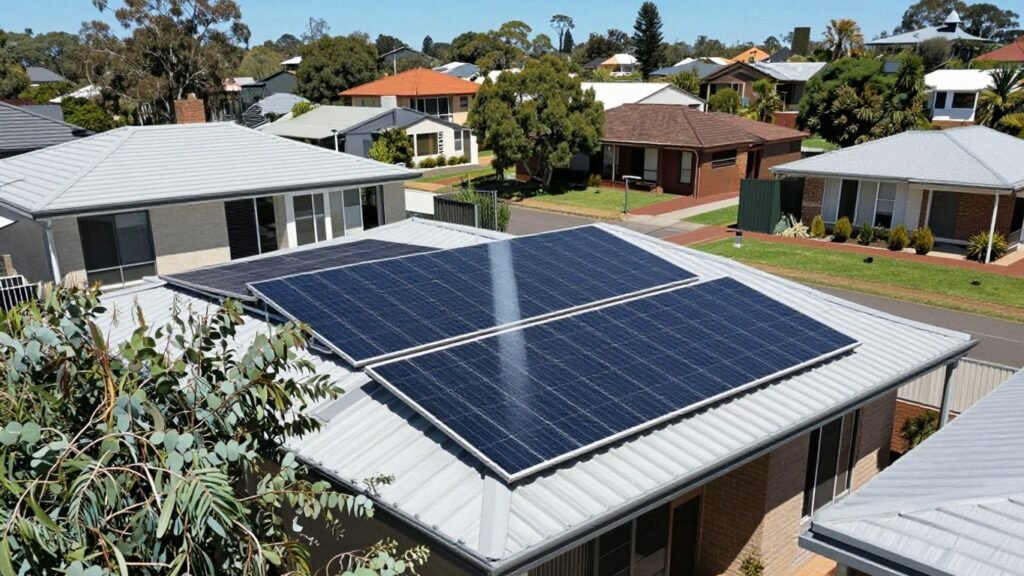
Key Takeaways
A 1 kW solar system is a modest starting point, but it can still reduce daytime grid consumption when designed around the home’s actual usage.
- A 1 kW array usually uses three or four modern panels, depending on their rated wattage.
- Australian output varies with location, roof orientation, weather, shading and system losses.
- The system includes more than panels: an inverter, mounting hardware, cabling and electrical protection are also needed.
- A small array may suit a shed, granny flat, small household or targeted daytime loads better than a typical family home.
- Compare quotes on expected output, compliance, warranties and total installed cost rather than panel price alone.
What a 1 kW solar panel system includes
A 1 kW solar system refers to the combined rated capacity of the solar panels, measured under standard testing conditions. It is not a promise that the system will produce 1 kW continuously, because sunlight changes throughout the day. The finished installation also needs equipment that safely converts, supports and routes the electricity. Understanding those parts makes it easier to compare a quote fairly.
How many panels make up 1 kW
The panel count depends on the wattage of the individual modules. Three 330-watt panels come close to 1 kW, while four 250-watt panels provide a similar nominal capacity. The wording “1 kW solar panels” can therefore describe a system made from several panels rather than one very large panel.
As a broad comparison, the 1 kW solar panel size guide explains how panel wattage affects dimensions and how a 1 kW array may require roughly 6–7 square metres before allowing for spacing and roof access.
Inverter, mounting and other balance-of-system components
Panels produce direct-current electricity, while most household appliances use alternating current. A suitable inverter performs that conversion and manages the connection to the home or grid. Mounting rails, clamps, isolators, cabling, circuit protection and monitoring equipment complete the balance of the system.
A battery system may also use a charge controller or a hybrid inverter, depending on the design. The exact equipment should be listed in the proposal rather than assumed from the panel capacity alone.
Roof space and panel layout requirements
Roof space is only one consideration. The installer must check usable areas, roof pitch, structural condition, access paths and the location of vents or skylights. A clean, unshaded section may produce more useful energy than a larger area interrupted by chimneys or nearby trees.
Gutters and downpipes also matter during planning because they affect safe access and roof drainage. Before work begins, it can be useful to review this roof gutter sizing guide, particularly for older homes or roofs that already overflow during heavy rain.
Grid-connected and off-grid configurations
A grid-connected system normally sends surplus generation to the household first, with excess electricity exported according to the retailer and network arrangements. It generally shuts down during a grid outage unless it has a properly designed backup function. An off-grid setup needs batteries and equipment sized for periods without sunlight, not just panels.
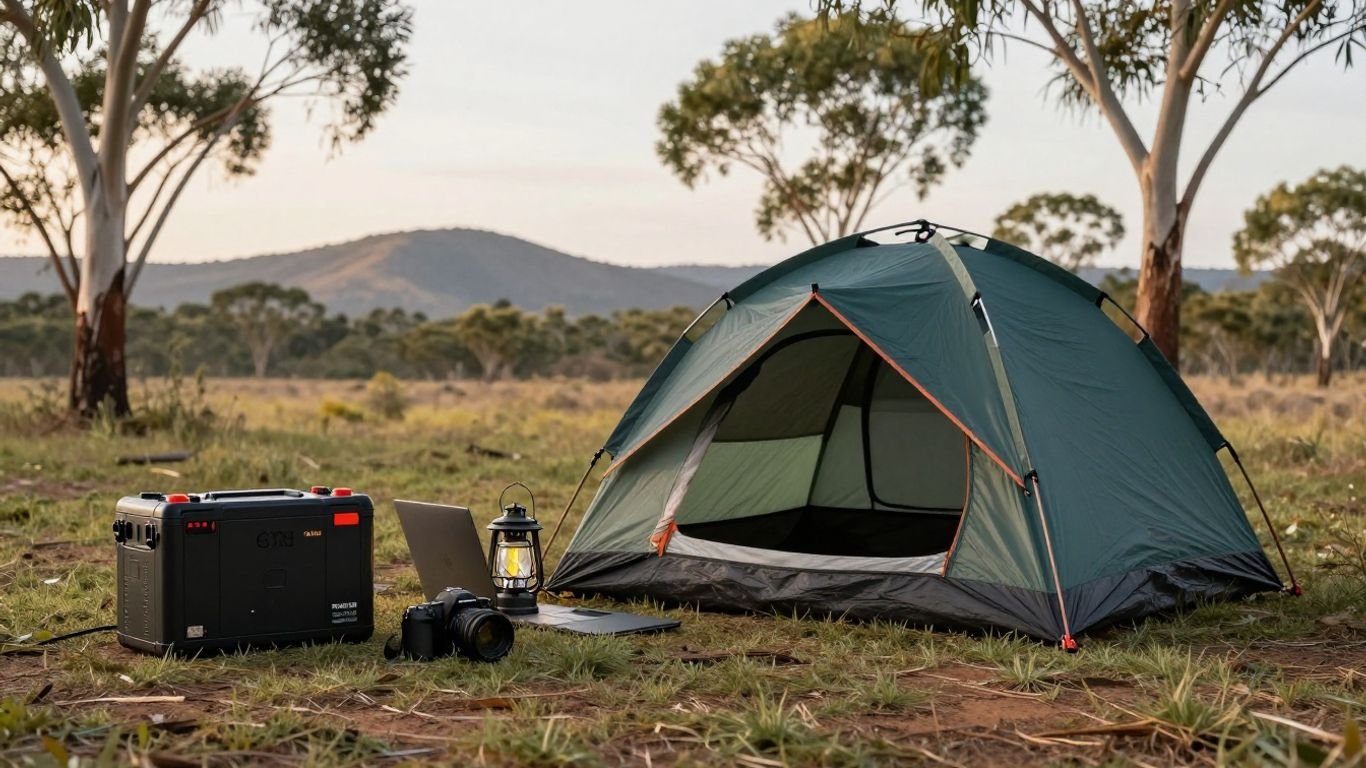
The appropriate configuration depends on the property, intended loads and local connection rules. A kit marketed for a boat, shed or recreational vehicle may not be suitable for a standard Australian home connection without additional design and approvals.
How much electricity 1 kW solar panels can generate
Output is best treated as an estimate rather than a fixed daily figure. In many Australian locations, a well-sited 1 kW array might generate roughly 3–5 kWh on a reasonably sunny day, with lower results in poor weather and higher results under favourable conditions. Annual production can therefore vary substantially between suburbs and seasons.
The figure shown on a quote may be a modelled average, while the meter records real conditions. Allowances for inverter losses, temperature, wiring and temporary downtime should be part of any realistic comparison.
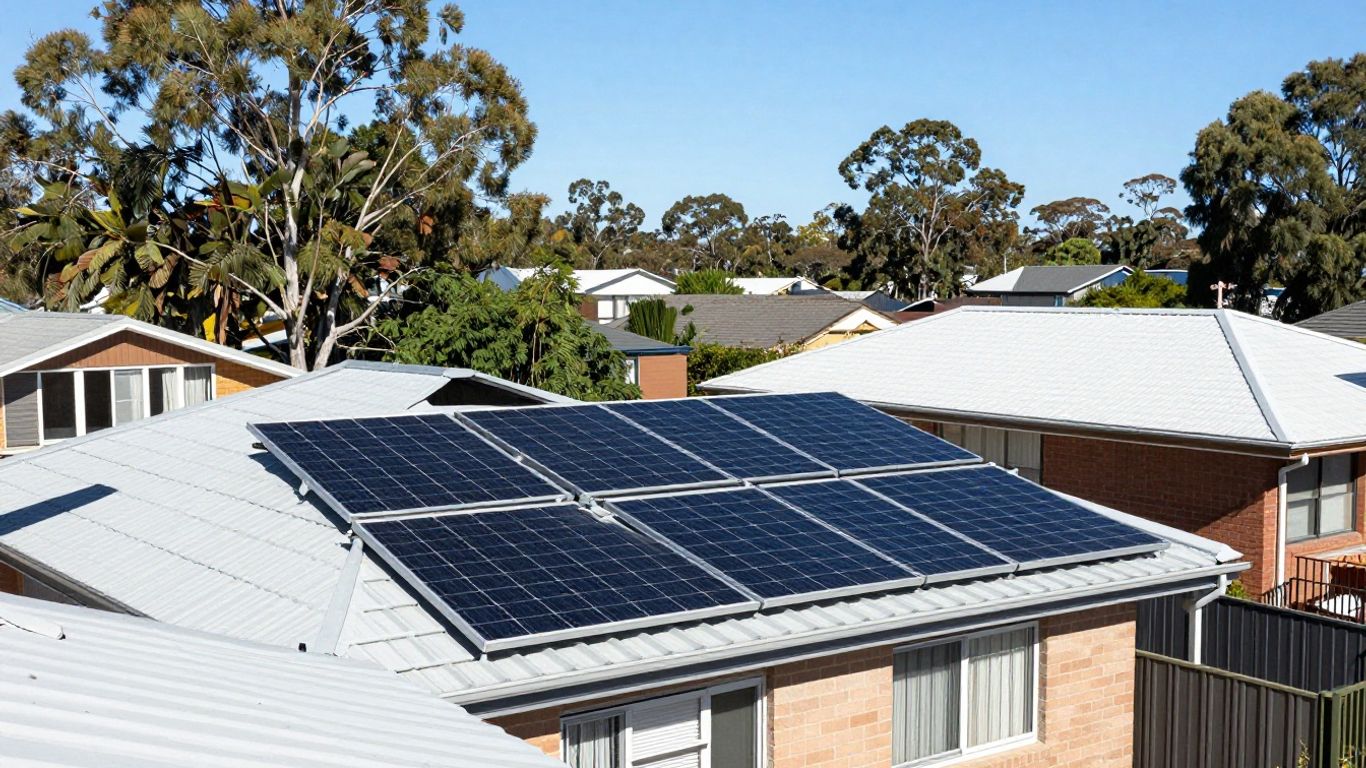
Average daily and annual output in Australia
A broad planning estimate for a 1 kW system is around 1,100–1,800 kWh per year, although the lower or upper end may be more realistic depending on where the home is located. Northern and inland areas can have strong solar exposure, while coastal cloud, winter weather and local shading can reduce production.
These figures are useful for early budgeting, not a guarantee. Ask an installer to show the assumptions behind the estimate, including orientation, tilt, shading and expected system losses.
Why location and solar exposure affect generation
Solar exposure changes with latitude, cloud cover, local weather and the surrounding built environment. A roof facing a useful direction with few obstructions generally receives more productive sunlight than one shaded for several hours each day. Even nearby trees can become a problem as their shadow moves across the array.
The roof’s usable area and the timing of sunlight matter as well. A north-facing roof is not the only workable option, but an east- or west-facing layout may shift generation towards morning or afternoon rather than maximise the midday peak.
Seasonal changes in system performance
Longer summer days usually provide more generation, while winter brings shorter daylight hours and a lower sun angle. Rain and cloud can affect individual days, so a monthly result may look very different from the annual average. Household demand can change seasonally too, particularly where heating or cooling is used heavily.
That mismatch is one reason a small system should be assessed against daytime consumption, not just the total electricity bill. A system can be useful even when its winter output is modest if its summer generation is well matched to regular daytime loads.
The impact of shading, dirt and panel orientation
Shading can reduce output disproportionately, especially when panels are connected in a string. Dirt, bird droppings and salt near the coast may also lower performance, although the effect depends on the severity and whether rain removes the build-up. Panels should be kept clear of avoidable obstructions and checked safely rather than cleaned casually from a roof.
Monitoring helps separate a normal cloudy day from a developing fault. If generation falls unexpectedly for several clear days, check the monitoring data and contact the installer before assuming the panels need washing.
Choosing the right panels and equipment
The cheapest equipment is not automatically the best value. Panel dimensions, inverter compatibility, roof conditions, warranty terms and installer workmanship all influence the result. A good proposal should explain why the selected equipment suits the property rather than simply listing a collection of model numbers.
For a useful comparison, focus on expected energy over time and the quality of the installation. The total system design matters more than a single headline efficiency figure.
Comparing panel wattage, efficiency and dimensions
Higher-wattage panels can reduce the number of modules needed, which may help where roof space is tight. Their physical size still needs to fit around ridges, vents, fire-access pathways and roof edges. Efficiency describes how much sunlight a panel converts in testing; it does not eliminate the effects of shade or poor orientation.
A compact roof may favour higher-wattage modules, while a larger roof may make a wider range of panels practical. The panel dimensions comparison provides a useful starting point, but the installer should verify the actual product dimensions in the quote.
Selecting a suitable inverter size
The inverter should match the array, the electrical supply and the intended configuration. A slightly different inverter capacity may be appropriate where future expansion, export limits or battery storage is being considered. Oversizing or undersizing without a design reason can create avoidable costs or reduce flexibility.
Ask whether the proposal includes single-phase or three-phase requirements, export control and a monitoring method. Those details can matter as much as the nominal inverter rating.
Monocrystalline versus other panel technologies
Monocrystalline modules are common in residential installations because they generally offer strong efficiency in a familiar format. Other technologies may suit particular applications, but availability, dimensions, temperature behaviour and price need to be considered together.
There is no universal winner for every roof. The sensible choice is the panel that fits the available space, budget, electrical design and expected conditions, with independent certification and a clear warranty.
Checking warranties, certifications and product quality
Read the product warranty separately from the installer’s workmanship warranty. Check what is covered, how claims are handled and whether the quoted terms apply in Australia. Electrical approvals, product certification and a compliant installation are essential, particularly for a grid-connected home.
A quote should identify the exact panels, inverter, mounting system and service arrangements. Vague descriptions make it difficult to compare offers or resolve a problem later.
Understanding the cost of a 1 kW solar system
The installed price of a small system does not fall in direct proportion to its capacity. Labour, site visits, design, scaffolding, electrical work and administration can take up a significant share of the total. This is why a 1 kW installation may have a higher cost per watt than a larger rooftop system.
Prices also vary with roof access, switchboard condition, regional labour rates and the equipment selected. Treat online figures as broad guides and seek written, itemised quotes for the property.
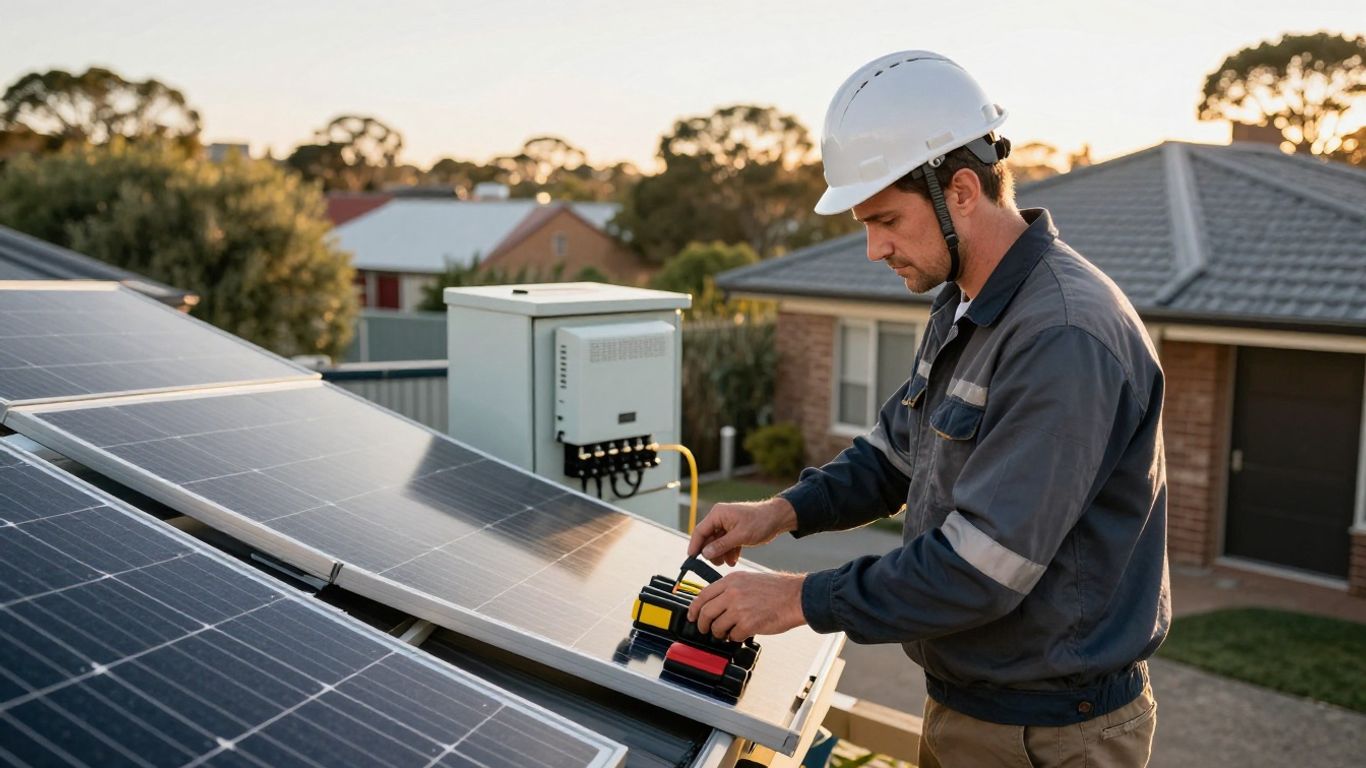
Equipment, installation and approval costs
A quote may include panels, inverter, rails, cabling, protection devices, labour, commissioning and grid-connection administration. Ask whether any switchboard upgrades, meter changes, engineering checks or extra roof work are excluded. Small omissions can make a low initial quote less useful than a slightly higher complete proposal.
The following breakdown shows the cost categories worth comparing, without pretending that one national price applies to every home.
| Cost category | What it may cover | Why it varies |
|---|---|---|
| Solar modules | Panels and product warranty | Brand, wattage and efficiency |
| Inverter and protection | Inverter, isolators and monitoring | Configuration and electrical supply |
| Mounting and cabling | Rails, clamps and wiring | Roof type, layout and access |
| Installation and approvals | Labour, paperwork and commissioning | Location, network and site complexity |
After reviewing the categories, check whether the quote states GST, rebates, monitoring, removal of old equipment and any future service costs. That makes competing proposals much easier to assess.
How Australian rebates and incentives may apply
Australian solar incentives can depend on system size, location, eligibility rules and the date of installation. The advertised price may already include an incentive, so ask for the gross price, the applicable reduction and the final amount payable. State and territory programmes can also change over time.
Do not assume that a small system receives the same treatment as a larger installation. Confirm current requirements through official sources and ensure the installer is qualified to claim any certificate-based benefit.
Battery storage and optional upgrades
A battery can store surplus solar for later use, but it adds substantial cost and does not automatically improve the financial case for a 1 kW array. The battery needs to be matched to the system’s daily generation, evening loads and desired backup duration. Monitoring, optimisers and extra electrical work are other possible additions.
For a small array, the battery may spend much of its time partly charged simply because there is not enough surplus energy. Model the expected charging pattern before treating storage as an essential upgrade.
Estimating payback and long-term savings
Payback depends on the installed price, self-consumption, export payments, electricity tariffs, maintenance and future equipment performance. A household that uses most of its solar during daylight may save more per kilowatt-hour than one that exports much of its generation. Simple payback calculations should be tested against conservative output assumptions.
Do not confuse a case study or sales estimate with a guaranteed result. A clear model should show annual generation, self-consumption, exports and the assumptions behind each dollar figure.
Is a 1 kW solar system suitable for your energy needs?
A 1 kW system is rarely intended to run every appliance in a standard Australian family home at once. It is better viewed as a targeted generator that can offset part of daytime demand. The right size depends on occupancy, appliances, roof space, budget and whether the home is connected to the grid.
Start with interval usage if it is available, then compare that pattern with the likely solar production curve. A small system can make sense when the goal is narrow and clearly defined.
Household appliances a 1 kW system can help power
During suitable daylight conditions, the system may contribute to loads such as refrigeration, lighting, computers, a television or small kitchen appliances. It cannot be assumed to run high-demand equipment continuously, particularly when several appliances start together. The inverter’s output limit is as relevant as the panels’ combined rating.
For practical household savings, reducing demand can work alongside solar. Measures such as insulation and efficient heating are discussed in this guide to heating a room cheaply, which is relevant when considering the load a small system must offset.
Matching system capacity to daytime electricity use
A small array is most useful when regular consumption occurs while the sun is up. Work-from-home equipment, refrigeration, daytime hot-water control or a small workshop may provide a steadier match than evening-only use. Moving flexible tasks into sunny hours can improve self-consumption without adding panels.
Track several typical days rather than relying on one bill. Weather, weekends and seasonal routines can all change the result.
When a larger solar system may be more practical
A larger system may be more suitable for a family home with electric hot water, heating, cooling, cooking, pool equipment or an electric vehicle. It can provide more useful generation across the year and may make the fixed costs of installation more worthwhile. Roof space, export limits and budget still need to be checked.
A 1 kW system can be a sensible first step, but expanding later is not always straightforward. Inverter capacity, roof layout and network requirements should be considered before installation.
Situations where a small system makes sense
A small system may suit a compact dwelling, granny flat, shed, remote monitoring setup, small business load or a household with limited available roof area. It can also be a measured way to learn about solar before committing to a larger installation. The key is to define the load it is expected to offset.
Specialist kits illustrate how different the design can be: A1 SolarStore describes 1 kW configurations for applications including DIY projects, boats and RV support. That does not make every kit appropriate for a residential grid connection, so the equipment and approvals must match the site.
Planning and installing 1 kW solar panels
Good planning prevents many of the problems associated with small systems. Before accepting a quote, inspect the roof, electrical supply, likely shade and household usage. The installer should explain the design in plain language and identify anything that could change the final price.
Australian connection and safety requirements are not optional. Use qualified professionals and keep the documentation supplied at commissioning.
Assessing your roof, switchboard and electrical supply
The assessment should cover roof condition, fixing points, pitch, orientation, shade, switchboard space and the property’s phase arrangement. An old or crowded switchboard may need work before solar equipment can be added. The installer should also identify safe access and any asbestos or structural concerns.
If a roof is due for replacement, complete that work first. Removing and reinstalling panels later can cost more than coordinating the projects from the beginning.
Choosing an accredited Australian installer
Look for an installer with the relevant Australian accreditation, current insurance, a clear written warranty and experience with comparable roofs. Check that the quote names the actual equipment and includes commissioning, documentation and after-sales support. Several detailed quotes are usually more useful than many vague prices.
The installer should be able to explain predicted output, shading assumptions and the proposed safety equipment. Be cautious if a salesperson cannot answer basic questions about the design.
Understanding grid connection and compliance requirements
A grid-connected system must meet network, electrical and product requirements that vary by state, territory and distributor. Applications, approvals, export settings and metering may be handled by the installer, but the homeowner should know what is included. The system should not be switched on as a casual do-it-yourself connection.
One reference, EcoFlow, outlines the usual roles of panels, inverters, charge controllers and batteries in a 1 kW setup. Its general explanation is useful for terminology, while Australian installation decisions still require local compliance advice.
Monitoring performance after installation
After commissioning, learn how to read the monitoring portal or inverter display. Compare generation with weather and season rather than expecting the same number every day. A sustained decline on clear days, repeated alerts or unusual shutdowns deserves attention.
Keep the final documents, warranty details, electrical certificates and network correspondence together. Eco Solar Kits notes that general system information and individual user experiences should not be treated as guarantees; the same caution applies when evaluating any solar result.
For a broader home-maintenance view, professional gutter installation, a comparison of solar roof tiles, and green cleaning solutions address related property decisions, but none replaces a site-specific solar assessment. Privacy-conscious readers can also review the privacy policy when using online calculators or enquiry forms.
Conclusion
A 1 kW solar system can be a practical, compact way to offset daytime electricity use, but its value depends on the roof, local sunlight, household habits and installation quality. Treat output and payback as estimates, compare complete quotes, and choose a system that matches the job rather than the smallest headline price.
Frequently Asked Questions
How many panels are needed for a 1 kW solar system?
Usually three or four panels are enough, depending on whether each panel is rated around 250–400 watts. The exact number depends on the selected products and their nominal capacity.
How much electricity can 1 kW solar panels generate?
A broad Australian planning range is around 3–5 kWh on a sunny day, with annual output often estimated at roughly 1,100–1,800 kWh. Location, shade, weather and system losses can move the result outside that range.
Can a 1 kW system power an entire house?
Generally, no. It can contribute to smaller daytime loads, but it is not normally enough to run all household appliances, particularly high-demand equipment operating at the same time.
Is a battery necessary with a 1 kW system?
No. A battery is optional and should be assessed against evening usage, backup needs, system output and its additional cost. A small array may not produce enough surplus to charge a large battery consistently.
Does roof direction affect solar production?
Yes. Orientation, tilt and shading influence how much sunlight reaches the panels and when generation occurs. East- and west-facing roofs can still work, although their production pattern may differ from a north-facing roof.
Are small solar systems eligible for Australian incentives?
Eligibility depends on current federal, state or territory rules, system details, installer requirements and installation timing. Confirm the position with an accredited installer and the relevant government or network authority.
How should solar performance be monitored?
Use the inverter’s monitoring system to compare generation with weather and seasonal expectations. A persistent drop in output on clear days, repeated faults or unexpected shutdowns should be investigated by the installer.