Key Takeaways
A solar quote is more than a panel count and a dollar figure. Compare the equipment, installation assumptions, likely savings and installer support before you commit.
- Ask for system size, estimated output and the assumptions behind both figures.
- Compare panels, inverters, batteries, warranties and installation inclusions line by line.
- Check the design against your roof, electricity connection, usage and future plans.
- Treat unusually low prices, vague promises and rushed decisions with caution.
- Choose the quote that offers the clearest value for your home, not simply the lowest price.
Understand what a solar quote should include
A useful quote should allow you to understand exactly what is being proposed for your home. It should identify the equipment, describe the installation work and show how the expected results were calculated. If key details are missing, asking for clarification before comparing prices will save you from comparing unlike systems. A practical solar quote comparison guide can help establish the questions worth putting to each installer.
System size, expected output and household energy use
The system size is usually expressed in kilowatts (kW), while expected generation is shown in kilowatt-hours (kWh) over a day, month or year. Those figures are not interchangeable: a larger system may generate more electricity, but its usefulness depends on when your household consumes power and how much energy the network allows you to export.
Look for the proposed panel capacity, the estimated annual generation and the assumptions used for that estimate. Your recent electricity bills are a better starting point than a generic household average. An installer should also explain whether the design is aimed at maximising self-consumption, reducing bills, charging a battery or accommodating future loads.
Solar panels, inverter and battery specifications
The quote should name the panel and inverter models, not just describe them as premium or high performance. Check the panel wattage, efficiency, physical dimensions and product warranty, then confirm the inverter’s rated capacity and warranty. For a battery, look for usable capacity rather than only its total capacity, along with its power rating and operating conditions.
A simple comparison table can expose differences that headline prices conceal:
| Item | What to record | Why it matters |
|---|---|---|
| Panels | Brand, model, wattage and quantity | Establishes capacity and roof-space needs |
| Inverter | Brand, model and AC rating | Affects conversion, limits and future design choices |
| Battery | Usable kWh, power rating and warranty | Indicates how much energy can be stored and used |
| Monitoring | App, portal or hardware included | Helps you check production and consumption |
After filling this in for every offer, check that the proposed equipment is actually included in the price. A quote with a larger battery may still provide less useful value if it has lower usable capacity, limited output or expensive installation conditions.
Installation work, permits and grid connection
Equipment is only part of the job. The quote should explain panel layout, mounting hardware, cable routes, switchboard work, roof access, scaffolding and removal of packaging or old equipment where relevant. It should also state who is responsible for applications, inspections and the electricity distributor’s connection requirements.
Ask whether the price includes upgrades that may be needed after a site inspection. Switchboard changes, tiled or unusual roofs, long cable runs and difficult access can all affect the final cost. A written allowance is more useful than a verbal assurance that everything will be straightforward.
Warranties, workmanship cover and after-sales support
Separate product warranties from installation or workmanship cover. A panel warranty relates to the panel manufacturer, while workmanship cover concerns the quality of the installation itself. The quote or contract should explain who handles a claim, how long each type of cover lasts and whether labour or removal costs are included.
Also ask what happens if the installer changes ownership, stops trading or uses another business for support. Keep copies of the quote, invoices, product registrations and commissioning documents. Good after-sales support is not only about a phone number; it is about having a clear process when a fault appears.
Compare the true cost of solar quotes
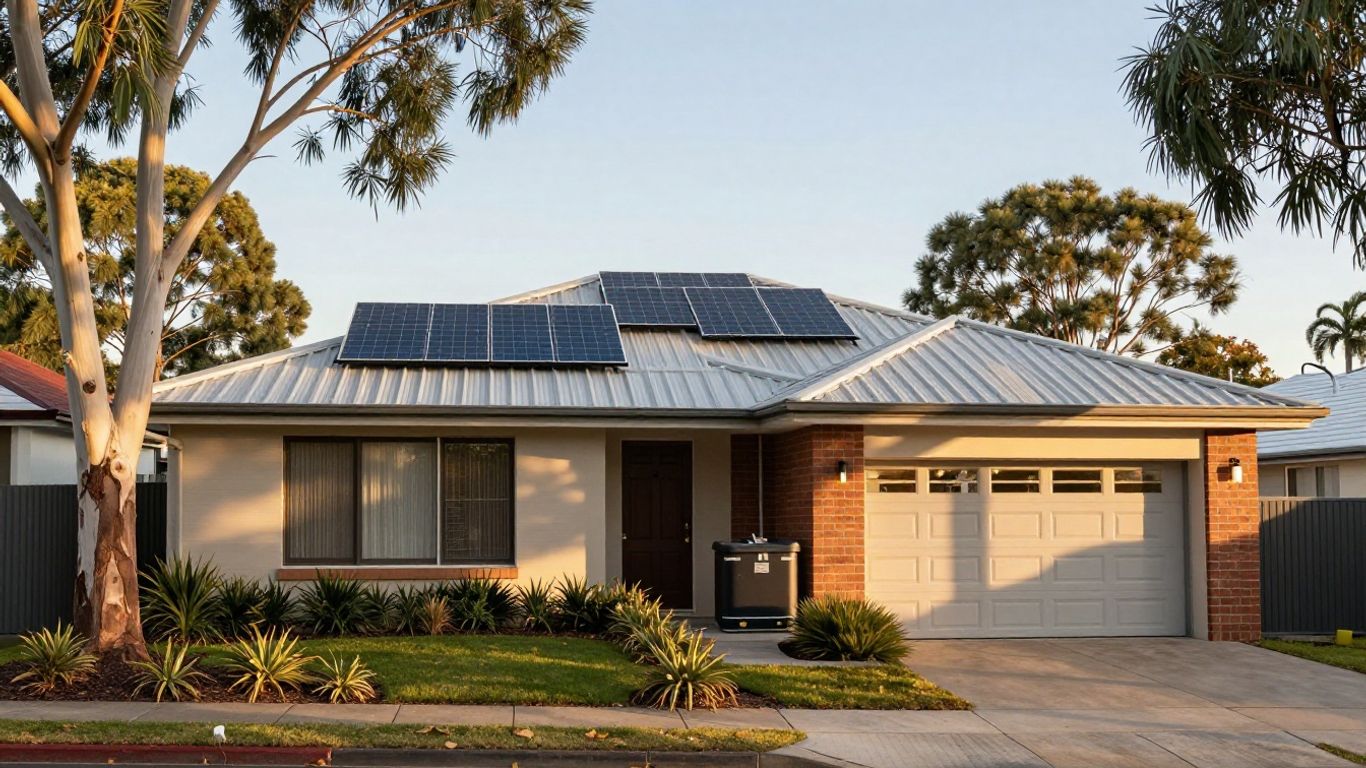
The cheapest offer is not automatically the best value, and the most expensive one may include equipment you do not need. A fair comparison considers the price you pay, the electricity you are likely to use directly, the value of exported energy and the costs that may arrive later. For another view of modelling assumptions, a solar savings estimator can be a useful general reference, provided you check how its assumptions differ from those in your quote.
Upfront price versus long-term value
Start with the total installed price, including GST and any stated rebates or certificates. Then list what the price buys: panel capacity, inverter size, battery capacity, monitoring, switchboard work and warranties. A lower price can reflect a smaller system, fewer inclusions or a more limited installation scope rather than a better deal.
Pay attention to the quality and clarity of the estimate. If one installer has included a switchboard upgrade and another has left it as a possible extra, their prices are not directly comparable. Clear inclusions matter because they reduce the risk of an unpleasant adjustment after you accept the offer.
Rebates, incentives and payment options
Ask the installer to show the gross price, the value of any incentive and the final amount separately. Eligibility can depend on the property, equipment, installer and current scheme rules, so do not treat a quoted rebate as guaranteed without checking the relevant conditions. The timing of the incentive can also affect the amount you pay upfront.
Finance deserves the same scrutiny as the system itself. Compare the interest rate, establishment fees, loan term, total repayment and consequences of paying early. A payment that looks manageable each month can cost considerably more over a longer term.
Feed-in tariffs and estimated bill savings
A feed-in tariff is the rate paid for eligible electricity exported to the grid. It is only one part of the calculation. If your household uses solar power while it is being generated, that energy may reduce the amount you buy from the grid; exported energy is paid at the tariff set by your retailer and plan.
Check whether the quote uses a current retail plan, a fixed tariff or an optimistic future assumption. Savings estimates should show the expected self-consumption, exported generation and grid electricity price. It is sensible to test the result with a lower feed-in tariff, because retail offers and export rates can change.
Battery costs, payback periods and replacement risks
Batteries can increase the amount of solar energy used after sunset, but they add cost, complexity and another component with a finite warranty. Compare usable capacity, maximum charge and discharge power, warranty length, performance conditions and the likely cost of replacement. A battery sized for occasional evening use is a different proposition from one intended to cover substantial overnight demand.
Do not assume a short payback simply because a calculator displays one. The result depends on energy prices, tariffs, battery cycling, financing, degradation and future maintenance. Treat payback as an estimate for a particular set of assumptions, not a promise.
Check whether the system suits your Australian home
A technically impressive system can still be a poor fit if the roof is shaded, the switchboard is unsuitable or the household uses most of its energy at a different time. Australian homes vary widely by climate, roof design, network rules and electricity connection. The quote should therefore reflect your property rather than a standard package. Your broader household budget matters too, just as it does when reading Australian money-saving advice before taking on a large purchase.
Roof orientation, shading and available space
Ask for the proposed panel layout and check which roof faces the panels will use. North-facing arrays are not the only workable option; east and west orientations can suit households with morning or afternoon demand. The key is understanding how orientation, roof pitch and shading affect the generation estimate.
Trees, chimneys, neighbouring buildings and rooftop structures can create partial shade at particular times. Ask whether the design accounts for seasonal shading and whether the installer has measured or modelled it. Available roof space also needs to accommodate setbacks, access paths and any future maintenance requirements.
Local climate, wind ratings and installation conditions
The system must be designed for the conditions at your address. Coastal air, high temperatures, heavy rainfall and strong winds can affect mounting choices and installation methods. Regional and remote properties may also face longer travel distances, different access requirements or delays in obtaining equipment.
Ask what site inspection has occurred and what assumptions remain unconfirmed. A quote based only on an aerial image may not identify roof condition, fragile tiles, asbestos, corrosion or switchboard limitations. These issues should be resolved before installation, not discovered when the crew arrives.
Single-phase and three-phase electricity connections
Your connection type can influence inverter selection, export arrangements and the way electricity is distributed through the home. Some households have single-phase supplies, while others have three-phase connections because of larger loads or particular appliances. The installer should confirm the existing arrangement and explain any distributor requirements.
If the quote proposes changes to the switchboard or connection, ask for the reason and the full price. Do not infer that a three-phase home automatically needs a three-phase system, or that every inverter will operate in the same way. The design should be based on the property’s electrical configuration and approved connection conditions.
Current usage, future needs and electric vehicle charging
Use at least twelve months of bills if possible, while also thinking about changes that may affect demand. More people working from home, a heat pump, a pool, induction cooking or an electric vehicle can alter when and how much electricity you use. A system sized only around yesterday’s usage may not suit the next few years.
Tell the installer about likely additions before the design is finalised. Ask whether the inverter, roof space, switchboard and battery can support a later change, and what would need to be replaced rather than simply added. Planning ahead does not mean buying the biggest system; it means avoiding a design that closes off sensible options.
Assess solar installers before signing
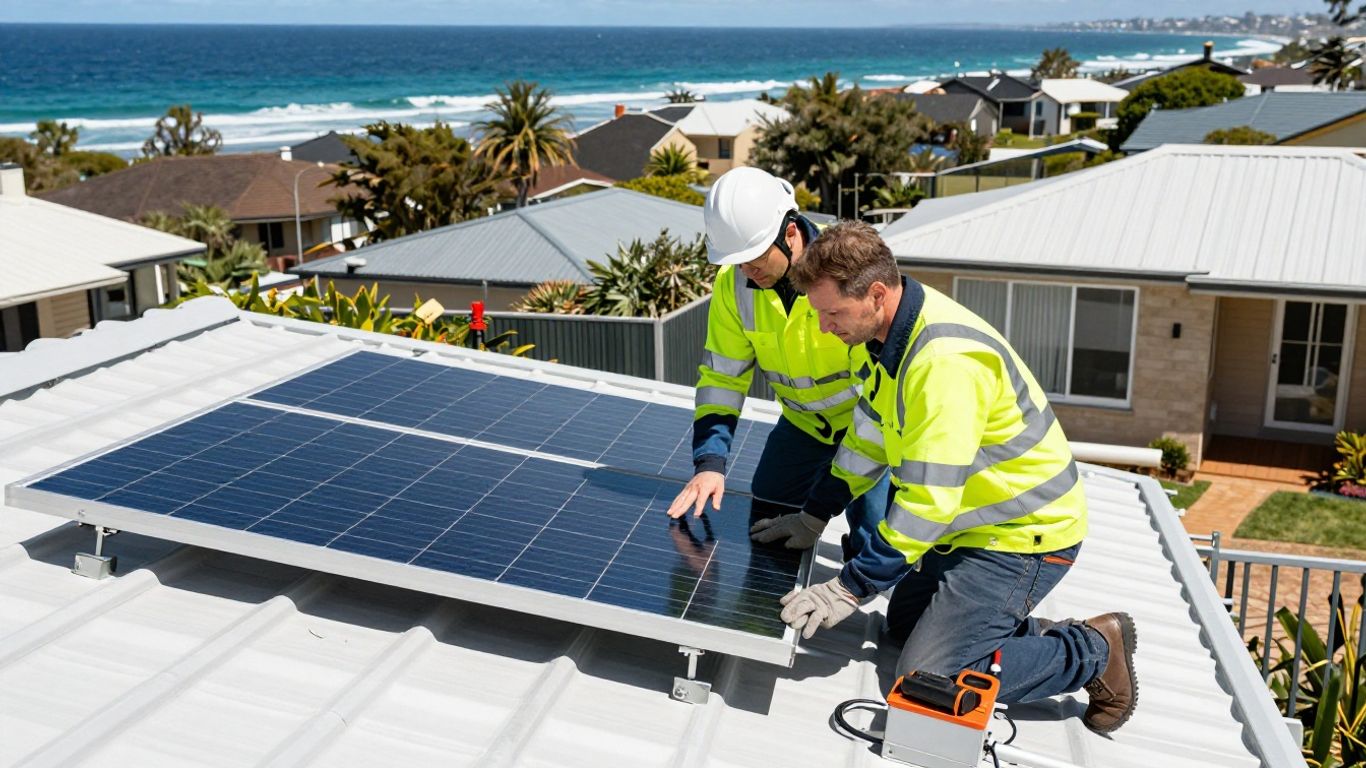
The installer is as important as the equipment listed on the page. A sound proposal should be supported by a business that can explain its work, answer questions plainly and provide records after commissioning. Take time to check credentials and references rather than relying on polished sales material. The same habit is useful when assessing any local service, from a property inspection guide to a building-related recommendation.
Accreditation, licences and relevant experience
Check the installer’s accreditation, electrical licences and eligibility for any scheme being used. Ask who will design and install the system, and whether the person selling it is the same business responsible for the work. Relevant experience with your roof type, local conditions and proposed equipment is more meaningful than a vague claim of being established.
You can also ask for evidence of insurance and the documents you will receive at handover. These may include compliance records, system details, manuals and monitoring access. If an installer resists reasonable questions about qualifications, pause before proceeding.
Reviews, references and complaint history
Online reviews can reveal patterns, but they should not be treated as a substitute for your own questions. Look for recurring comments about communication, delays, unfinished work and warranty responses, not only comments about the salesperson. Recent reviews are particularly useful when a business has changed staff or ownership.
Ask for references from customers with a similar roof, system size or battery setup. A reference should help you learn whether the installation matched the quote, whether the site was left tidy and how faults were handled. Be wary of references that cannot be independently verified.
Subcontractors, project timelines and communication
Find out whether the installer employs its own electricians or uses subcontractors. Subcontracting is not necessarily a problem, but you should know who will attend your property and who remains accountable for the finished work. The quote should give a realistic sequence from acceptance and site inspection through to installation, inspection and connection.
Before choosing, write down the communication arrangements. A reliable process includes a named contact, written updates when dates change and a clear route for raising defects. Delays can occur, particularly when equipment or distributor approvals are involved; silence and uncertainty are the more useful warning signs.
Warning signs of high-pressure sales tactics
A salesperson who insists that you must sign immediately is making the decision harder, not better. Be cautious when a quote is valid for only a few hours, the product models are withheld, savings are guaranteed or a large deposit is demanded before the scope is clear. Vague claims about government support also deserve verification.
A short checklist can keep the conversation grounded:
- Can the installer explain every major line item in writing?
- Are the equipment models and warranties identified clearly?
- Are likely extra costs and site conditions stated?
- Is there enough time to compare the contract and ask questions?
After using these questions, step away from the sales conversation and review the offer calmly. A genuine quote should still make sense the next day.
Evaluate the performance claims in each quote
Generation estimates are useful only when their assumptions are visible. Two installers may quote the same panel capacity but predict different annual output because they have used different shading, orientation, weather or export assumptions. Read the method behind the number, not just the number itself.
Understanding production estimates and assumptions
Look for estimated generation by month or at least by season, rather than a single annual figure with no explanation. The estimate should account for the panel orientation, tilt, shading, system losses and local conditions. Ask whether the figure is a modelled estimate, a conservative range or a sales target.
Savings are a separate calculation. They depend on how much electricity you consume directly, how much is exported, your retail rates and your feed-in tariff. A quote that combines generation and savings into one impressive headline is less helpful than one that shows each step.
Comparing panel efficiency and degradation rates
Panel efficiency describes the proportion of available sunlight converted into electricity under stated test conditions. Higher efficiency can be useful when roof space is limited, but it does not by itself determine the value of the whole system. Compare the panel dimensions, output, warranty and price alongside efficiency.
Degradation is the gradual reduction in output over time. Read the product warranty to see what performance is covered and how the guarantee is structured. It is also worth checking whether the proposed layout leaves enough space for safe access and future maintenance.
Inverter limits, monitoring and system expandability
The inverter links the panels to the home’s electrical system, so its capacity and operating limits deserve close attention. Confirm the maximum DC input, AC output, number of tracking inputs and any restrictions relevant to the proposed array. Monitoring should show enough information for you to identify unusual changes in production or consumption.
If you may add panels or a battery later, ask exactly what expansion would involve. Some systems may need a larger inverter, additional hardware or a replacement rather than a simple extension. Get the answer in writing instead of relying on the phrase battery-ready.
A video can illustrate how solar monitoring and household consumption interact, but it should supplement—not replace—the technical information in your own quote. Your installer remains responsible for explaining the design proposed for your address.
How export limits can affect expected savings
A network export limit can restrict how much excess solar your home sends to the grid at a given time. When that happens, the system may still produce energy for household use, but some generation could be curtailed unless it is stored or consumed locally. The effect depends on your network, inverter settings, battery and usage pattern.
Ask the installer what export limit has been assumed and whether approval has been received. If the savings model assumes unrestricted exports while your connection will be limited, the forecast may be overstated. This is one of the most important technical details to resolve before accepting a promise about bills.
Choose the best solar quote for your circumstances
Once the technical and commercial details are clear, the decision becomes much less about picking a number from a page. It is about matching a system to your home, finances and tolerance for future uncertainty. Keep each revised quote and record what changed, because verbal adjustments can be difficult to prove later.
Creating a like-for-like comparison
Prepare one comparison sheet and copy the information from every offer into the same fields. Include installed capacity, estimated generation, panel and inverter models, battery usable capacity, monitoring, warranties, installation scope, grid connection work and final price. Add notes for assumptions that cannot be expressed as a simple number.
Do not award a quote a higher score merely because it has more features. A larger battery, premium monitoring platform or additional hardware may be worthwhile for your household, but only if it solves a real need. The best comparison makes trade-offs visible.
Questions to ask before accepting an offer
Before you accept, ask questions that test both the design and the relationship with the installer. Written answers are preferable, especially when they affect cost, timing or future support. A clear response should make the contract easier to understand rather than introduce another layer of sales language.
Useful questions include:
- What exactly is included in the installed price, and what could cost extra?
- Which business is responsible for the installation warranty and service calls?
- What export limit and annual generation assumptions were used?
- What documents and monitoring access will I receive at handover?
Use the answers to update your comparison sheet. If one installer will not provide information that others have supplied, that difference is itself relevant.
Negotiating inclusions, exclusions and installation dates
Negotiation does not have to mean pushing for the lowest price. You can ask for clearer inclusions, a defined installation date, a longer workmanship period or removal of an unwanted add-on. Confirm any change in a revised quote or contract, including whether the change affects the expected output.
Be particularly careful with provisional sums and site-dependent extras. Ask when they will be confirmed, who decides whether the work is required and whether you can decline it. A transparent installer should be able to explain the process without making you feel rushed.
Reviewing the contract and cooling-off conditions
Read the contract before paying a deposit. Check the total price, equipment models, payment schedule, installation obligations, cancellation terms, expected dates, warranties and what happens if the design changes. Also check the applicable cooling-off conditions in your state or territory, as they can vary according to how and where the agreement was made.
If a clause is unclear, ask for an explanation or independent advice before signing. Keep the final signed version and all attachments together. Solar is a substantial household decision, and a few extra minutes with the paperwork can prevent a much longer dispute.
Conclusion
Comparing solar quotes in Australia means looking past the panel count and headline discount. Match the system to your roof, usage and connection, test the assumptions behind generation and savings, and choose an installer that explains its responsibilities clearly. A careful, like-for-like review gives you a better chance of finding a system that remains useful long after installation day.
Frequently Asked Questions
How many solar quotes should I get?
Three comparable quotes are a practical starting point. Ask each installer to quote for a similar design brief, then compare equipment, assumptions, installation scope, warranties and total price rather than simply counting panels.
What is the most important detail in a solar quote?
There is no single detail that suits every home, but the proposed system size, estimated generation and assumptions behind the estimate are central. Without those figures, it is difficult to judge likely value.
Should I choose the cheapest solar quote?
Not automatically. A low price may reflect fewer inclusions, different equipment or unresolved site costs. Consider the complete installed scope, product quality, workmanship cover, installer experience and realistic savings.
Is a solar battery always worthwhile?
A battery can help shift solar energy into evening use, but its financial value depends on your consumption, tariffs, system size, battery cost, warranty and future electricity prices. Compare the additional cost and estimated payback carefully.
Can I add more panels later?
Possibly, but expansion depends on roof space, inverter capacity, electrical design, network rules and the compatibility of future equipment. Ask the installer what expansion would require before choosing the original system.
Why can two quotes predict different savings?
Installers may use different assumptions about shading, household consumption, electricity prices, feed-in tariffs, export limits and system losses. Request a breakdown so you can compare the underlying inputs.
What should I do if a salesperson pressures me to sign?
Pause the decision and ask for the full quote and contract in writing. Take time to compare alternatives, verify credentials and check cancellation or cooling-off conditions before making any payment.